

Here's What Happens When You Freeze Vegetable Cooking Oil

There are some persistent myths circulating about freezing cooking oil — from the fridge test, which supposedly indicates the authenticity of extra virgin olive oil, to claims that freezing the oil ruins its quality. The truth is more reassuring: Freezing doesn't spoil oil. In fact, it can even help extend its shelf life.
Here's what happens to oil when exposed to cold temperatures. To start with, oil doesn't freeze in one go the way water does. Instead, the bottle will gradually change, first becoming thicker and more viscous, then turning gel-like, and eventually solidifying. The temperature at which this happens depends on two factors: The balance of saturated and unsaturated fat in the oil, and the kind of processing it has undergone.
Does freezing your oil make it go bad? No, it's completely OK to freeze your oil. In fact, most vegetable oils have naturally long shelf lives, anywhere from 12 to 18 months. Rather than suddenly expiring, they slowly lose freshness over time before eventually turning rancid. Cooler storage can help delay that process. In fact, straining and freezing it is one of the recommended ways to preserve used cooking oil for later.
Why different oils freeze differently

Understanding how different oils respond to different environments can help you make better choices about storage, shelf life, and even which oil to reach for when cooking. Oils rich in saturated fats solidify easily. Coconut oil, for example, starts solidifying at 75 degrees Fahrenheit (24 degrees Celsius). In contrast, oils with a higher proportion of unsaturated fats, like canola oil, need far lower temperatures, freezing only around 14 degrees Fahrenheit (-10 degrees Celsius). Blended cooking oils, commonly known as vegetable oils, can be less predictable since their freezing point depends on the mix of base oils like soybean, canola, and others.
Processing also plays a role. Refined oils go through a process called "winterization." An essential step in manufacturing sunflower oil, corn oil, and other vegetable oils, this process exposes the oils to cold temperatures to separate and remove natural waxes and impurities in the oil. Apart from extending the shelf life, this process also ensures they stay clear and liquid for longer, even in cold temperatures.
When it comes to chances of spoiling, what matters isn't the freezing but how you thaw the oil afterward. The easiest method is simply to move the bottle into a warm room or leave it in your pantry, allowing it to return naturally to its liquid state. If you're in a hurry, you can place the container in a pan of warm (not boiling) water and let the gentle heat do the work.
How to ensure oil doesn't spoil
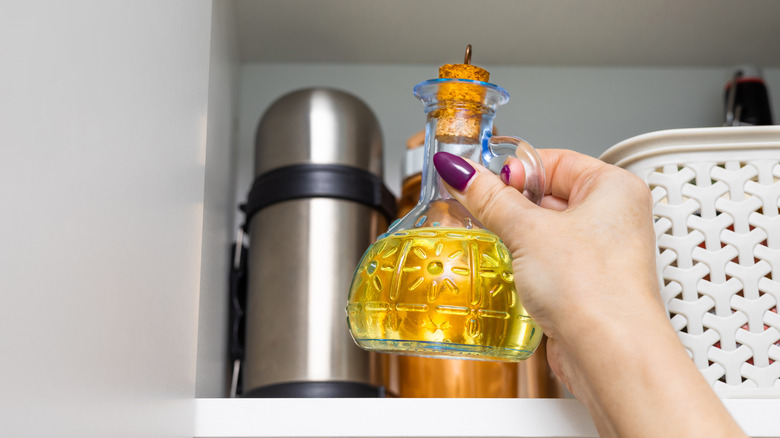
To start with, avoid blasting frozen oil in the microwave as your oil will heat unevenly, making it harder to control cooking temperatures. Also, while freezing oil doesn't spoil its quality, repeatedly freezing and thawing oil can shorten its shelf life. Each temperature shift increases the chance of condensation forming inside the bottle, and if even a little water mixes with the oil, it creates a risk of bacterial growth through contamination.
The other factor to watch out for is oxidation. Oxidation happens when oils are exposed to oxygen, triggering a chemical reaction similar to how metal rusts (or how your wine goes bad). In oils, this process — called rancidification — breaks down fats and creates new compounds, including free radicals. These free radicals don't just affect the taste and smell of the oil; they can also damage cells in the body and promote inflammation, which has been linked to chronic diseases such as heart disease and cancer.
Heat, light, and prolonged exposure to air all speed up oxidation, which is why oils last longest when stored in tightly sealed containers away from sunlight in a cool, dark place. This also means that keeping your bottle of oil right next to the stove, while convenient, isn't the best idea.