

10 Reasons Why Cracker Barrel Is Failing
In late summer 2025, the media was awash with one of the most pressing issues in the nation, one that even President Trump had to weigh in on: the rebrand of Cracker Barrel. There was a time not so long ago when a visit to this Southern-themed chain was far more than just a roadside pitstop. It was a place that served traditional Southern comfort food with staples like biscuits, grits, and country ham. Cracker Barrel's iconic interior decor was inspired by old country stores, and the service was that of good old country hospitality.
In recent times, not only has the chain seen declining customer numbers but also a declining share price that dropped quicker than a plate of biscuits at a Sunday brunch. Over the course of one year, after battling to attract senior diners after the pandemic, the chain underwent a number of drastic changes that culminated with public outcry. As the Cracker Barrel leadership has tried to keep up with the times, almost overnight the chain's famous front porch became center stage for heated debates.
The roots of Cracker Barrel's decline go further back than just the last few months, however, with a series of events showing signs that the brand was, at some point, setting itself up for failure. Some of these events were out of its control, but others were bizarre decisions that were somewhat unfavorably received by a previously loyal customer base. Here, we share some insights into what those events were.
Senior diners stopped eating out post-pandemic
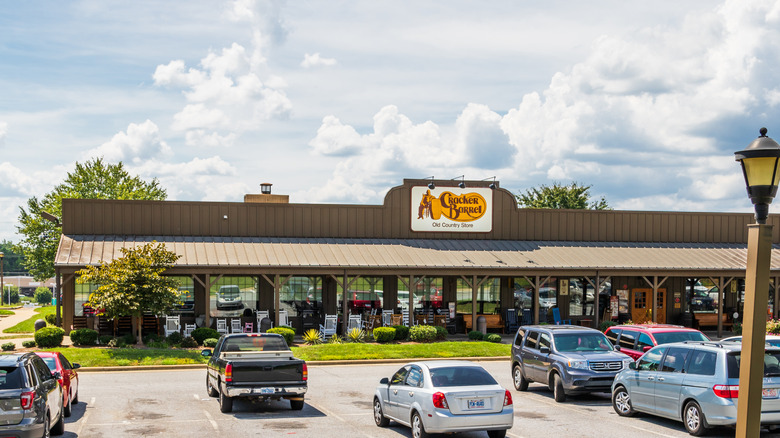
Going all the way back to early 2020, before the world was turned upside-down by the COVID-19 pandemic, you would expect to find a steady bustle of senior diners entering one of the many Cracker Barrel restaurants across the country. For years, a generation of senior diners formed the backbone of the brand's loyal customer base — retirees and families relishing a taste of Southern comfort they grew up with. By 2023, however, the pandemic's aftershock completely changed more than just how seniors shopped. They never really went back to dining out at the much-loved classic chains of America, not in the same numbers at least.
Cracker Barrel was one of the chains on the receiving end of this change in consumer behavior. It was more than just health concerns keeping them away; inflation was also to blame. As the older generation is generally more value-conscious, when belts are tightened, they often feel most of the squeeze. As a result, for seniors, eating out at their favorite restaurant was simply one thing that needed to be removed from the luxury list.
When the numbers declined and never bounced back, the chain saw significant pressure on already thin profit margins. For a brand rooted in nostalgia, the absence of its once most-devoted guests marked the first unmistakable cracks in the chain's foundation. It was arguably the beginning of what would be a challenging journey for the brand.
The chain struggled to attract younger diners
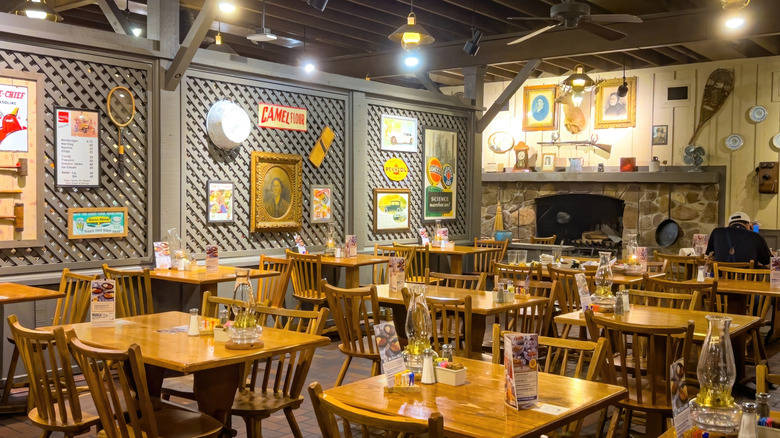
As the familiar faces of senior diners grew scarcer, Cracker Barrel looked to attract other audiences. One specific type of customer was the younger diner, but the brand faced the dilemma of alienating loyal seniors as it looked to appeal to the youth. This wasn't a new strategy by the company that arose post-pandemic, but a few years prior.
In 2020, Cracker Barrel added wine and beer to its menu for the first time, having lasted 50 years without either. Later, the brand added mimosas, sangria, and even Jack Daniels-branded lemonade. It then added early-bird deals to its menu to appeal to the younger diner and align with the trend of this demographic eating dinner earlier, while still trying to cater to health-conscious seniors who generally eat early in the evening.
Cracker Barrel even took to TikTok in a bid to appeal to the youth, launching a paid campaign with influencers after a harmless prank. While the alcoholic drinks were popular with younger diners and the paid campaign was appealing, the strategy didn't pay off as expected. As older patrons faded away and the chain missed the cool factor that attracted younger diners, the chain struggled to bridge the generational gap. In September 2023, the stock price had fallen 27%, as reported by Daily Mail. The cracks became larger.
The new CEO publicly admitted the brand isn't relevant anymore
In July 2023, Cracker Barrel announced its new CEO: Julie Felss Masino. Although Masino had entered the scene with what seemed to be a wealth of experience in the restaurant and retail industries — previously serving as an executive at Taco Bell — it didn't take too long for controversy to enter the scene. In May 2024, in a presentation to analysts, she said something that was quoted extensively in the media. "We're just not as relevant as we once were," she said on the conference call, as reported by CBS News. Masino commented that "transformation" was needed to not only appeal to its primary audience but also attract new customers. For a company more than 50 years old, the plan to change things up was received with mixed views.
The frank May 2024 assessment raised more questions than it answered, with the conference call also revealing that a number of changes were coming to the chain. This included new menu items, changes to the pricing of meals, and a remodeling of the restaurants. The plan was to spend as much as $700 million over the next three years as it looked to freshen up the brand and the customer experience. For a chain known for its rock-solid reliability and comfort-first dining rooms, it was a big cultural shift.
Revenue decreased in Q3 2024
Following the candid May 2024 announcement by the new CEO, the company released its latest performance figures. While Julie Felss Masino had set out a variety of changes to drive more people through Cracker Barrel's doors, the figures that were put out were not very promising. The company's Q3 2024 financial performance was a tough pill for its investors to swallow. With the numbers leaving little room for any sugarcoating, its third-quarter total revenue was down 1.9% year-on-year, decreasing to $817.1 million (via NASDAQ). Sales for like-for-like restaurants were down 1.5%, while the brand's comparable retail sales were down nearly 4%. This was off the back of a 7.4% increase in same-store revenue the year prior (as reported by New York Post) — a significant swing in performance.
While the financials may not have been all that positive, the share price did manage to improve by May 2024, trading 3% higher and surpassing estimates that analysts had put out, according to the New York Post. While this may sound like a positive outcome, the bigger picture at the time was a dire one.
Between the start of 2024 and end of May, the stock had dropped by almost 40%. While the stock was once trading at a record high of $180 in July 2019, it was down to below $50 when the Q3 results came out. Unfortunately, the brand was heading, unavoidably, into uncharted territory.
The stock value never recovered
The shockwaves from Cracker Barrel's disappointing Q3 results were felt far beyond its kitchen and dining rooms — they sent the company's stock into a further tailspin that left investors reeling. With media headlines already quoting Masino's frank assessment of the chain and unsettling investors, the poor financial results did nothing to stem the direction of the share price. By July 2024, the share price had dipped below the $40 mark and it didn't stop there. The stock, once a stalwart of the casual dining set, was well into a relentless decline that never seemed to show any real signs of recovery.
While analysts may have at first worried that Cracker Barrel might not regain its former luster, the sense that the kitchen was on fire was felt in September 2024 when the share price hit a 52-week low of $38.46 a share. Over the 12 months prior, the share price had dropped by 56.07% (via Investing.com). People who had invested in the company watched in concern as the bounce back simply never came.
Cracker Barrel had become an example of how the retail and hospitality sectors, especially those that were as much a part of American road trips as maple syrup on pancakes, could so quickly fall out of favor in a rapidly changing market. While the share price did start to make a modest comeback at the end of 2024, by February 2025 the decline had begun once again.
Menu prices increased
If there is one surefire way for a restaurant chain to turn its regulars off, all it needs to do is increase the menu prices. So, when Cracker Barrel decided to start charging its guests more for the meals they had grown to love, as you can imagine, they were not happy. The chain wasn't the only one looking to increase prices, with many other restaurant brands having to do so as inflation increased, alongside wage hikes and other factors influencing the need to raise prices. But, Cracker Barrel went ahead with a plan to increase menu prices by 4.7% (via Restaurant Business Online) between November 2024 and January 2025.
The pricing increase was a part of the company's strategic transformation plan, which included "optimizing strategic pricing to protect value and improve profitability," per a press release. This wasn't a blanket approach, but rather one where pricing was dependent on the area. Basically, its strategy was designed to price menu items based on the dynamics of the market the store was located.
While it may have made sense in the boardroom, loyal customers were not all that receptive. They quickly began airing their frustrations when they saw the increased prices on the menu.
The $700 million transformation plan was criticized
The transformation plan that Masino unveiled in May 2024 came with a major price tag — $700 million to be exact. The grand project was built around the strategy of bringing the brand roaring into modern times. After announcing the rejuvenation plan, which was expected to take place over three years, it invited criticism that Masino and the board apparently ignored.
One top investor strongly advised that it wouldn't work, calling it "obvious folly," and then submitted a 120-page slide deck presentation that set out exactly why. The investor titled the presentation, "Cracker Barrel is in Crisis." That's certainly not the type of presentation that a company looking to turn its performance around wants to receive.
In any event, the board went ahead with its plan. It even hired a top branding agency as part of the transformation plan to review its positioning in the market and improve the store and guest experience. The company also went ahead and appointed a new chief marketing officer, Sarah Moore, who brought experience from her tenure at MGM Resorts. By this time, though, the chain had already been struggling with negative traffic and sales over several quarters in succession. With millions being poured into a rejuvenation, Cracker Barrel was betting big that these changes would help win back old fans and finally spark the curiosity of new ones.
Cracker Barrel rebranded its logo and restaurants
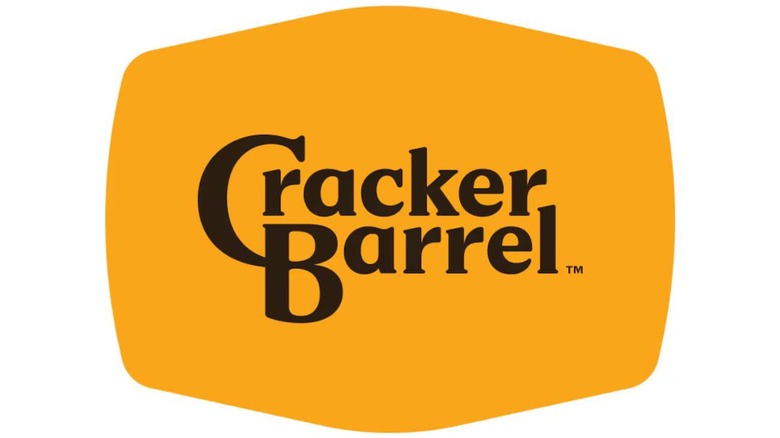
Just when many thought that Cracker Barrel's transformation path couldn't get any bumpier, August 2025 proved otherwise. When the company officially took the wraps off its new look and announced not only the new Cracker Barrel interior but also a new logo, the internet nearly lost its mind. Gone was the timeless front-porch font and rocking chair nostalgia; in its place was a modern logo with crisp lines, a refreshed color palette, and an identity that looked more Silicon Valley than Smoky Mountains.
While the board and CEO may have been sold the idea that the new look would modernize the brand, appeal to a wider audience, and move it forward into the future, the reality was far from it. In one Reddit thread, users shared their feedback: "Definitely meets the criteria of unpopular opinion!" and "It looks like they paid a high school kid to make it with MS Paint."
As for the interior, the chain went ahead with remodeling its stores by stripping some of the country-themed style and tried to brighten the spaces up by moving away from darker woods. TikTok, of course, went berserk, with the complaints coming in fast. Masino had a different opinion, telling Good Morning America that "people like what we're doing." If the media coverage was anything to go by, that wasn't the case.
The chain was hit with backlash from investors and political figures
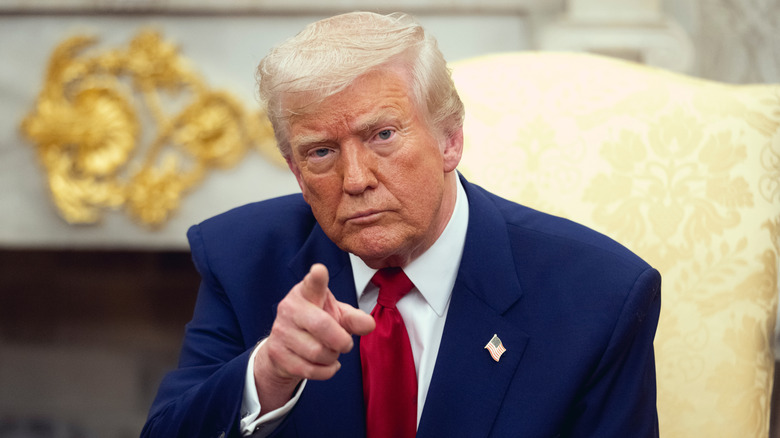
The company didn't just feel the backlash over the new Cracker Barrel logo from customers — it was far worse. Shortly after revealing the new logo and brand direction, investors made their case clear, and the company's stock took a hammering. In what was a backfire of epic proportions, the company lost nearly $100 million in value, falling $8.26 per share on August 21, only two days after the big announcement. The backlash also erupted into mainstream politics when President Trump caught wind of the rebrand.
At first, his son, Donald Trump Jr., took to X to present his view on the logo change, saying, "WTF is wrong with @CrackerBarrel??!" It didn't take long for his father to add to the conversation when he wrote on Truth Social, "Cracker Barrel should go back to the old logo, admit a mistake based on customer response (the ultimate Poll), and manage the company better than ever before."
One of the biggest reasons for the strong reaction from Americans across the country was that Cracker Barrel took out the iconic older gentleman who featured in the logo. The company's response was that they weren't doing away with him entirely: "Uncle Herschel will still be on our menu (welcome back Uncle Herschel's Favorite Breakfast Platter), on our road signs, and featured in our country store," it said in a statement. This, however, did very little to quell the strong tide against its rebranding decision.
The logo was abandoned and stocks continued to swing
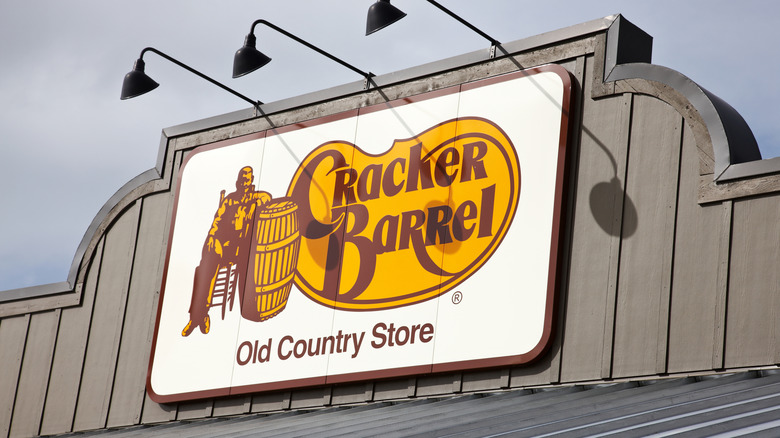
The saga of Cracker Barrel's logo rebrand is a recipe that had all the ingredients for a public relations nightmare. After the public and political outcry hit a crescendo, the company decided to put out one more statement — one that announced the reversal of the logo update. It said on X, "We thank our guests for sharing your voices and love for Cracker Barrel. We said we would listen, and we have. Our new logo is going away and our 'Old Timer' will remain."
Was the final straw on the camel's back the comment from President Trump, or was it the overwhelming public outcry? Whatever it was that pushed Cracker Barrel to reverse its logo decision, Uncle Herschel was back. As had been the case when the logo was first revealed, Cracker Barrel was once again in the headlines, with titles across the U.S. talking about the comeback of the old logo.
As evidence of how people viewed the old logo, a day after the announcement of the logo reversal, the stock price started to swing again — this time in a positive direction. It was as low as $54.27 per share on August 25; by August 27, it had risen to $62.33. It didn't stay there, however, with the share continuing its yo-yo of ups and downs. Where to for Cracker Barrel? Time will tell.