

These Antique Knives Could Be Worth A Small Fortune Today
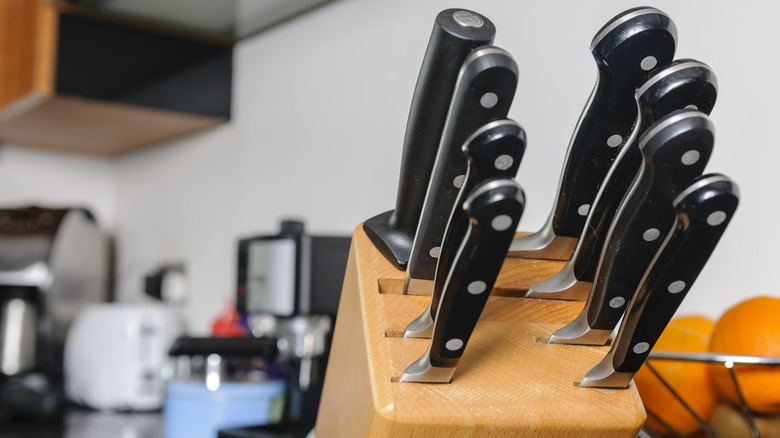
Not all knives are created equally. Especially revered antique ones made from carbon steel and kept in great condition. These knives are found all over the world at vintage stores, estate sales, or even from a seller's own private collection, most dating back to the early 1900s.
Carbon steel knives differ from stainless steel in a variety of factors. Primarily, their material, price, and upkeep are all different. Sabatier, a brand from Thiers, France, is prized for its pre-World War II knives with their full tang and wooden handles that are made directly in Thiers. Another brand, F. Dick from Deizisau, Germany, is known for its carbon steel knives hand-forged by blacksmiths in the '50s and '60s. The brand made a name for itself in the butchery and industrial industries. Both these brands have been found on Etsy and eBay, starting at $100, depending on the year they were made.
Other types of knives, such as products made with Damascus steel, hail originally from Syria, India and parts of the Middle East. These antique knives could sell for as much as $100,000 (via Bighorn). These knives are prized for having a pattern similar to the Milky Way that originates back over 2,000 years and marks the high-quality steel.
Which knives are worth collecting?
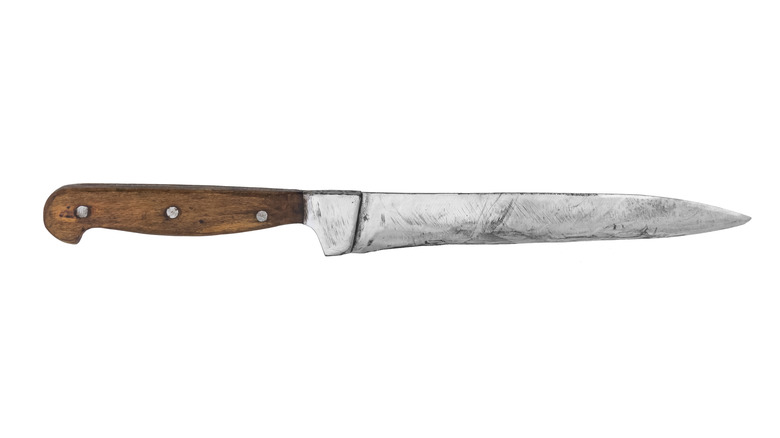
Like a number of kitchen tools that are actually worth something, knives often come with a certificate of authenticity to help you determine when and where they were created and what materials they are made from. If you don't have a certificate of authenticity on hand, these common indicators can help you identify your blade.
First, to decipher the year of the knives, you can look for a few indicators. Often, the hardware is a great place to start. The full tang (with a taper) is a common sign, which is where the blade extends all the way through the handle. Aluminum and nickel were commonly used for ferrules, which are the metals used between the handle and the blade. The types and shapes of rivets along the handle can also be indicative of the year. Then, look to the knife itself: Most are either fully hand-forged by craftsmen or started by drop-foraged for initial shaping, then later refined by hand by blacksmiths. You can also look at the style of blade, such as pocket knives, hunting knives, or butcher/kitchen knives, and condition. Lastly, if there are any production indicators, such as brand or number, you can always work backwards from there. That all being said, if you're in the market for used kitchen tools, here are a few you should avoid thrifiting.