

Here's Why You Shouldn't Always Follow 'Room Temperature'
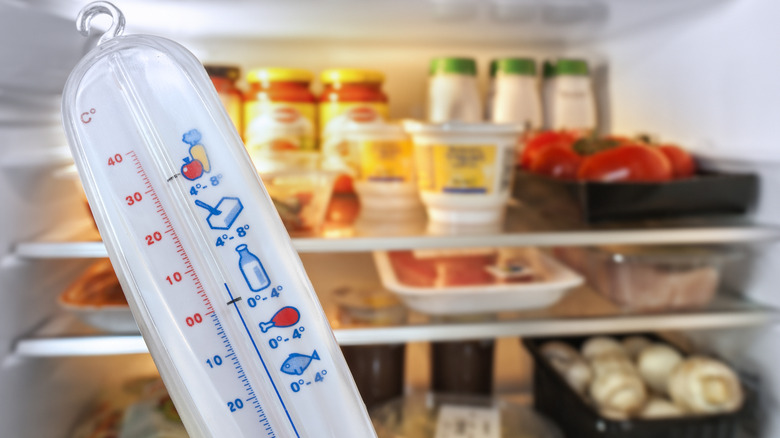
We often hear recipes call for ingredients to be at "room temperature," as though that term carries a universal, dependable meaning, almost like a culinary safe harbor. But that phrasing may inadvertently lull us into a false sense of security by masking a range of real-world variation. What you're picturing in your cozy kitchen may be far different from what is implied by room temperature, and that difference matters — especially when it comes to keeping food safe.
In fact, room temperature can span a surprisingly broad range — typically around 68 to 72 degrees Fahrenheit in many households — but under various professional or regulatory contexts, it can mean anywhere from about 59 up to 86 degrees Fahrenheit (with controlled-room-temperature often defined between 68 and 77 degrees Fahrenheit, but allowing even brief spikes up to 104 degrees Fahrenheit). This wide span illustrates just how variable room temperature can be depending on climate, season, HVAC settings, building type, or even whether you're in a pharmacy, a restaurant, or your own home.
That variability becomes especially significant in food contexts, because what may seem like a harmless ambient temperature could actually fall squarely into the danger zone — the range between 40 and 140 degrees Fahrenheit where bacteria grow particularly fast. Ignoring how much room temperature fluctuates can unintentionally expose food to risky bacterial growth, especially when combined with factors like humidity, air movement, or delays in refrigeration.
Why this matters for food safety

Understanding that room temperature varies substantially is more than just a semantic quibble; it's a matter of public health. The food temperature danger zone (40 to 140 degrees Fahrenheit) is where many pathogens — Salmonella, E. coli, Staphylococcus aureus, and others — can double in number in as little as 20 minutes. Leaving foods out at a presumed safe ambient temp for too long (especially when that ambient is at the warmer end of the scale) can turn a benign kitchen situation into a bacterial breeding ground.
Because of this, guidelines urge that perishable foods be refrigerated or maintained above 140 degrees Fahrenheit promptly. For instance, food shouldn't remain at room temperature — and thus in the danger zone — for more than two hours, or just one hour if the ambient temperature exceeds 90 degrees Fahrenheit. These rules are based on how rapidly bacteria multiply when conditions are favorable. What feels like a safe ambient moment can in fact be dangerous if it's toward the warm side of room temperature.
Seasonal climates compound the issue. On hot days, indoor temps may climb above the comfortable 68 to 72 degrees Fahrenheit range, whereas in air-conditioned spaces, they may slip below (which may affect how you serve your salsa). These fluctuations directly impact how quickly food enters or remains in the danger zone. Being precise — monitoring with a thermometer, rather than relying on vague terms — ensures you don't inadvertently let food linger in unsafe conditions.