

The Plant Used In Your Hibiscus Tea Might Not Be The Flower You Think It Is
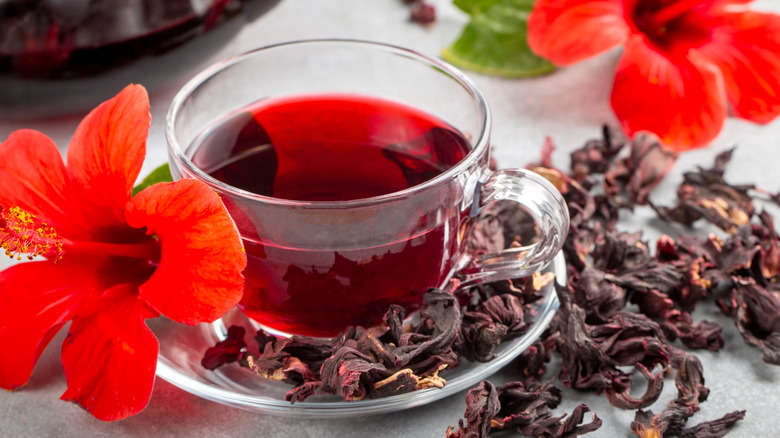
Hibiscus tea has been growing in popularity in recent years, thanks in part to published studies that tout its beneficial health properties, such as lowering blood pressure, reducing cholesterol and blood sugar, and helping to manage weight. Recipes abound for using as a tasty addition to non-alcoholic drinks and to add a beautiful color and welcome acidity to cocktails. However, there seems to be confusion among consumers when it comes to identifying the correct hibiscus plant that is used to make the infusion, especially as many commercial brands include an image of Hibiscus rosasinensis, a large tropical flower, on the packaging. In truth, that is not necessarily the plant that's contained in the product. Instead, the species of hibiscus widely used in tea is Hibiscus sabdariffa, better known by its common name, roselle.
Turns out, it's not the petals of Hibiscus rosasinensis which are used to make tea, but rather the bright red, fleshy calyxes of roselle flowers, which have been dehydrated. Although it seems some companies might use Hibiscus rosasinensis in their tea blends, most studies citing its health benefits are referring to roselle. Hibiscus rosasinensis, the typical hibiscus you see in gardens and the one many people in the U.S. think of when they hear the word, is a plant of Asian origin, cultivated in China as an ornamental.
Both belong to the Malvaceae family and the genus Hibiscus, the Latin word for mallow, but there are significant botanical differences between the two. This, of course, also reflects in their chemical composition, their flavor, and the potential health benefits they offer.
A plant with many uses and deep cultural ties
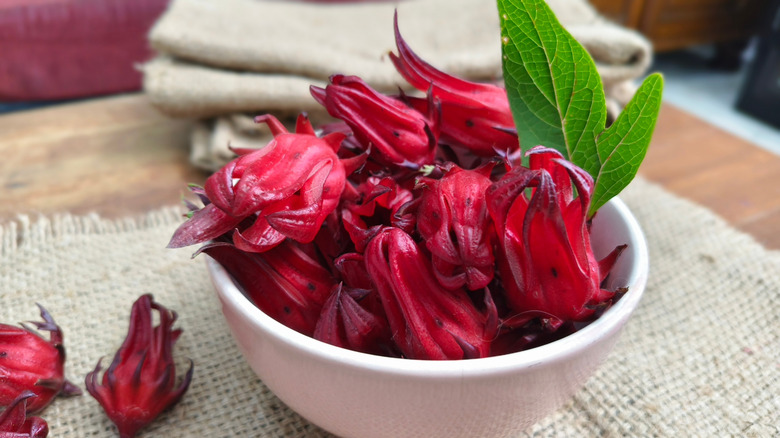
Roselle is native to Central and Western Africa and is closely related to okra. The plant made it to the Americas with the African diaspora, brought over by enslaved Africans who used it in cooking and as a traditional medicine in their places of origin. It quickly adapted to the American tropics, especially in the Caribbean, where it became known as sorrel.
These plants eventually arrived in Mexico, where the flowers were known as flor de jamaica, or "flower from Jamaica." Today, the dried calyxes of rosella are still widely used to make a refreshing drink, known as agua de jamaica. In the Southern United States, various beverages known as "red drink," made from hibiscus, ginger, and other spices brought from Africa, such as kola nut, became popular after Emancipation and are still enjoyed during Juneteenth celebrations.
Although the flowers of roselle are less showy compared to their Chinese cousins, they make an attractive garden plant thanks to their red stems and bright red calyxes, which contrast with the pastel-colored blooms. They are easy to grow in the garden, but you would need a very large harvest to make more than a pitcher of tea. It is easier and more economical to buy them, but to be sure you're getting the right hibiscus, purchase in bulk packages rather than in boxes containing sachets. After you boil them to make your infusion, the calyxes will rehydrate somewhat, and rather than discard them, you can lightly sautee and season them to make a filling for tacos or a vegan "pulled pork."