

16 Drinks You Should Never Order At A Busy Bar
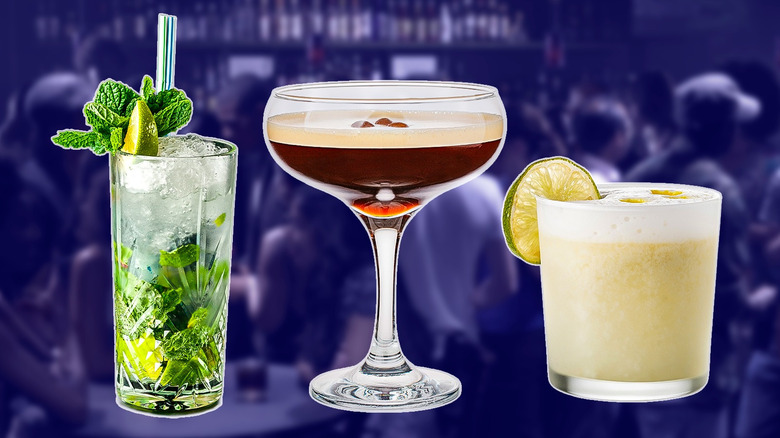
There's a time and a place for everything, including cocktails. Bars are the best place to catch a buzz, but there is some unspoken etiquette when it comes to ordering. To start, order all at once, say thank you, and never, ever, order a Ramos Gin Fizz. A seasoned bartender can shake up cocktails insanely fast, but speed can only go so far with a packed bar full of thirsty patrons. Making painstaking cocktails is all part of the job, so chances are the bartender will smile politely and add your order to their long mental to-do list, but they'll be silently stewing inside.
Swanky cocktail bars feature elaborate cocktails that take time and precision, but even those bars get slammed. If you ask for anything with more than three ingredients at a dive bar mid-rush, the bartender might not even humor you, but avoiding complicated drinks is also an advantage for you. The price of cocktails doesn't ebb and flow with the crowd, and do you really want to wait an extra fifteen minutes for that fancy $20 cocktail?
First and foremost, these drink orders will put you on the bartender's blacklist, and if you're in the business of having a good time, that's not a great place to be. If you really want to bring the bartender joy (and this is coming from one), order a beer, wine, or a simple two-ingredient pour; something that doesn't call for more hands than a human has. If you'd like a drink in your hand within ten minutes, steer clear of these 16 cocktails.
1. Mojito
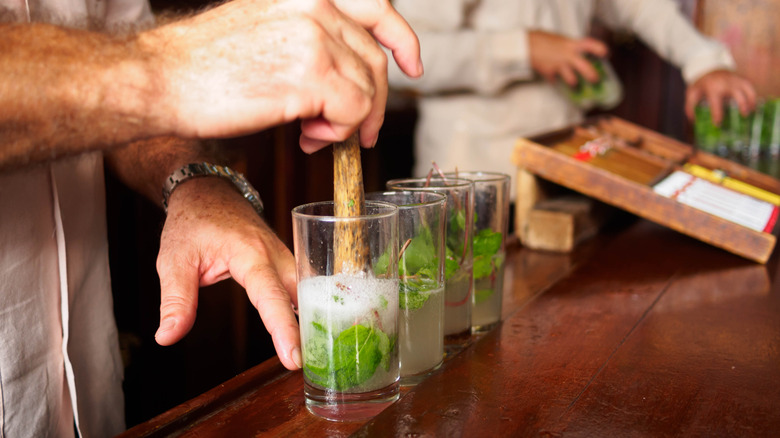
When made right, a mojito is crisp and concerningly drinkable. It's a treasured summer cocktail, generally served with so much crushed ice that it's practically a snow cone. As simple as the ingredients are (just rum, fresh lime, sugar, mint, and soda water), the logistics are a nightmare. The key to a perfect mojito is all in the mint, which is much more than a garnish. Although some mixologists attest that muddling isn't a necessity, the classic Cuban recipe from Havana calls for muddled mint.
Any cocktail that relies on muddled herbs is going to warrant a big sigh from the bartender. You can always sniff out fresh mint, but the oils aren't magically released as soon as the leaves hit the glass. Mixologists have to pulverize the mint for a few solid seconds to really infuse the mint's flavor, which is, of course, critical to a mojito.
2. Egg white cocktails
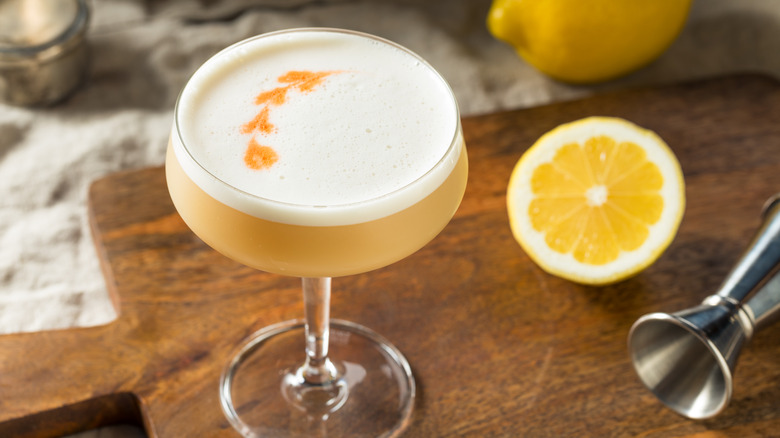
If you order an egg white cocktail when the line at the bar reaches the front door, the bartender is going to take it as a personal attack. Any egg white cocktail is going to be a pain to make, even with as few as three ingredients. Between taking more time to shake and then carefully cleaning the shakers, this order can really set a bartender back on a busy night. Egg whites do something spellbinding to cocktails, creating a silky sip topped with a foamy crown. Over one hundred years ago, mixologists discovered the impact egg whites had in cocktails without messing with the flavor, and the technique worked its way across bars all over the world.
There are plenty of classic frothy egg white cocktails, but the Ramos Gin Fizz is one of the most universally hated by bartenders. It's made with gin, egg white, citrus, simple syrup, and cream, but has to be shaken hard for up to ten or fifteen minutes. It was popular from the late 1800s up until the 1970s, when it (thankfully for bartenders) fell out of fashion.
3. Espresso martinis
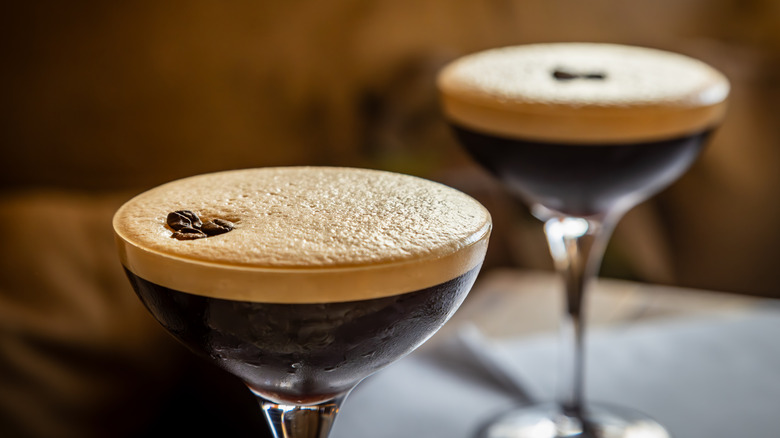
With the espresso martini fandom over the last few years, it's hard to believe this cocktail was only introduced sometime in the '80s. Starting in London, the espresso martini worked its way around the world, all thanks to a model's request for something that would jolt her awake. Typically made with vodka, coffee liqueur, simple syrup, and, of course, espresso, it's a smooth caffeinated martini that can be as sweet or stiff as desired.
All of the ingredients can be tossed in the shaker at once, so the cocktail itself isn't too taxing, but that's only if there's chilled espresso at the ready. If the bartender's fridge is stocked up with quarts of fresh espresso, then things will move a lot faster, but if they run out of the pre-made batch, it can all go down fast. Running back and forth to the espresso machine all night will probably have the bartender 86-ing espresso martinis by the end of the night. Do the bartender a favor and order a canned espresso martini if they're on the menu, so all they have to do is crack it open.
4. Milk punches
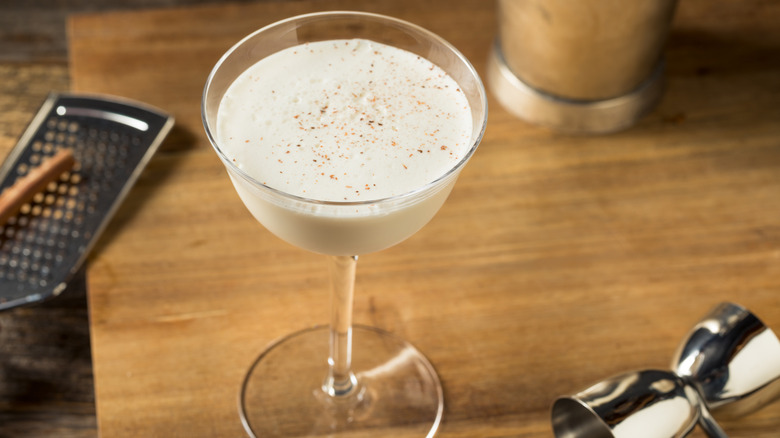
Similar to egg white cocktails, anything involving milk will need to be carefully shaken. The varying temperatures and dairy can easily cause the cocktail to split, so, ideally, bartenders will have anything dairy-based pre-chilled so there's less pressure during crunch time. Even if cooled down beforehand, milky cocktails have to be powerfully shaken, which is a total time suck behind the bar.
Its roots trace back to Christmas time in NOLA, where milk punch started as a late morning holiday tradition. The rich cocktail is sweetened with milk, sugar, vanilla, and nutmeg, traditionally made with brandy and bourbon or cognac. Some recipes even add heavy cream, tacking on another step for the bartender. Milk-based cocktails like White Russians and Brandy Alexanders are very dessert-like, making it tough to nail down the right sugary proportions while the clock is ticking.
5. Bloody Marys (past 4 PM)
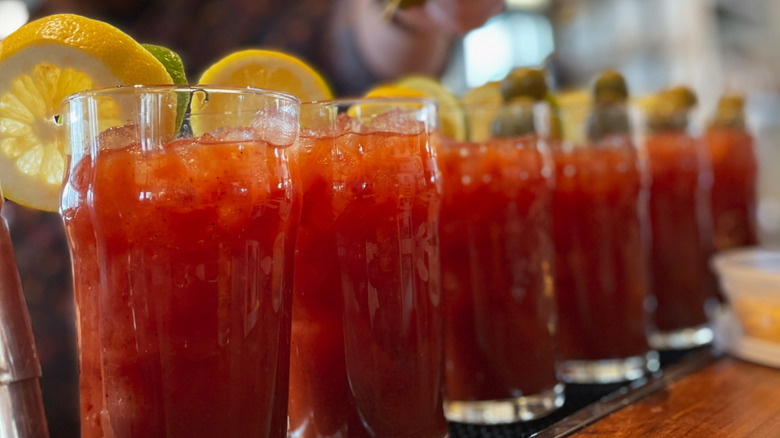
Bloody Marys seem to be a love or hate thing, which isn't surprising. Personally, I'm a big fan, especially to curb my hunger as I'm waiting for my brunch table. The thick, tomato-based cocktail was understandably novel when it first appeared on bar menus in the '20s, but once folks gave it a chance, it became brunch's top hangover cure.
Any bar with Bloody Marys on the menu will have the mix pre-batched, but the garnishes alone can really slow a bartender down. Bartenders will do their best to plan for busy brunch shifts with a stockpile of batched Bloody Mary mix, but they'll never expect one to be ordered past 4 PM. By the end of the afternoon, the bar has likely stopped re-stocking for the brunch menu, and it's slim to none that a bartender will whip you up a fresh Bloody on the fly.
6. Anything on fire
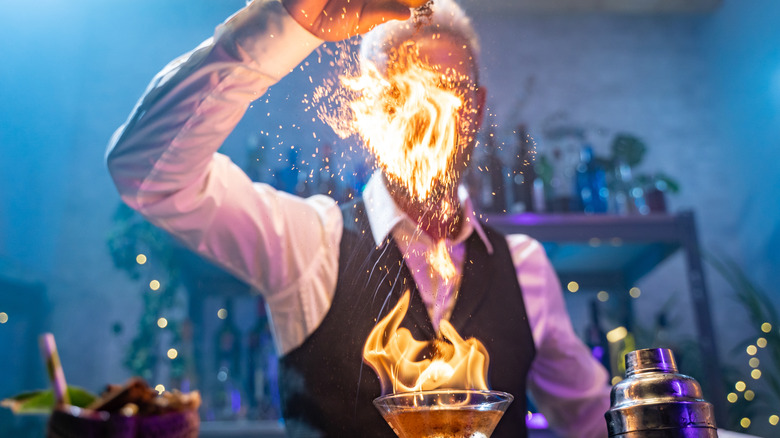
Just, no. Unless you're in a bustling club scene where theatrical drinks are genuinely encouraged, don't throw the bartender off their game with a flaming order. At a high enough ABV, alcohol will catch fire, and bars will often put on a show by lighting shots of 151 rum on fire and serving them in style. This technique can be fun at times, but definitely not during a hectic night.
Working with fire requires serious accuracy. It's a little sketchy, especially when patrons are crammed together like sardines. The last thing a bartender wants is a lawsuit over a mediocre cocktail, and rowdy customers can get a little too enthralled in the presentation. Bartenders have to give 100% of their attention to the literal fire in front of them and the wide-eyed customer when they have a line of thirsty folks waiting.
7. Painkiller
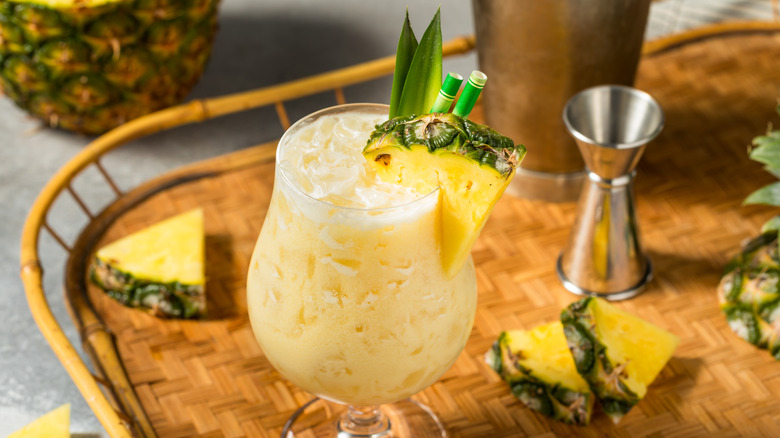
This vacation-ready cocktail originated from the British Virgin Islands during the 1970s. As delicious as the coconut rum concoction is, ordering one is rarely worth the pain you'll cause the bartender. The tropical dark rum cocktail mixes pineapple, orange, and cream of coconut for a uniquely indulgent sip. Using cream of coconut rather than just coconut milk provides that almost milkshake consistency that everyone adores, but it also calls for an extra tedious step: straining.
It's piña colada-esque, swirled with creamy coconut and pineapple, but shaken rather than blended. The painkiller's signature ingredient is the garnish: freshly grated nutmeg. While just sprinkled on top, the nutty spice changes the entire drink's flavor for the better. That being said, nutmeg isn't the most popular ingredient behind the bar. A painkiller is the kind of cocktail you shouldn't really walk up and order unless it's already on the menu, and even then, it's not a good choice during a rush.
8. Aviation
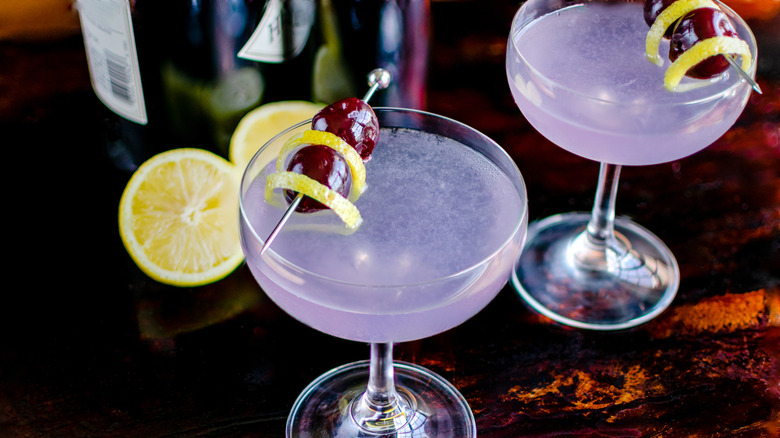
The Aviation cocktail, dating back to 1916, is notorious for being a bartender's challenge. It's a pioneer of American mixology, but its many ingredients and distinct proportions require a keen eye that's usually MIA during the rush. Bartenders have to find the perfect harmony between gin, maraschino liqueur, lemon juice, and crème de violette. Once customers see its enchanting purple hue, the whole bar will want to jump on the Aviation bandwagon, and the bartender will never forgive who set the trend.
For one, the elegant gin cocktail is served up, so strenuous shaking is a strike right off the bat. It's also made with some niche ingredients like the crème de violette, which bars will often replace with another floral liqueur, throwing the whole cocktail off. Too much crème de violette overwhelms the drink, making it feel like you're sipping on the perfume section of Macy's. However, too little encroaches on a basic gin sour.
9. Corpse Reviver #2
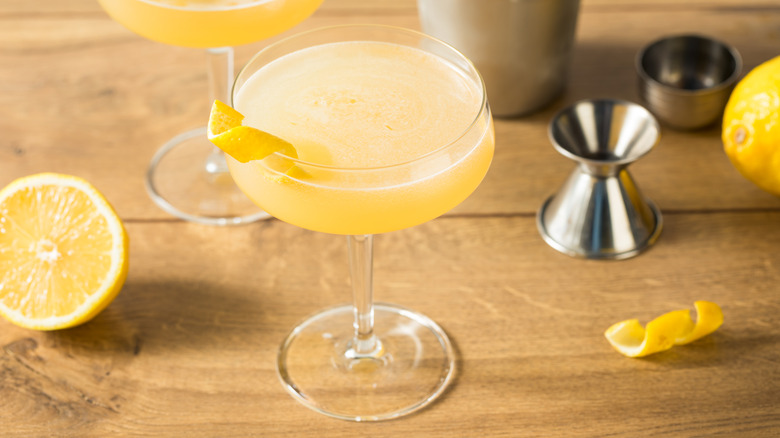
The Corpse Reviver #2, not to be confused with its slightly less annoying predecessor, was originally designed as a hangover cure. "Four of these taken in swift succession will unrevive the corpse again," Harry Craddock shared in his 1930 book, "The Savoy Cocktail Book." Craddock can't take credit for the original Corpse Reviver, made with vermouth, brandy, and Calvados, but the second coming is all his. The gin cocktail begins with an absinthe rinse (an immediate headache for the bartender) and was originally made with Cointreau, Kina Lillet, and lemon juice. Today, Lillet Blanc has essentially replaced Kina Lillet, the now-defunct French aperitif wine. After the quick rinse, all of the ingredients are shaken and then strained into the absinthe-coated martini glass.
Absinthe isn't easy to come by in the States, with tight regulations that were only introduced in 2007 after decades of being banned. The tug and pull of legality had most bars eliminating absinthe from their drink menu, replacing the hallucinogenic spirit with wormwood-free liqueurs like Herbsaint or Ricard's alternative, pastis. Even if the bar is stocked with enough options to shake up every variation of the Corpse Reviver #2, it's still going to be a distraction. Any passionate bartender will appreciate the history of this cocktail, but that doesn't mean they're eager to make it. Between the elusive ingredients, shaking, straining, and the delicate rinse, it can take up to five minutes, which is like 25 minutes in the bar world.
10. Ingredient-heavy cocktails
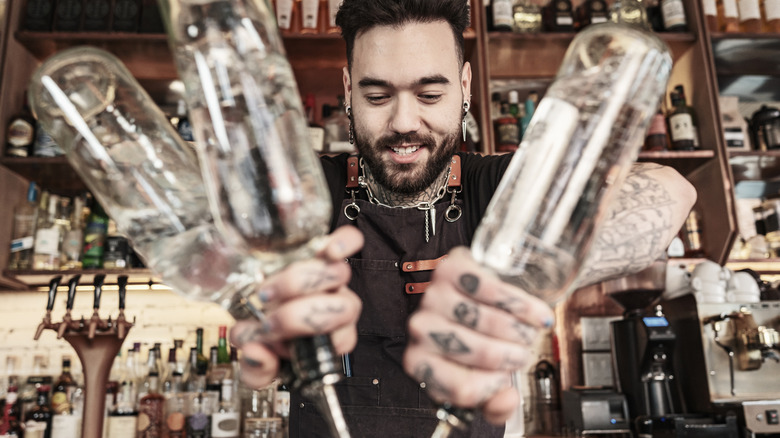
Bartenders love hearing a 1-1 order on a busy night, like a simple vodka soda or rum and Coke, but anything with five plus ingredients will just get you an eye roll. Ingredient-heavy cocktails like Long Island iced teas and Singapore Slings call for some serious leg work, or arm work in this case. Bartenders have to reach for a jumble of bottles across multiple shelves, and that's before the shaking begins. Unless you've arrived at a space-themed bar where bartenders have ten arms, these kinds of jungle juice cocktails will drain them of much-needed energy.
There are pre-mixed bottles for Long Island iced teas that include everything other than the splash of Coke, which is just a handful of different spirits. These bottles certainly make mixing up the cocktail easier, but the time it takes is only one of its qualms. It's also notoriously strong, and serving more than one per customer can make bartenders uneasy, especially on a busy night.
11. Any flip cocktail
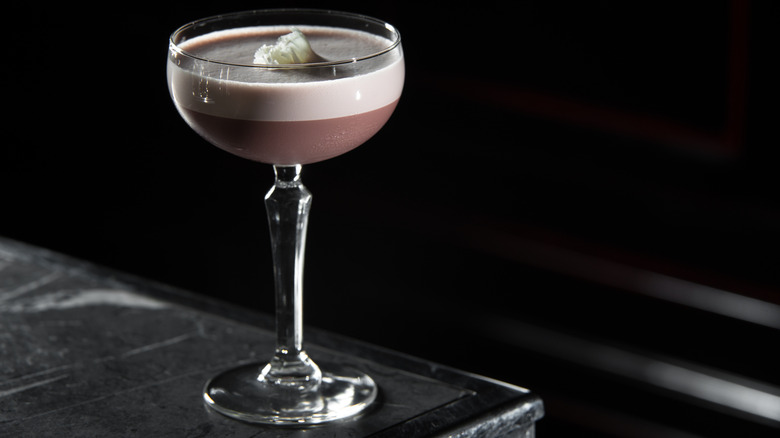
If you thought egg white cocktails were hated, just wait until you see the bartender's reaction upon ordering a flip. The cocktail's history goes back centuries, once heated by a fiery iron poker and served steaming, but Craddock presented a more modern take in "The Savoy Cocktail Book", following hot toddies. Craddock notes that rum flips are a sailor's favorite, made with one egg (yolk and all), ½ tablespoon of powdered sugar, and one "glass" of rum. This mixture is then shaken vigorously, strained into a glass, and topped with grated nutmeg.
Brandy, port, sherry, and whisky work just as well as rum, with some ancient recipes even using beer. In this century, any liquor or fortified wine shaken with sugar and egg can be defined as a flip. While shaken egg whites create an airy element in a cocktail, the entire egg adds a creamier thickness, like eggnog. Worst of all, flips should be shaken not once, but twice. First, a dry shake to break down the egg and create that ideal frothy body, and then a typical shake with ice to chill the cocktail.
12. Specialty shots or bombs
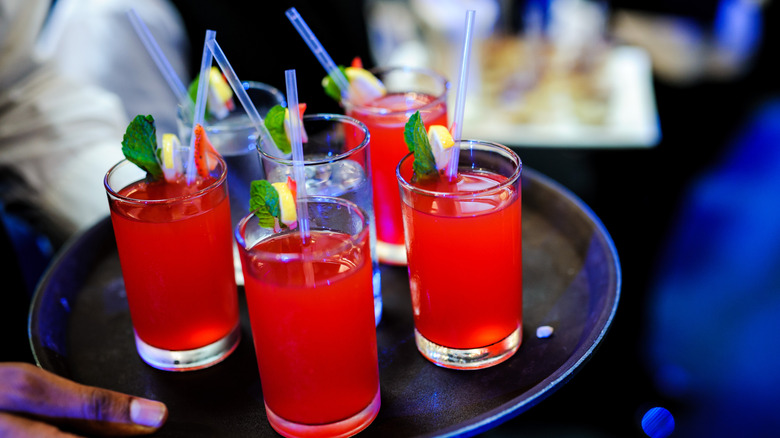
Shots of bourbon, tequila, or rum are a breeze for bartenders to pour, but specialty shots that call for a handful of ingredients, tons of ice, and sometimes even another cocktail to drop it into are a hard pass. Just because they're smaller doesn't mean they're any easier to make. In fact, they take just as long to make and are consumed four times as fast.
Specialty shots like green tea shots or kamikazes aren't tough to make, but it's a slippery slope that never stops. One round is manageable, but the problem with trays of colorful shots is that they catch everyone's eye, and one never seems to be enough. Before you know it, the bartender is pouring 25 shots down the entire bar. Plus, these orders tend to come from boisterous groups requesting a sizeable tray of shooters. It's hard for the bartender to even find room to pour however many shots are needed.
13. Pousse Café (a layered cocktail)
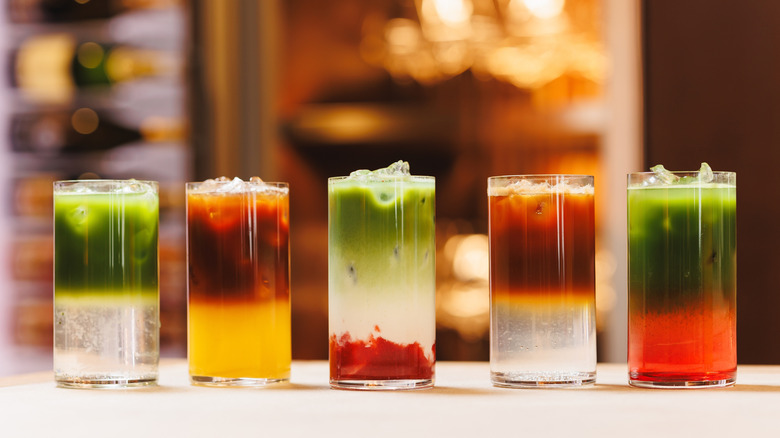
If it sounds fancy, that's because it is. Pousse Café, a cocktail with different colored layers stacked on top of each other, is a little bit of science on display. Ordering a Pousse Café at a busy bar tells the bartender all they need to know. There's nothing inherently taboo about ordering any particular cocktail, but landing on a Pousse Café when there's a line behind you is very telling of your bartending experience.
Any layered cocktail takes precision and focus, which is the opposite of what a bartender wants on a busy night. To achieve those layers, bartenders have to use a trusty spoon trick. They carefully pour each ingredient over the back of a spoon at just the right speed and angle so they don't mix. As one can imagine, this is a grueling process, and just one wrist twitch will have them starting from scratch. In a busy bar, this order feels disrespectful to all.
14. Old fashioned
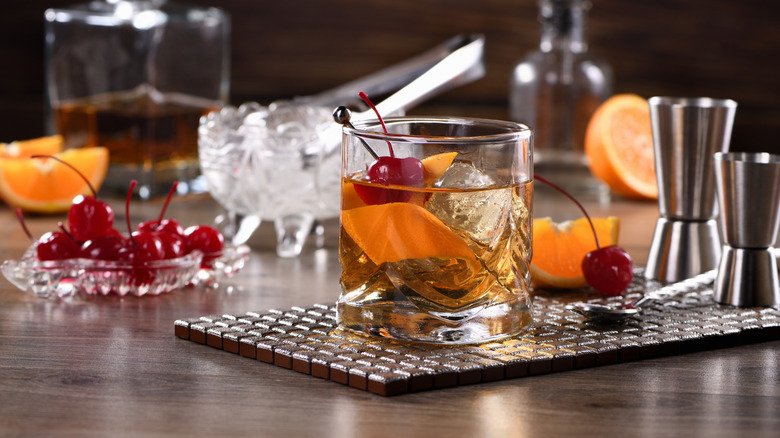
An Old Fashioned is one of the first cocktail recipes under a bartender's belt. The classic bourbon cocktail, stirred with bitters and sugar, is seemingly simple, but it's not a cocktail to rush. There's a proper moment for the sophisticated drink, and it's not during the 10 PM bar rush. While not as draining as some others, it's not much of a dive bar drink. A traditional Old Fashioned is made with real sugar cubes, which aren't always within reach. If the bartender has to step out or snag a barback to run for them, you'll be kept waiting.
Similar to a martini, anyone who orders an Old Fashioned presumably knows exactly how they like it. This is better than having no idea of your taste and sending drinks back repeatedly, but it also leaves room for disappointment. This order can trigger a handful of questions: bourbon or rye? Fruit or no fruit? Muddled or garnished? Splash of soda? The secret to a perfect Old Fashioned is all about stirring carefully, and even the order in which you add ingredients to the glass matters.
15. Frozen cocktails (if they're made to order)
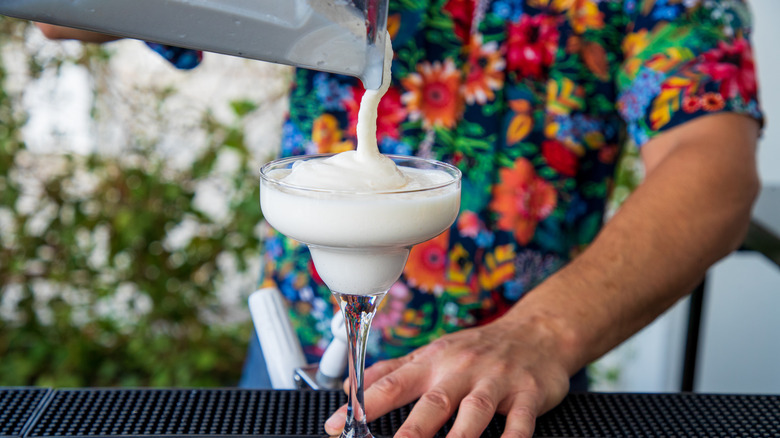
Nothing says vacation time quite like an icy cocktail, but if there's no slushie machine swirling in sight, think twice before ordering that frozen margarita. If the bar has one of those huge frozen drink machines rotating right on the counter, then order away, but if frozen cocktails are made to order, reconsider your strategy.
Pre-batched cocktails right from the spout are just as easy for the bartender as a draft beer, if not easier without needing to consider the beer's head. Not to mention they'll be far more consistent than one the bartender blitzes together in a panic. Bar menus might feature crowd favorites like piña coladas and daiquiris, but if they're tailor-made, don't put the bartender out by forcing them to drag out the ol' blender. They're loud and torture to clean, but above all else, require endless ice, which is its own obstacle when the bar is slammed.
16. Hot toddies
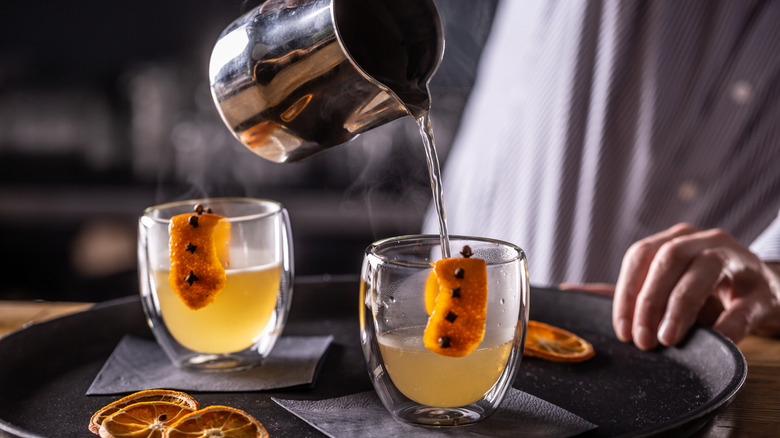
Whiskey has been teetering on the line of medicine for decades, and back in the 18th century, it fell more towards cold remedy than party fuel. That's when everyone's favorite winter cocktail was born: the hot toddy. When the sniffles are coming but you still want your nightcap, hot toddies are the universal pick-me-up. Given that mixologists are usually tiring their wrists out to make that first sip as cold as possible, you'd think a hot cup of whiskey would feel like a break, but it's rarely that simple.
A hot toddy consists of whiskey, honey, lemon, and hot water, usually garnished with star anise and a clove-decorated orange. Even with just a few ingredients, the hot water will always be the bartender's downfall. Unless hot toddies are on the menu, chances are they don't have a tea kettle or hot water behind the bar. They'll have to run out back or track someone down to help, and you might never see your drink.