

This One Ingredient Is All You Need To Seriously Enhance The Flavor Of Just About Any Soup
We may receive a commission on purchases made from links.
Simple as they are to make, and hearty when they're made just right, sometimes, the flavor of your soup just falls a bit flat. If you just so happen to have this secret ingredient handy, no matter what it is that's cooking on the stove — be it a hearty minestrone or a chicken noodle soup — you can fix its flavor in a pinch. It's called kombu, and it's one heck of an umami powerhouse.
Kombu is the catch-all term for certain types of edible kelp or seaweed rich in natural MSG — the same compound responsible for the umami flavor. East Asian kitchens have sworn by this flavor secret for over 1,200 years (possibly even as far back as 15,000 years ago), and honestly, it's time you got in on it too. Even the most boring, water-like soup gets a serious upgrade with just a hint of this umami magic.
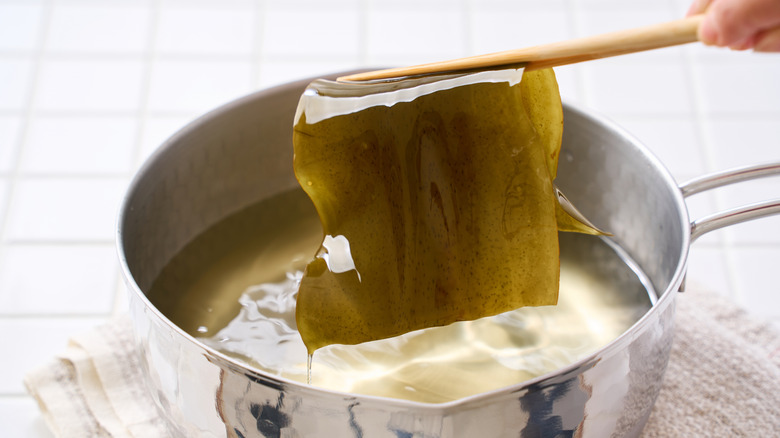
So, how exactly do you use it? Well, you'll need to make what's called a kombu dashi, which is a soup stock that you can get when you "cook" a piece of kombu in hot water. Add the stock one tablespoon at a time into your soup until it tastes right (but the vibe's particularly sublime when you combine it as a base for Japanese-inspired dishes, like miso soup).
Preparing kombu is an art
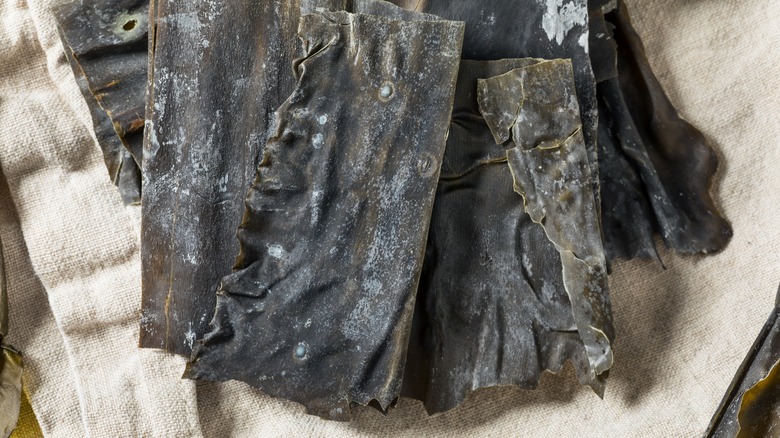
As awesome as it is, the bad news is that if you're looking for a "one and done" ingredient, then kombu isn't it. You'll need to prepare it very carefully, or else, your kombu dashi is going to taste bitter instead of having the super-savory you were hoping for. Let's say you've got a piece of kombu on the countertop right now, the first thing you need to do is cleaning it. Fresh kombu will have a layer of white powder on top, which you'll need to clean with a damp paper towel. It's nothing concerning and is actually natural. This white powder is called mannitol, a type of sugar produced by the kombu, and can actually contribute to the flavor (this is why you should leave a teeny bit of it to take advantage of its flavor).
Since kombu comes dried, you'll need to rehydrate it by soaking it in clean water for at least 30 minutes. The longer it soaks, the more intense the flavor becomes — so if you've got time, let it sit overnight in the fridge. That'll crank the umami in your stock to the max.
Simmer the piece of kombu on medium heat, and as we mentioned earlier, you'll want to take the piece of kombu out of the pot just before the water starts boiling. A good trick to know when this is is by looking at the bubbles in the pot. The moment bubbles start floating up from the kombu, that's when you should take it out. And there you have it, perfect kombu dashi for your soup!
Here's how you can buy kombu
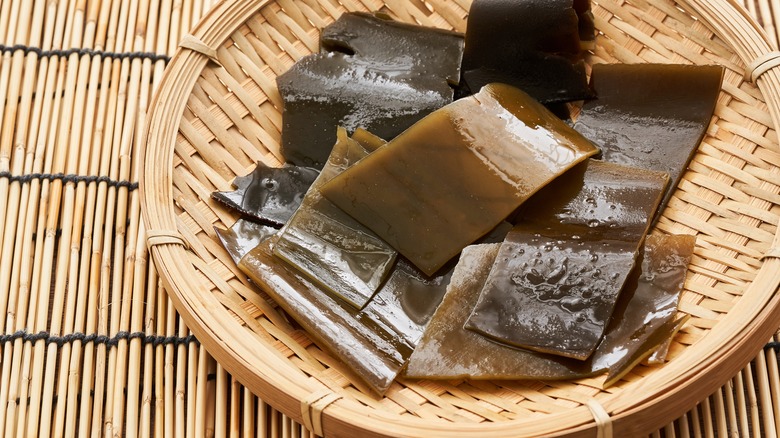
Finding kombu at your average grocery store can be tricky, so head to a Japanese or Asian specialty market where it's almost guaranteed to be in stock. Here's what to look for: dried kombu (dashi konbu) is your go-to for soup-making and the most widely available option. You might also spot shaved kombu (oboro konbu) — while it can work for broth, it's typically used as a garnish. Skip the pickled kombu (su konbu) entirely — it won't work for soup prepping.
No specialty store nearby? No problem — just buy it online. Amazon actually stocks kombu from multiple brands in all the varieties and forms you could want. A 4-ounce pack of dried kombu from WEL-PAC is $8.17. In case you prefer something a bit more artisanal, you can spring for hand-harvested kombu from Eden for $14.20 per 2.1-ounce pack. There's also USDA-Certified Organic kombu, perfect if you want all your food to be GMO and preservative-free — Ocean's Halo Organic Kombu's the name, and you can get a 1.76-ounce pack for $11.99.
All that money for just one or two ounces of kombu might sound way too expensive ... but wait! You can use a single piece of kombu up to two times (just fish it out and store it somewhere after the first use). The second batch might not taste as strong, but it'll still work to amp up your soup's flavor. And once all the umami's been extracted? Dice it up and scatter it on top of your soup as a topping — every ounce can be put to use.