

Trade In Your Lazy Susan For This Genius Storage Solution That Actually Works For Lower Kitchen Cabinets
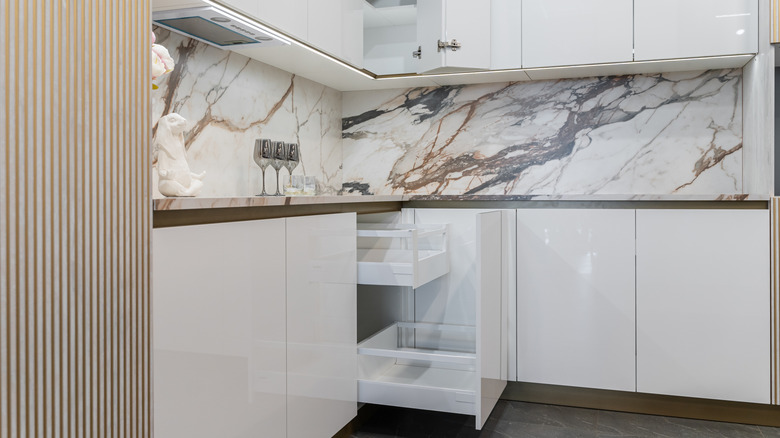
We may receive a commission on purchases made from links.
If you've ever crouched down, rummaged through a lower kitchen cabinet, and emerged with the wrong pans, bowls, or pantry items, you know why we're talking about this. Kitchen storage can be frustrating, particularly when there's not enough of it. But there's a really simple solution, one that sends your lazy Susan back to whichever century it came from. It's a pull-out cabinet drawer, alternatively known as a pullout tray, roll-out, or sliding shelf. Whatever you call these kitchen wizards, they're basically changing the way we store and access cooking tools.
These practical, clever inserts allow drawers and trays, laden with cooking gear or pantry staples, to slide smoothly toward you — eliminating that awkward rummaging for hidden items you urgently need. You can opt for tray‑bin styles for platters and baking sheets, deep slide‑outs for small appliances and bulky cookware, or low-height versions for spices or oversized cooking utensils such as ladles and spatulas. No only do these pull-outs make things more accessible, they can double as available storage space when stacking two within the same cabinet.
In some ways, pull-out tray drawers work the same as standard sliding kitchen drawers, but there's no need to fit these in defined spaces. That means they're handy for those lower kitchen cabinets with hard-to-reach depths. The most convenient versions, such as these Seinloes pull-out cabinet organizers from Amazon, are expandable to fit your specific space, and they're super easy to install using included heavy-duty adhesive strips — no tools, bolts, or brackets required.
Installing pull-out cabinets in your kitchen
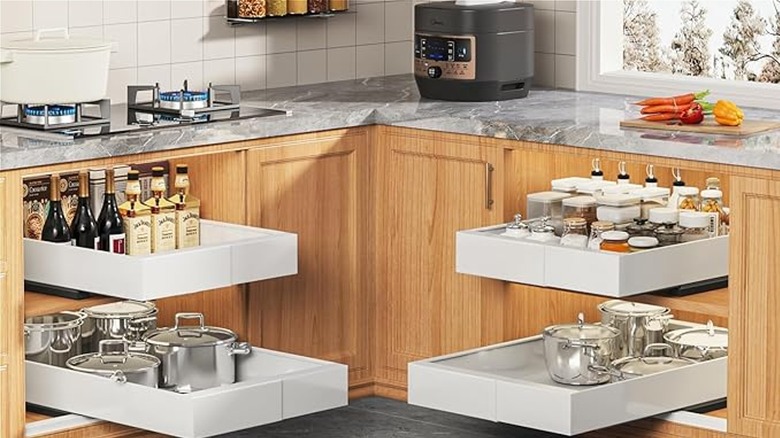
Installing adhesive-strip pull-out drawers for kitchen organization is a snap compared to traditional bolt-and-bracket setups. First, you'll need to thoroughly clean and dry the interior surface of the cabinet to avoid bits of dust or dirt jamming up the strip adhesive. Rubbing alcohol on a lint-free rag should do the trick. Next, peel off the protective backing from the heavy-duty double-sided adhesive strip, then press the glued rail (or drawer piece if the rail comes already attached) firmly into place inside the cabinet, pressing firmly for at least a full minute to make sure it securely sticks into place.
Since the strip adhesive is purposely strong and difficult — if not impossible — to reposition, it's a good idea to mark the placement spot using a ruler and pencil. If you do happen to adhere it crooked or even backwards, reviewers recommend carefully sliding dental floss underneath the drawer and working it back and forth to gently separate the adhesive without damaging the surface. That's a home remedy recommended by some folks, but don't count on it as a foolproof "oops fixer" — measure and mark!
Once you're confident everything is aligned and firmly adhered, these drawers typically support a good amount of weight due to materials such as carbon-steel frames. Compare materials and weight limits of available pull-out cabinet trays, especially when storing heavy cookware, and feel free to reinforce with screws if desired. For more helpful tips, check our articles on organizing kitchen cabinets and storgage hacks for deep pantry shelves.