

This Common Mistake At Thai Restaurants Is Costing You The Best Flavors Of The Food
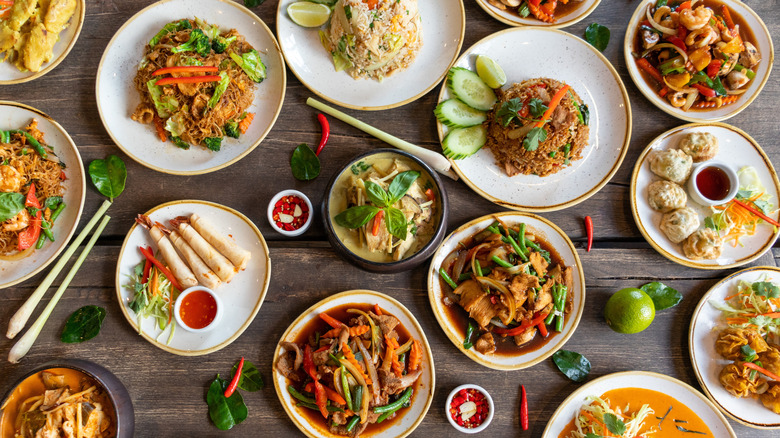
Even if you stick to the same few dishes at your favorite Thai restaurant, you might be missing a component that would help you get the most out of your meal. While traditional Thai dishes are as diverse as any other type of cuisine, there is a balance of flavors that many of the best have in common. It's a unique mixture of sour, sweet, salty, and spicy. Most cuisines use these flavors, but instead of relegating sweetness to desserts or making heat an optional addition like many European dishes, you'll find all four of these flavor profiles in most savory Thai recipes. They tie directly into something many people fail to utilize: the four condiments you'll find at Thai restaurants.
While you'll see variations, they are usually sugar, chili flakes, fish sauce, and chili vinegar sauce, and ignoring them is one of the biggest mistakes you can make at a Thai restaurant. Like salt and pepper or hot sauce, those condiments let you balance a dish to your personal taste. In fact, the meals are prepared with the expectation that you'll make those flavor adjustments. For instance, the chili flakes are there for exactly what you think, heat,heat. They may come immersed in oil. Alternatively, you can use a little sprinkle to help fix meals that are overly sour or too bitter for you.
Make full use of the condiments at Thai restaurants
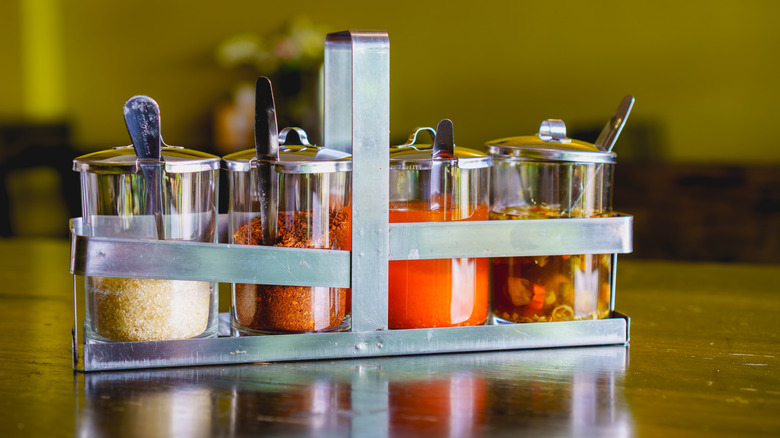
Two of the condiments are salty and sour respectively. The salty option is almost always the Thai style of fish sauce, and it functions much as soy sauce would at a Chinese or Japanese restaurant. Use it to add salt, but know that since fish sauce is made from fermented fish, it has its own unique and complex flavor, with a little bit of funk. The sour condiment is usually prik nam som. This is chili vinegar and is usually made simply with chopped and pounded fresh hot chilis and white vinegar, sometimes with optional added garlic. With both acid and heat, this is the one to use on that pad Thai that's a little too sweet.
So don't be shy with a Thai condiment. They are there for a reason. The acidic chili vinegar is particularly underrated if you aren't used to it. That item can liven up fried rice and Thai soups, which often have a strong sour profile compared to Western versions. Meanwhile spicy curries can be lightly mellowed with sugar without actually making them sweet. Fish sauce is also great in curry, but try it in some stir-fried meat dishes too where it will boost the umami flavor while adding its own salty and tangy notes. The reality is once you get to know them all four Thai condiments at a restaurant are all purpose, and even your favorite dishes will be better off for using them.