

How The Caffeine Content In Matcha Compares To Black Tea
We may receive a commission on purchases made from links.
When it comes to a morning beverage, many people are looking for a hit of caffeine to get them through the day. On the other hand, some people seek to lower their caffeine content whenever possible, since too much caffeine can cause anxiety and insomnia, among other symptoms. No matter which camp you belong to, it's important to know how much caffeine is in whatever drink you're imbibing, including matcha.
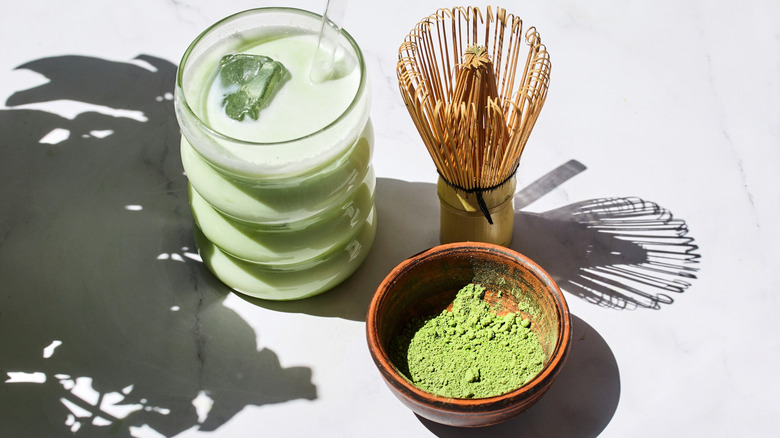
Matcha is a kind of green tea that is ground and whisked into hot water, meaning that unlike with other kinds of tea, you directly drink the grounds. This may contribute to matcha's higher caffeine content, as a cup contains about 70 milligrams. The average cup of black tea, meanwhile, has only about 47 milligrams. Both of these numbers can vary based on several factors, but as a general rule, matcha is more caffeinated than black tea. It's also more caffeinated than other varieties of green tea, which average 29 milligrams per cup.
Of course, if you want matcha but don't like to drink too much caffeine, there are caffeine-free matcha varieties out there. For instance, the brand Caff Off sells decaf matcha in both traditional culinary form and flavored varieties. The taste may be slightly different, but it's worth checking out if it fits your lifestyle better.
How matcha's caffeine content compares to other drinks
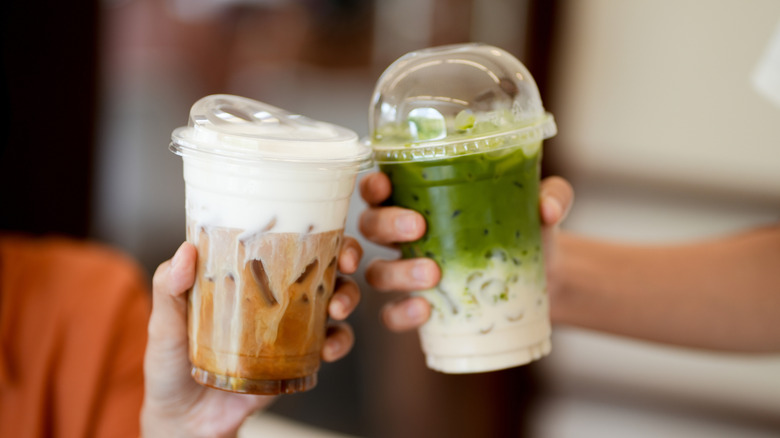
While matcha has more caffeine than other teas, the caffeine content is still dwarfed by other drinks; namely, coffee. For instance, the average cup of black coffee can have 120 milligrams of caffeine, nearly double the amount of a cup of matcha. In addition, a single ounce of espresso can have 63 milligrams of caffeine, which equates to over 500 milligrams per cup. This is why some people who like matcha but want a stronger hit of caffeine make a dirty matcha, which combines matcha and espresso. Adding a shot of espresso to a cup of matcha would give you a drink with 133 milligrams of caffeine, more than a cup of black coffee. Up it to two shots, and you get a whopping 196 milligrams of caffeine. That's certain to wake you up first thing in the morning!
When it comes to soda, matcha takes the cake for caffeine content. For instance, a cup of cola averages only 33 milligrams of caffeine, while most citrus sodas and root beers have no caffeine at all. Energy drinks, however, tend to have more caffeine, with a cup containing 79 milligrams on average. Energy shots outperform any other drink by a country mile when it comes to caffeine, containing 100 milligrams per ounce, or 800 milligrams per cup. This means that while matcha will give you a nice little burst of energy, it's not nearly the strongest drink out there.