

It May Feel Wrong, But You Actually Can (And Sometimes Should) Peel Strawberries
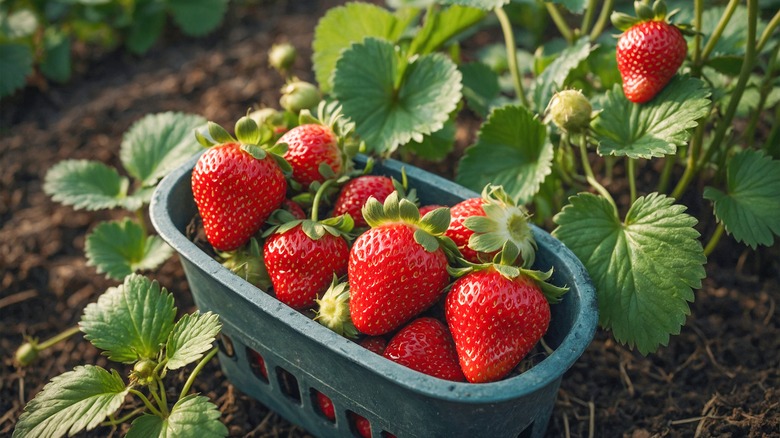
The joy of eating strawberries extends beyond their sweet and tart taste; one of their best qualities is just how effortlessly snackable they are. All you need to do is give one a simple wash and pluck out its stem before munching on it. As it turns out, however, there is merit to giving strawberries some extra prep. It may seem unnecessary to peel a strawberry, but there's a reason why you should — it improves the flavor and texture of the fruit.
Technically speaking, strawberries are safe to eat without peeling. However, taking the skin off them can make the strawberries taste sweeter. A reason why that may be the case is that some fruits have a higher concentration of the bitter-tasting tannin compound on the skin. By peeling the fruit's skin, you remove the bitterness, making its sweet flavor shine more. Peeling can also improve the texture of strawberries. It helps get rid of the crunchy seed-like bits present in the skin (these are called achenes) — eliminating the grainy mouthfeel that sometimes comes from eating them. In fact, peeling strawberries is something that legendary chef José Andrés very much recommends. "If you never had a peeled strawberry, you don't understand strawberries," Andrés shared on YouTube.
How to peel a strawberry
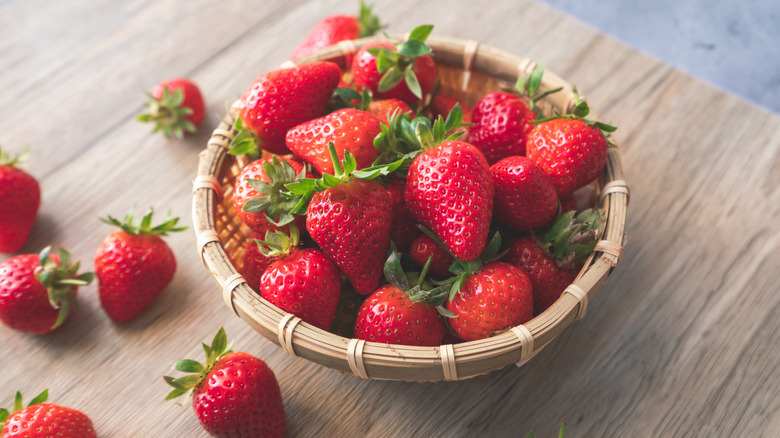
So, how do you peel a strawberry? Start by washing the fruit, ideally with baking soda. Then, grab a pairing knife to begin the careful peeling process. You'll want to be careful how you go about it. One option is to chop the top part of the fruit so you have a flat and smooth surface. Once done, place the berry on the board with the chopped side facing down so it's stable. You can then slice the fruit, rotating and repeating the process until the skin is entirely off. An alternative is to stick a fork into the strawberry to hold it in place as you gently make your way down with the pairing knife.
Admittedly, although peeling may make a strawberry taste sweeter and give you a smoother mouthfeel, it is a rather time-consuming process. That's why it's wise to do the extra work only when it will make a noticeable difference. For example, peel the strawberries when you're eating them on their own or turning them into black and white chocolate-covered treats. You might also appreciate the peeling process when adding sweet and smooth strawberries into a salad or when you're making strawberry bruschetta, where the fruit is the star ingredient. However, if you plan on, say, juicing the fruit and turning it into a smoothie with several other ingredients, the distinct flavor and texture of the skinless strawberry might likely go unnoticed — so it might not always be worth the effort.