

Avoid This Common Mistake When Serving Yourself At A Thai Restaurant
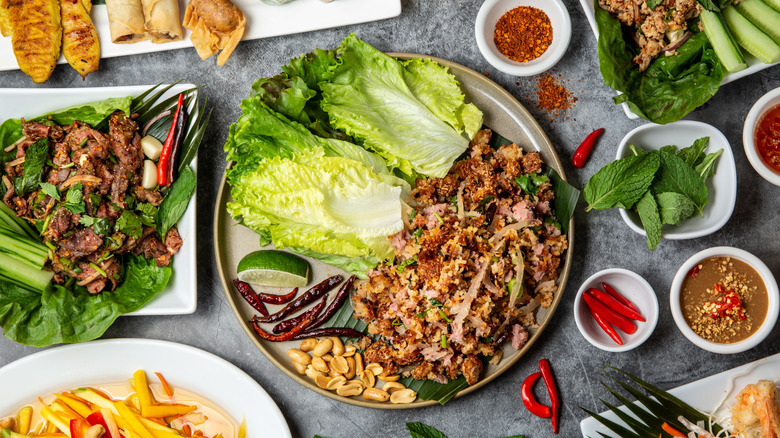
Thai dining etiquette can seem daunting to an outsider at a large, extravagantly laid-out table. Eat with your spoon, not your fork. Don't ask for chopsticks if they aren't already on the table. Don't stir through the serving bowl looking for the perfect piece of chicken as if you're on a treasure hunt. No finger-licking, no noodle-slurping. The list might seem never-ending and too hard to remember, but much of it boils down to two simple things: restraint and respect. This is one of the reasons you always serve rice to those around you before taking some yourself. This is also why one of the biggest mistakes you can make is heaping your plate with a little bit of everything — a gesture that signals both greed and a lack of consideration for those around you.
Like much of Asian cuisine, a Thai meal is designed for sharing. There will be a lot of rice (most likely two types: jasmine and sticky rice), a curry or two, a stir-fry, perhaps a soup, vegetables, fish, or meat. Set all this on the table at once and it can resemble an all-you-can-eat buffet, but treating it like one would be one of the many mistakes you can make while eating Thai food. The correct way to eat is to serve yourself a portion of rice and a spoonful of two or three different dishes at one time. This way, you're ensuring that you leave enough for everyone around the table, and if you do run out of a particular dish, repeat orders can always be placed for those.
Slow and steady
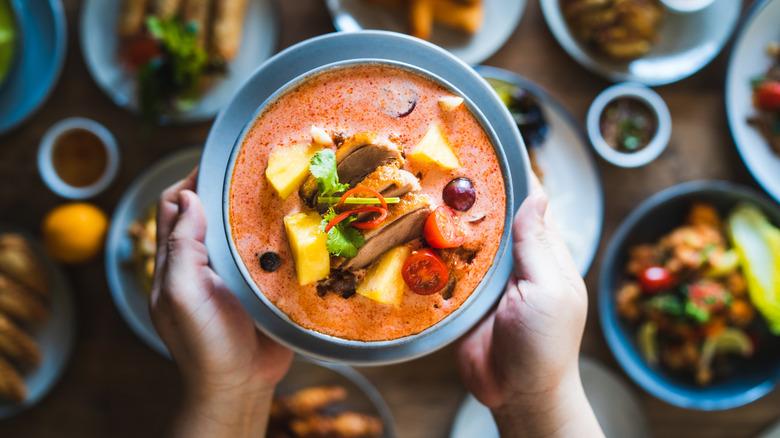
Thai meals are often lengthy, social affairs built on the foundations of unhurried eating and easy conversation. It's recommended to savor one dish at a time, rather than muddle two or three flavors together. A complete Thai meal is designed to balance contrasts, and the best ones will include a wide range of recipes: crisp salads with a sharp sweet-sour hit, fragrant curries mellowed by coconut milk, fiery stir-fries or grilled meats with a chili edge, and lighter sides of vegetables or soup to cool the palate. Each dish plays its part, but the pleasure lies in giving every flavor its own moment. Once you've tasted everything, you can always go back to something you really liked. Loading your plate up will leave you with a soupy mess (the soup, incidentally, is the one thing you will get an individual bowl for).
Unlike in parts of Southern Europe or South Asia, where hosts often press their guests to take "just one more helping," Thai hospitality doesn't hinge on how much you can eat. The table will always be abundant, but the expectation is that everyone eats at their own pace, takes what they need, and stops when they're satisfied. There's no need to prove your appreciation by overeating or forcing down a second serving. In fact, eating too greedily can come across as rude rather than grateful. What truly signals enjoyment is much simpler: a smile, a word of praise, a question about a dish's flavors or ingredients. Abundance is part of the meal, but restraint is what shows respect.