

Why You May Want To Avoid Spicy Foods On A Flight

When preparing for a flight, your food choices can significantly impact your comfort during travel. While they do have health benefits, chowing down on spicy foods before or during a flight can have some rather unexpected and uncomfortable side effects. Even pilots agree. The reason for this lies in how your body reacts to flying, changes in air pressure, and increasing altitudes. Your gastrointestinal (GI) system is especially affected. At cruising altitude, the air pressure in the cabin is significantly lower than at sea level, which can cause gases in the body to expand. This expansion can lead to bloating, cramping, and increased flatulence, which may break the standard rules of flying etiquette. When you add spicy foods into the mix — often high in capsaicin, which stimulates acid production and intestinal activity — it can intensify these symptoms and create discomfort.
Spicy foods can also trigger or worsen acid reflux and heartburn, especially when consumed before flying. Capsaicin, the active component in chili peppers, affects the lower esophageal sphincter, the valve that keeps stomach acid from entering the esophagus. With this valve weakened, the risk of heartburn and reflux increases — particularly in the seated and often slightly reclined positions experienced during a flight. Additionally, airplane cabins have very low humidity levels, which can already cause mild dehydration. Dehydration during a flight can lead to fatigue, headaches, and an overall feeling of sluggishness, which is not ideal for long-haul travelers. It can also exacerbate jet lag and make it harder to adjust to new time zones.
How spicy foods affect your body at high altitudes
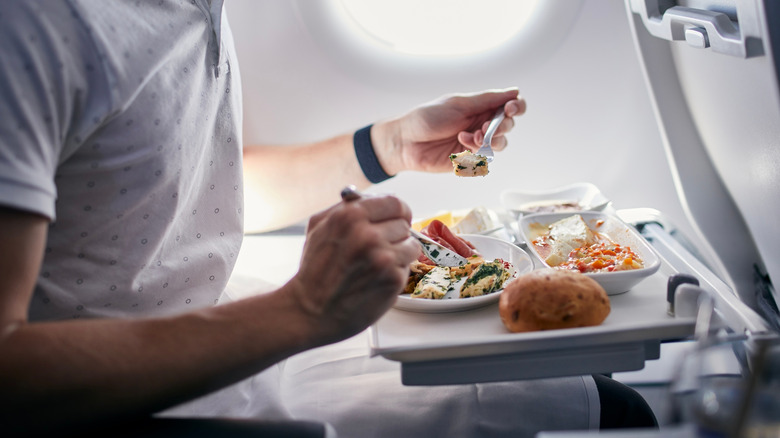
One major reason to skip the spicy meal on your flight is that taste perception changes at different altitudes. Our ability to perceive salty and sweet flavors decreases by about 30% while flying, according to one study by Lufthansa (via Jerusalem Post). However, spiciness is perceived differently since capsaicin triggers pain receptors rather than taste buds. This often leads passengers to crave stronger flavors and over-consume spicy foods, not realizing they're eating more than they can tolerate under normal conditions. This miscalculation can result in nausea or upset stomach mid-flight, when bathroom access is limited and air circulation is poor.
Spicy foods also interact with the nervous system under stress. Flying — especially during turbulence or takeoff — can trigger mild anxiety in many, leading to a stressed digestive system. Capsaicin stimulates the release of endorphins and adrenaline, which may compound the physical stress already being experienced. The combination of heightened anxiety and an overstimulated gut can contribute to diarrhea, stomach cramps, or nausea. And spicy meals can accelerate bowel activity, which could lead to an urgent and inconvenient situation.
Finally, spicy meals can disrupt sleep patterns, something many travelers rely on during long-haul or overnight flights. Capsaicin has been shown to raise body temperature and interfere with thermoregulation during sleep, potentially making it harder to fall or stay asleep. Spicy foods close to bedtime can lead to poor sleep quality. Given that flying already makes rest difficult due to cramped seats, cabin noise, and dry air, any further disruption can negatively impact your energy and mood upon arrival.