

15 Foods You Should Never Store Together (And Why It Matters)
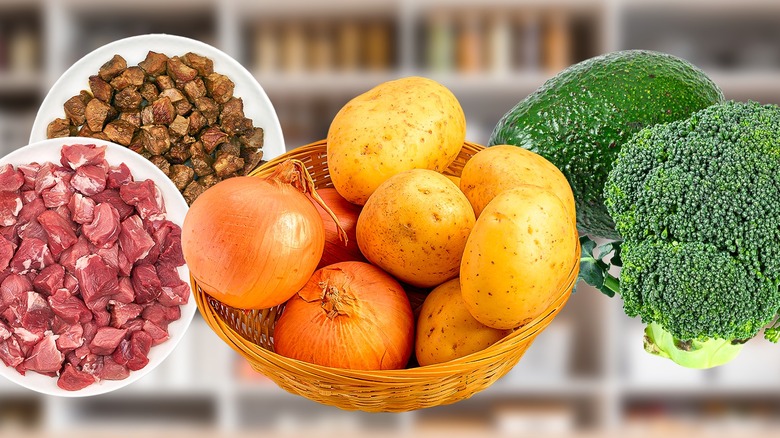
When you get home from a tiring trip to the grocery store, it can be tempting to throw everything into the fridge or pantry together, close the door, and forget about it. However, storing certain produce together could shorten their lifespan considerably, which is going to cost more money in the long run.
In the case of fruits and vegetables, the problem is often the release of a gas called ethylene, which is produced by certain plants as they continue to ripen after picking. Some produce is very sensitive to ethylene, meaning that storing them near an ethylene producer can be bad news, and may result in the ingredients spoiling very quickly. Often, foods that match brilliantly with each other on the plate are a nightmare when stored together raw. From apples and bananas to potatoes and onions, many common food pairings shouldn't be sharing a space in the fridge or kitchen cupboards.
By understanding which foods are not compatible for side-by-side storage, you can help all of your food to last longer and prevent cross-contamination that could potentially make your family sick. Let's take a look at 15 foods you should never store together.
Onions and potatoes
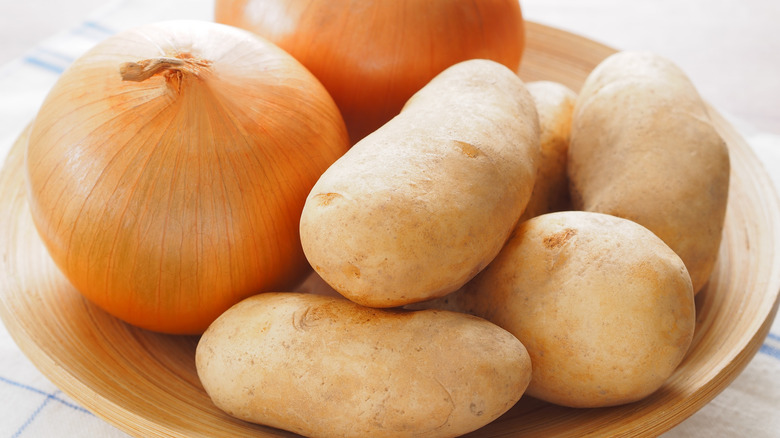
Since many people store both potatoes and onions in the pantry rather than the fridge, it makes sense that they would often be stored together. While a cool dark space is a good option for both vegetables, storing them apart will help the longevity of both.
Potatoes are sensitive to ethylene gas, and low levels can cause them to shrivel. If they are exposed to higher concentrations, the potatoes can sprout prematurely. Any ethylene produced by the onions will contribute to this if they are stored close together. Additionally, the strong scent from the pungent onions can transfer to the potatoes, and remains even after they have been cooked.
Conversely, the high moisture content in potatoes can negatively impact onions, too, as they should be stored in a cool, dry place. This mutual spoiling of onions and potatoes is a good reason to keep them separated, even if they are kept within the same cupboard.
Bananas and pears
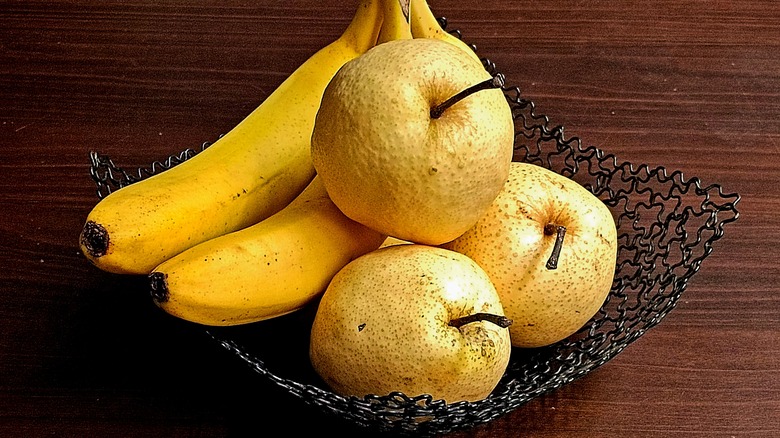
Storing different fruits together in the fruit bowl is something that most of us do without even thinking about it, but in some cases it is a sure fire way to reduce the freshness of the produce. Bananas and pears are an example of a pairing where combining them can be detrimental to both fruits.
Bananas and pears booths produce significant amounts of ethylene, meaning they cause other produce to ripen more quickly. The issue with this coupling is that both fruits are also very sensitive to the gas, and begin to decay quickly when exposed to it. If you have purchased particularly green bananas or firm pears, storing them together for a short while could work in your favor, but if the fruit you have bought is ready-to-eat, keep them in separate places.
Pears actually ripen inside first, which means that you won't notice the negative ethylene effects until it is too late. If the outside is beginning to feel overly soft, chances are the inside will have gone too far. Instead, leave them at room temperature but away from ethylene producers until they soften slightly, then transfer to the fridge to keep them fresh.
Cauliflower and apples
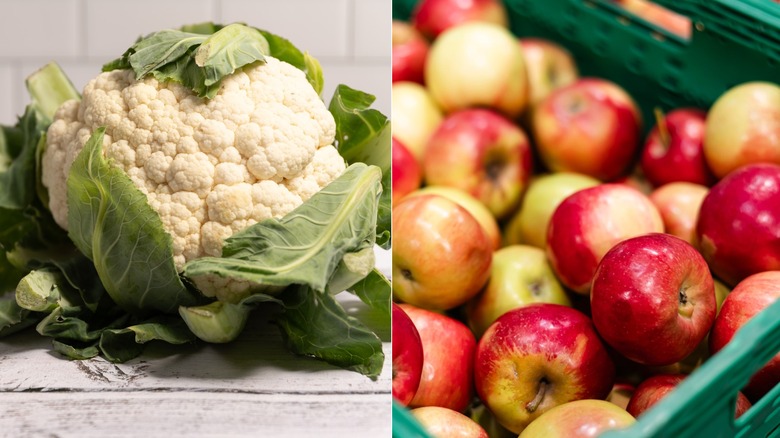
When you buy fresh cauliflower at the store or market, it is usually crisp and firm, and if you want it to stay that way, you should be careful where you store it. Simply throwing it in the fridge on a shelf shared with fruit, such as apples, can drastically reduce its shelf life.
As a member of the Brassica family, cauliflower is extremely sensitive to ethylene, and the effect will be visible fairly quickly. The white head of the plant — known as the curd due to its resemblance to cheese curds — will become discolored and turn yellow, signaling that it is spoiling. While it is unlikely you would go out of your way to store cauliflower and apples together, they both often end up in a salad drawer together, and the high ethylene production of the apples will turn the cauliflower quickly. The same applies to other cruciferous veggies, such as broccoli, Brussels sprouts, and cabbage, and all should be stored away from the potent apples. Keep your cauliflower in the crisper drawer for optimum freshness, and move the apples somewhere that they will be less of a menace.
Mushrooms and garlic
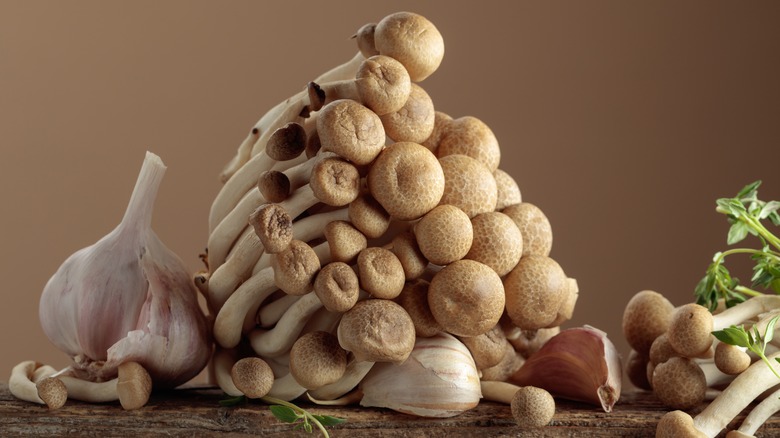
If you buy mushrooms that you are planning to keep for a few days rather than eat immediately, you will need to consider what you are storing them near. Mushrooms absorb flavor and odors well, which is great news when you are cooking with them and adding seasoning, but you need to keep them away from any produce that could contaminate them in the meantime.
Garlic is a delicious way to flavor mushrooms as they are cooking, but storing them together in the fridge means the mushrooms will absorb the pungent garlic flavor during the time spent there. The best way to store mushrooms is in a paper bag to protect them from both odor and moisture, and keep them cool. There is actually no reason to store garlic in the fridge, unless you have already peeled the cloves. Store in a garlic cellar in a cool cupboard instead, where the chances of ruining the delicate flavor of the mushrooms are zero.
Uncooked and cooked meats
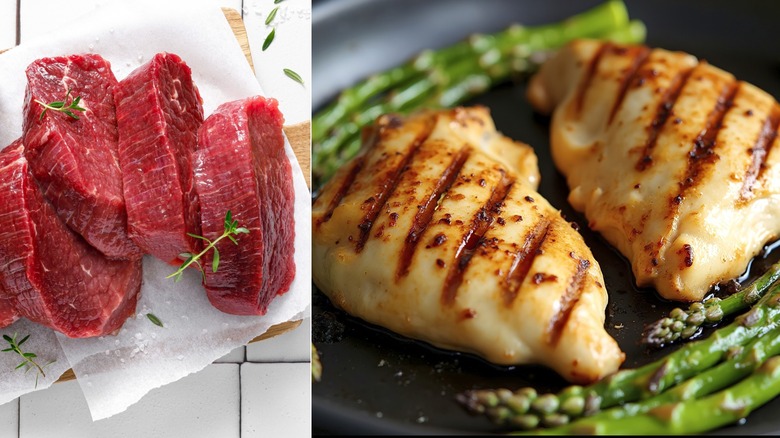
When it comes to food storage in the fridge, there is one golden rule that must be followed to keep everyone safe — uncooked and cooked meats should not be stored together. Cross-contamination can lead to food-borne illness, and storing raw meat next to cooked food, or any other food that won't be cooked, can be incredibly dangerous.
Bacteria such as Salmonella, E. coli, and Campylobacter can all be found in raw meat and poultry, and cooking the meat will prevent illness. If you are storing the raw meat near cooked meat in the fridge, however, the chance of contamination will increase, and you could get sick from eating the previously-cooked food. The USDA recommends separating cooked and raw meat in the fridge — separate shelves are the best idea, with the raw meat being at the lowest point in case it drips. You should ensure they are both fully wrapped up or placed in plastic bags to further prevent contamination. Once you remove the food from the fridge, you can reduce the risk further by using different cutting boards and knives and washing your hands thoroughly after handling either of them.
Melon and peaches
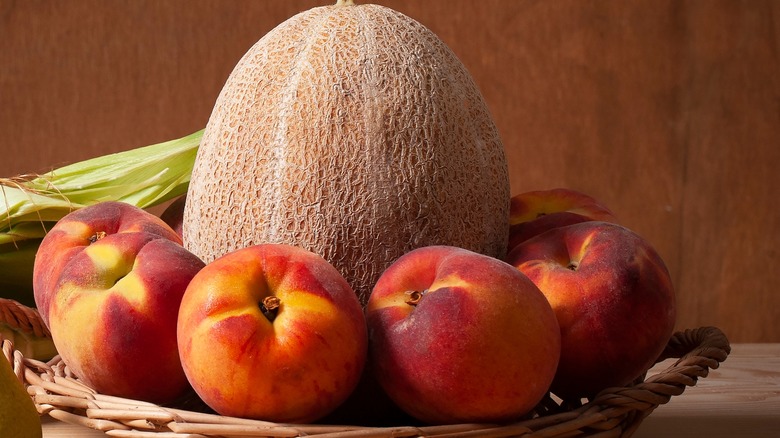
Melons and peaches are both summer fruits that you could quite easily buy at the same time and store together. However, this is not a good move, and could result in both fruits deteriorating in quality quickly.
Melon, especially cantaloupes, and peaches are both ethylene producers, and are both sensitive to the gas too. This means that storing them side by side can cause both fruits to start decaying much more quickly. Peaches are notoriously sensitive, bruising at the slightest touch, and it turns out that even gases can harm them in enough quantity. The best way to store peaches is to keep them out on the counter until they are close to ripe, then transfer to the fridge to prevent further ripening. Melon can also stay out until it ripens, unless you have cut it, in which case it should be stored in an airtight container.
Avocados and bananas
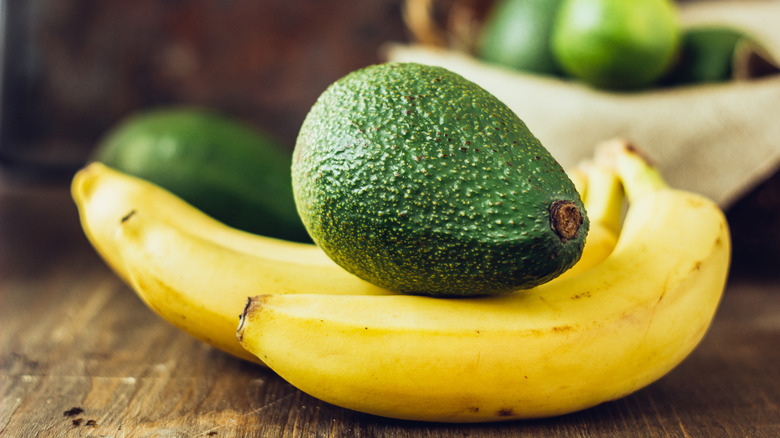
If you are a regular eater of avocados, you will know how difficult it is to get them perfectly ripe. If it is firm when you bring it home from the store, it will remain rock hard until one day you pick it up and it has turned to mush, having apparently been edible for all of two hours. Storing them near bananas is just going to make matters worse, since the ethylene produced by the bananas is going to speed up the decay rate of the highly sensitive avocado.
If you desperately need to ripen your avocado quickly, especially if you want it a bit softer for something like homemade guacamole, you can try to use a controlled method to put the ethylene sensitivity to good use. Store one avocado with a banana in a brown paper bag, but check on it regularly. If you can catch it just at the sweet spot where it is fully ripe but hasn't turned, you could end up with a beautifully edible avocado and a nicely yellow banana, since the avocado also causes it to ripen. For most situations, though, keep them apart to prevent a mushy mess with both fruits.
Apples and pears
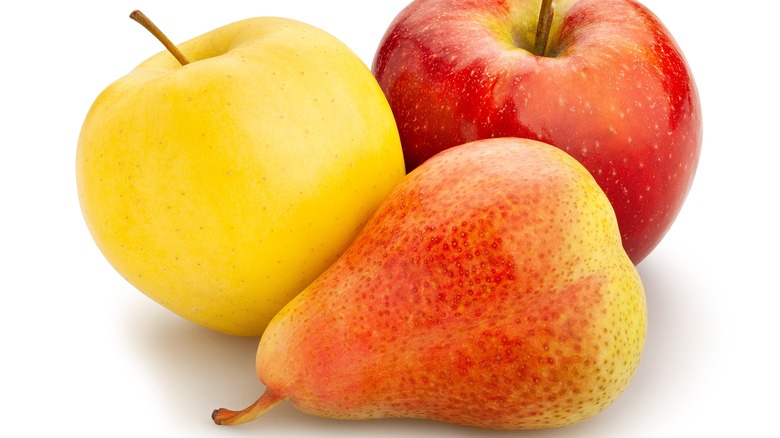
Apples and pears are often bought together and eaten in a similar way, so storing them next to each other seems natural. However, they are both climacteric fruits, meaning that they are picked from the tree before they are ripe, and continue to ripen afterwards, releasing plenty of ethylene gas as they do so. Apples are particularly high producers, and since both fruits also happen to be very sensitive to ethylene, it means that ripening and therefore decay will speed up.
Pears can be a tricky fruit to get to just the right stage of ripeness, and under-ripe pears are not pleasant to eat. Ripe pears, on the other hand, are a joyous, sweet fruit, so it is worth persevering to get them spot on. Leave firm pears at room temperature, away from apples, until they are soft when you press gently on them, which indicates that they will have ripened inside. If you don't plan to eat them all at that point, move them to the fridge to prevent further ripening.
Tomatoes and cucumbers
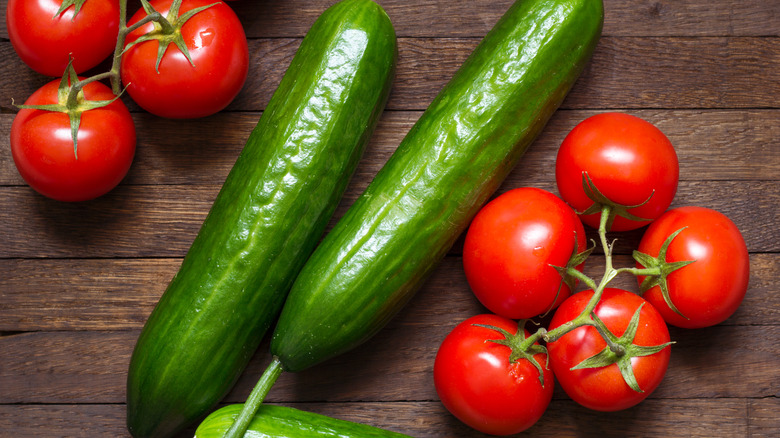
If you're planning to whip up a few salads throughout the week, chances are that tomatoes and cucumbers will both be on your shopping list. When you return home, however, store them separately if you want your healthy meals to have the best possible texture and flavor.
Tomatoes are moderate ethylene producers, and cucumbers are very sensitive to the gas, which means they will begin to spoil much more quickly if they are in the salad crisper alongside their fellow fruits-posing-as-vegetables. In fact, they shouldn't even be in the same part of the kitchen, as contrary to what most of us believe, tomatoes are best stored out of the refrigerator. Keeping them chilled slows down the chemical reaction that makes them tastier, so room temperature toms will have a deeper, more complex flavor.
Another handy hack for tomato storage involves the rather strange process of adding a little tape over the top, where the stem is or used to be. This reduces the chances of bacteria building up and spoiling the tomatoes, and can help them to stay ripe and delicious for well over a week, even when kept out of the fridge.
Apples and bananas
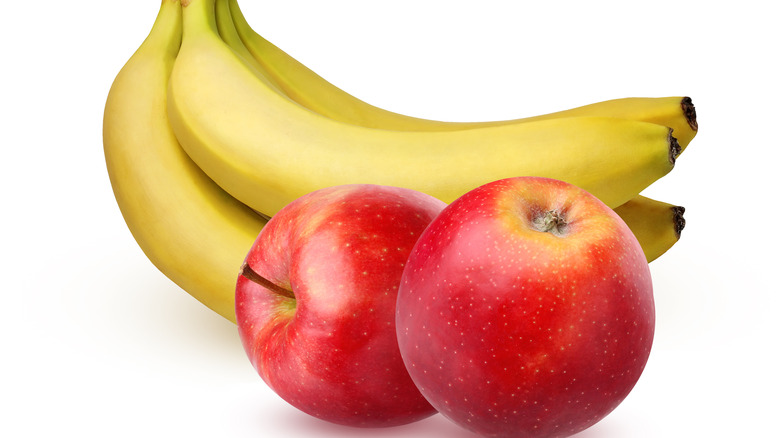
Along with berries, apples and bananas are the most commonly purchased fruits in the USA, and most fruit bowls will have a few of each hanging around in them from day to day. As great a fruit salad as they make together, you should actually be storing them far apart, since they are both ethylene producers, and are not a good influence on each other.
If you store these two fruits together for a reasonable length of time, they will cause each other to ripen more quickly, along with everything else in the fruit bowl too. If you are planning to eat all of them within a day or two, this won't be a major issue, but if you like to buy fruit for the whole week, you should reconsider their location to avoid prematurely blackened bananas and apples that have lost their crunch.
The best way to store bananas is to buy a banana "tree," which means they can hang separately from the rest of the fruit, and their ethylene-producing stems will be pointing upward. If you want to prevent the bananas from ripening each other, you can cover the stems with plastic wrap or aluminum foil, keeping them from turning too black soon after you buy them.
Melon and kiwi
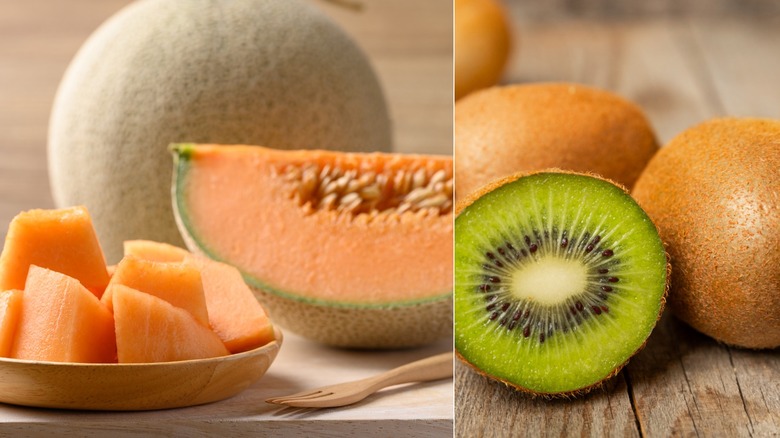
Melon and kiwi make a great pairing in a fresh fruit salad, but if you store them together in the fridge, it will shorten their lifespan. Kiwifruit are very sensitive to ethylene gas, softening much more quickly and starting to decay prematurely. All types of melon are also sensitive to the gas, but cantaloupe melon produces a lot of it, while honeydew creates a little too, as it ripens.
As long as you haven't yet cut into it, a kiwifruit can be stored on the countertop until it has begun to ripen. Once opened, it should be kept in the fridge, but still make space between it and the melon to prevent it from spoiling. Alternatively, you can store either whole or cut kiwi in the freezer if you want to keep it long-term, and know that you always have a few slices or cubes to add to an impromptu smoothie.
Tomatoes and spinach
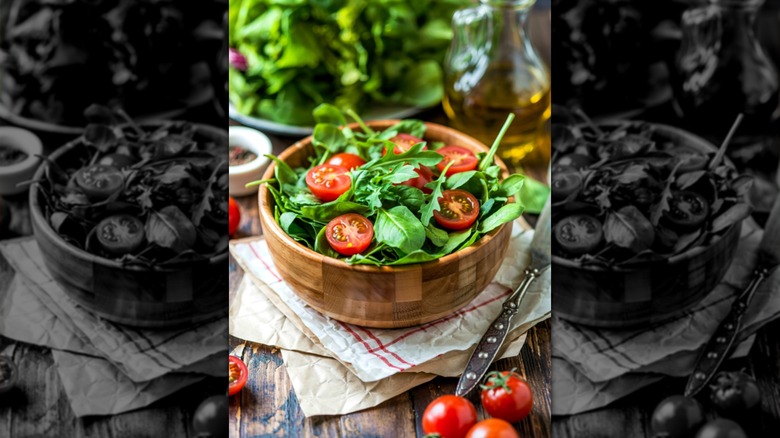
Spinach is a beautifully vibrant green vegetable that adds so much color and nutrition to salads, stir-fries, and even smoothies. If you store it near tomatoes, however, it won't keep its freshness very long. Spinach is incredibly sensitive to ethylene gas, and tomatoes create enough to cause the leaves to wilt and turn yellow before they should. If you have ever left a bag of spinach forgotten about in the crisper drawer, you will know how quickly it can turn slimy, so anything you can do to prevent that from accelerating will be welcome.
Spinach is also very sensitive to moisture, so don't wash it when you bring it home from the store, as it will encourage it to become soggy and will end up in the bin within a few days. Instead, add a paper towel to the storage bag to soak up moisture, and keep it in the crisper drawer, well away from those tomatoes.
Apples and oranges
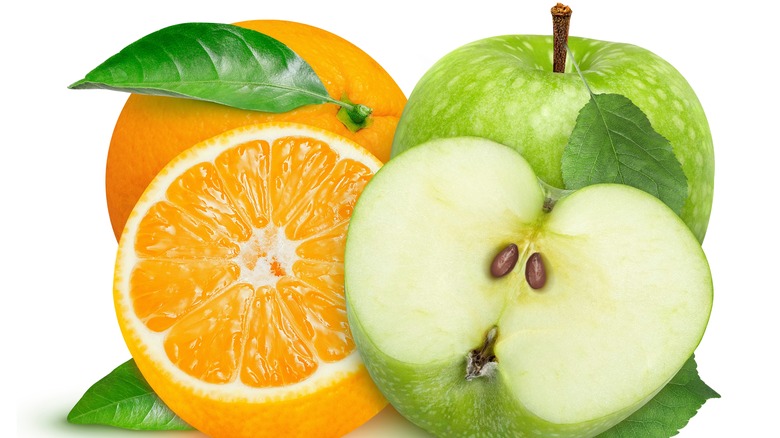
In an attempt to create a colorful fruit bowl in the middle of the kitchen or dining table, it can be tempting to add bright citrus, such as oranges, and a variety of colors of apples. This beautiful display, however, won't last long, as the high ethylene volume produced by the apples can have a negative effect on the oranges.
Most citrus fruits, including oranges, are moderately sensitive to ethylene gas, which causes mold to form and the rind to degrade. Oranges shouldn't really be in your fruit bowl at all, since they keep best at cooler temperatures, around 41 degrees Fahrenheit, where they will stay fresh for many weeks. To prevent moisture buildup, remove them from any packaging and store them individually. Whichever part of your fridge you choose to store them in, don't overcrowd them — they need space and good airflow to keep them at their best.
Broccoli and avocado
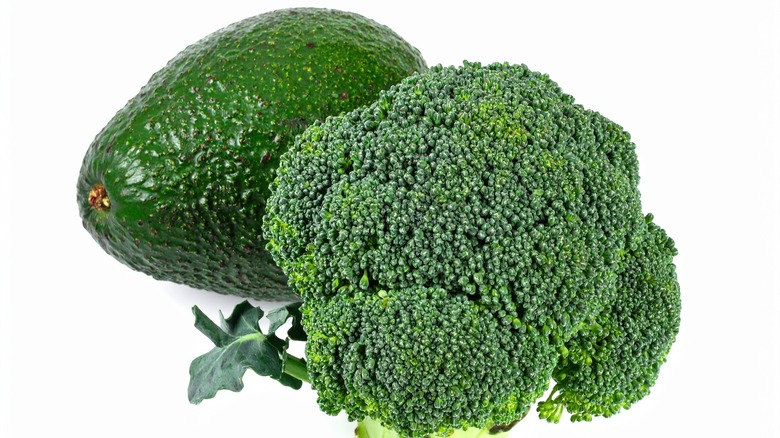
Fresh, crunchy broccoli is a delicious vegetable that packs a powerful nutritional punch, but storing it next to another health powerhouse, the avocado, could leave it looking and tasting a bit worse for wear. Avocados produce a lot of ethylene gas, and broccoli is particularly sensitive to it.
Instead of the distinctive green florets that are the highlight of fresh broccoli, when the vegetable is exposed to ethylene, it begins to yellow and spoil faster. Washing the broccoli too soon can also encourage decay, so keep it dry for as long as you can while storing it.
Avocados should be stored in a cool place outside of the fridge until they ripen, and then refrigerated to slow the ripening process and prevent them from becoming mushy. Keeping them away from broccoli and other cruciferous veggies will help to reduce food waste and let you enjoy your healthy veggies whenever you wish.
Cabbage and onions
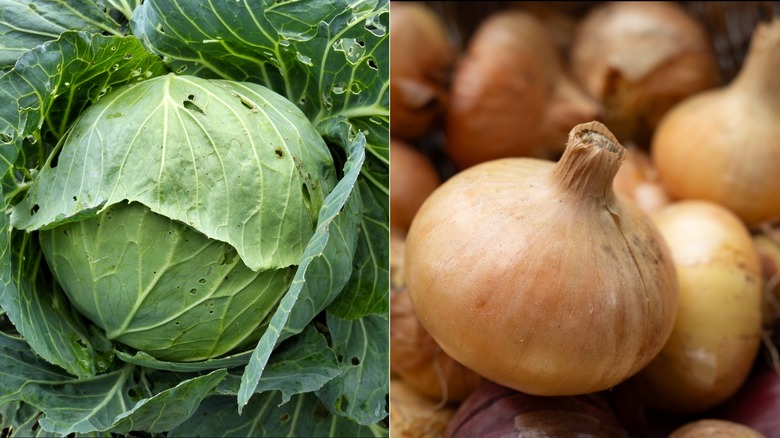
Cabbage is a pretty hardy vegetable that can keep fresh for months if stored correctly. However, if you keep it in the vicinity of onions, you will significantly reduce its shelf life. While cabbage and onions go nicely once cooked, it is best to store them far away from each other when they are raw.
As an ethylene producer, onions can emit a gas that will hasten the spoilage of Brassicas such as cabbage. If exposed to large amounts of ethylene, the leaves may begin to fall off, and it may begin to turn yellow. The sulfur compounds in the onion also cause a pungent smell to be given off — the same chemicals are responsible for making you cry — and the scent can flavor the cabbage if they are stored together for a while.
A good solution is to store cabbage in the fridge, even before it has been cut, and place onions in a dark cupboard instead. This will allow both vegetables to reach their maximum life, and keep the strong onion flavorings away from sensitive produce.