

The Name Brand That's Behind Some Great Value Cereals

America loves cereal. According to Civic Science, 70% of households eat it at least once a week, and 12% eat it almost every day. But with rising grocery prices across the board, and shrinkflation hitting cereal boxes hard, many of us are looking for wallet-friendly alternatives to the breakfast staple.
If you're worried about your grocery bill, we've got some good news. It turns out that many of Walmart's Great Value cereals are probably made by the exact same companies that sell the name-brand product, including Kellogg's and General Mills. Reportedly, the Great Value version of the nation's favorite cereal, Cheerios, is very similar to the real thing, for example.
While they might not have made it onto our list of the 20 best breakfast cereals, the (probable) pedigree of being produced by cereal big-hitters and prices that are sometimes half the sticker price, choosing Great Value cereals might be the smartest breakfast swap you can make.
Evidence that Great Value cereals are made by big brands
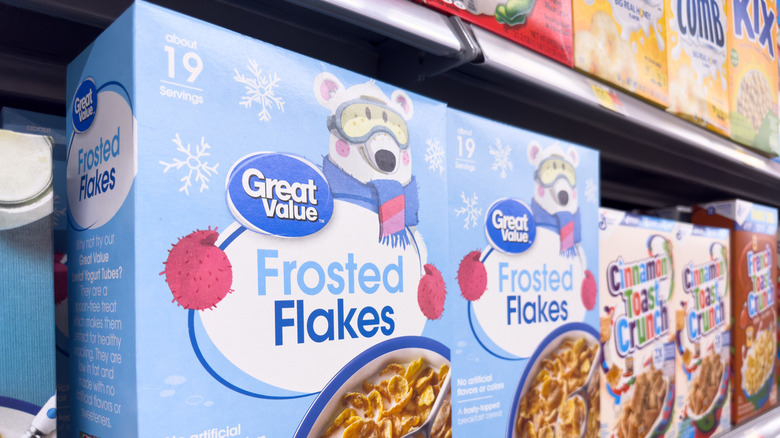
The true provenance of Great Value cereal has been a topic of discussion for a long time. After all, many of the cereals are almost impossible to tell apart in a taste test. It's unsurprising, then, that when smart shopping sleuths investigated they concluded that Kellogg's and General Mills are probably behind many popular Great Value breakfast favorites.
This is backed up by Reddit chatter. One Redditor, who claims their family member works in food packaging, confirmed that big-brand factories make store-brand cereals along with the expected name-brand products, while in another thread about a Kellogg's boycott a Reddit user questions why people avoiding Kellogg's would buy store brands when they're made by the company.
It's not just store brand cereal that might be an unexpected bargain. One study in The Journal Of Marketing claims that more than 70% of store brand products are made by national brand manufacturers on a private labelling basis (this means they get packaged as store brand).
We don't often get official confirmation that a specific store brand product is made by a household name, because admitting you produce an alternative to your flagship products simply isn't good business. Not only would it offer your customers a cheaper option, but it would also be free advertising for the store that sells the private labelled products. Given that low spending on marketing and advertising is part of what allow private labelled products to be priced so competitively, doing that work for the grocery store would give them a real leg up!