

7 Tips For Building The Perfect Poke Bowl

Before poke bowls became Instagram darlings stacked high with a rainbow of colorful toppings, they were a simple, nourishing staple in Hawaiian culture. The word "poke" (pronounced POH-kay) literally means "to slice" or "to cut crosswise into pieces" in Ōlelo Hawaiʻi, the indigenous language. For generations, native Hawaiians made traditional poke with freshly caught fish, cubed into small pieces, and seasoned with sea salt, limu (seaweed), and roasted kukui nut. Served as an everyday food, poke was an unpretentious way of honoring the gifts from and the abundance of the ocean, deeply connecting people to place through locally available food.
Today, poke has traveled far beyond the shores of Hawaii and has been reinvented everywhere from Los Angeles and Tokyo to Dubai. To get insider knowledge on how to build the perfect poke bowl, we turned to executive chef Ritchard Cariaga of Andaz Maui at Wailea Resort, who spends every day honoring this culinary tradition while sharing it with visitors from around the world. His advice is perfect for the home cook who wants to bring the fresh flavors of poke into their own kitchen — whether making it for the first time or looking for a few professional tips to refine their technique.
Choose the right fish
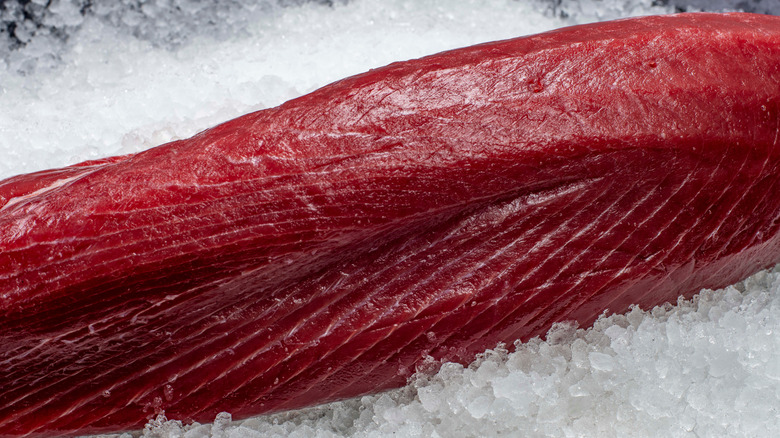
Your poke bowl is only as good as the fish you start with. "For me it's all about the fish — local first and fresh is always best," says executive chef Ritchard Cariaga of Andaz Maui at Wailea Resort. Traditionally, ahi tuna is the star of Hawaiian poke, but you can also experiment with salmon, hamachi (yellowtail), swordfish, or even octopus if you want to branch out. If raw fish isn't available, or if you prefer cooked options, consider using shrimp or seared scallops. If you are vegan or vegetarian, you can use tofu, and even beets can all be excellent alternatives to raw fish. What matters is that the main protein is clean, high-quality, and treated with respect.
Cariaga stresses the importance of sourcing good-quality ahi tuna for an authentic experience. "Ask your [fishmonger] for sushi or sashimi-grade," he recommends. But don't confuse "fresh" with never-frozen. For food safety, sashimi-grade fish is typically frozen first to kill any parasites.
The cut of the fish matters too. Look for center-cut loin pieces, which are cylindrical cuts of tuna sourced from the upper belly. It is generally a leaner cut than the belly and offers a firmer texture. You want to pick out a loin with a deep red color and minimal connective tissue. Dice the fish into small, even cubes about ½ inch each — small enough to pick up easily with chopsticks, but not so small that the texture disappears.
Start with a simple marinade
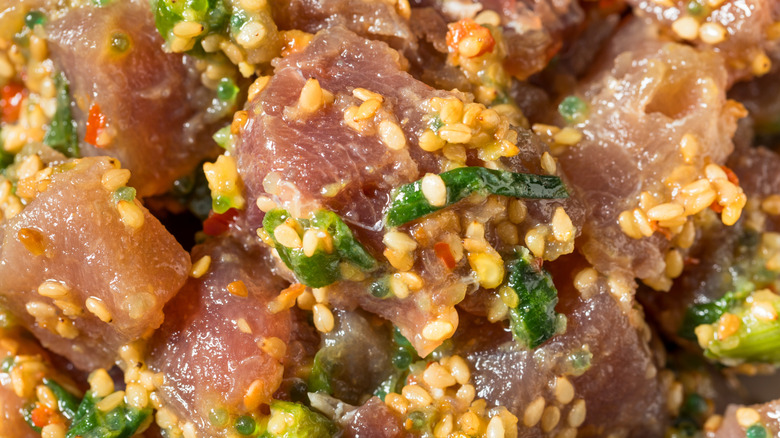
Now that you have your piece of sashimi-grade fish (or some alternative), the next most important step for a flavorful poke is the marinade. Marinate your cubed fish for between 15 minutes to a few hours before serving. A good marinade enhances the fish without overpowering it. Unlike ceviche, where fish "cooks" in the acidity of lemon and lime juice, poke marinades are designed to only season the fish, not alter its texture, so skip the citrus juice.
Ritchard Cariaga's approach is minimalist. "My go-to seasonings tend to be more simple that highlight the fish; Hawaiian salt, soy sauce, bit of sesame, and grated ginger." Start with that base. From there, you can experiment by adding a dash of chili flakes or thinly sliced Serrano peppers for spice, rice vinegar for brightness, scallions for aromatics, and sesame seeds for crunch.
Cariaga says, "Always taste as you go; the great thing about poke is that you can really make it your own." The secret, however, is restraint. Let the fish be the hero. This is your foundation — everything else builds from there.
Balance every component
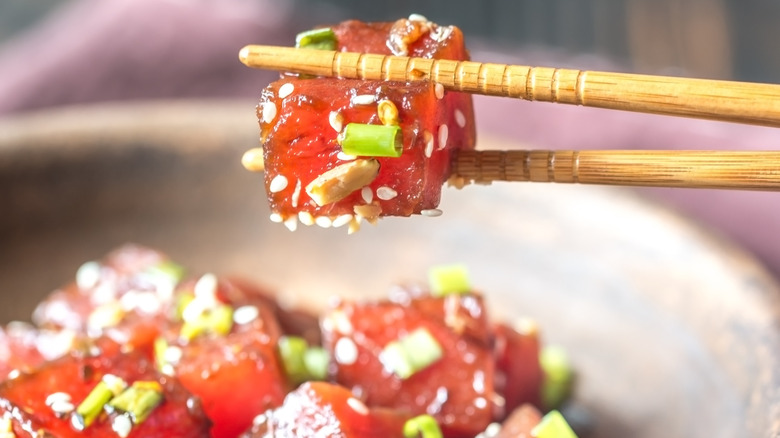
Once you've marinated your fish, it's time to think about how to balance your poke bowl. A good poke bowl is so much more than just raw fish; it's a carefully layered dish with rice, vegetables, toppings, sauces, and garnishes. Each element adds texture, flavor, and color to create the overall experience. If every element in your bowl is similar, the dish quickly becomes one-note instead of providing a cornucopia of contrasting flavors and textures.
Think of your bowl as a balancing act. As your star, you have the richness of the marinated tuna, which needs to be balanced against the other elements. Ritchard Cariaga explains his strategy: "I tend to add more contrasting textures like [diced] cucumbers or pickled ginger to cut through some of the richness of poke."
Too much richness without acidity can feel heavy, while too much crunch without creaminess can feel stark. Striking the right balance is what transforms a poke bowl from good to unforgettable.
Aim for contrasts
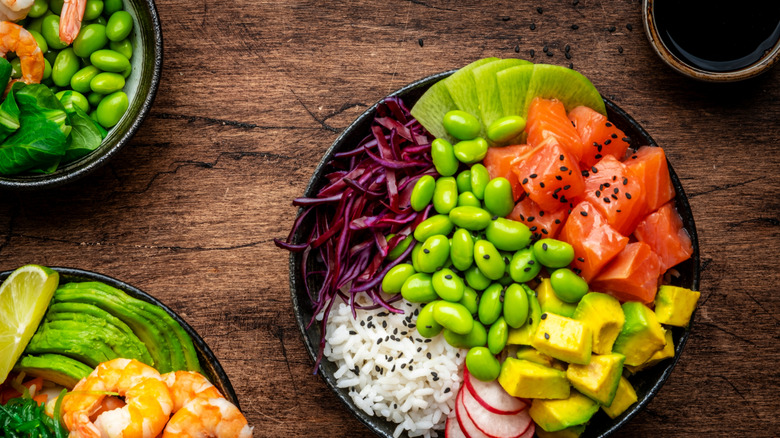
Contrasting textures and flavors are everything when it comes to building a great poke bowl. Not only should you think about how to balance the rich creaminess of marinated tuna with other elements that provide brightness and crunch, but you should carry this principle over to the rest of your poke bowl ingredients as well.
Ritchard Cariaga is not shy about giving you permission to experiment. "A poke bowl should be balanced in flavors and [textures], incorporate as many [components] as you prefer to achieve this balance," he says.
Depending on what other ingredients you want to add to your poke bowl, you may need also to balance the creaminess of ingredients like avocado and mayonnaise-based sauces against crunchy elements, like radishes, fried onion flakes, flying fish roe, lotus root chips, or macadamia nuts. If your poke marinade is mild, consider adding a spark of heat with some freshly diced jalapeños, a few wasabi peas, or a drizzle of chili oil. If it's spicy, add in a few sweet toppings, like diced mango, shredded carrots, or a scoop of sweet corn. The goal isn't to overload the bowl but to create moments of surprise. For example, a single slice of pickled ginger between bites can cleanse and completely reset your palate, making the richness of tuna feel fresh again.
Layer in the right order
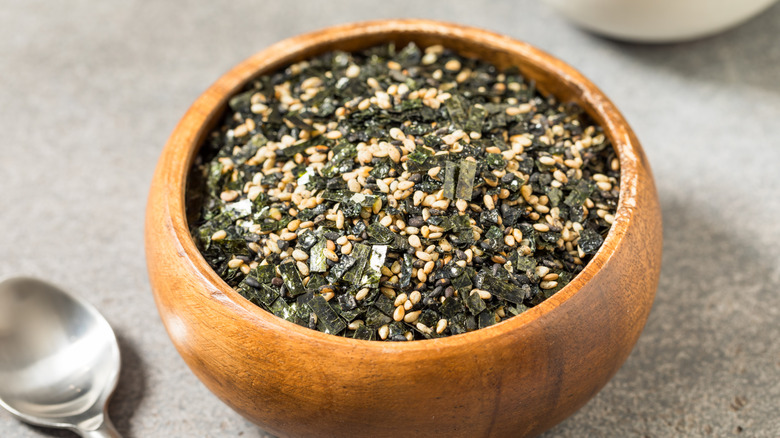
The beauty of a poke bowl is in its presentation. A well-assembled bowl invites you to dive in, while a clean, distinct placement creates a sense of abundance without looking messy. But there's a method to the layering. Ritchard Cariaga recommends "rice on the bottom, then layer poke, and toppings."
Although the fish is already seasoned thanks to the marinade, toppings are where you can add more flavors to really personalize the poke bowl. At minimum, you'll want something that adds umami depth to pair with the rice. Cariaga has a clear favorite: "furikake (dry seaweed and sesame seasonings) adds additional umami to the rice."
Start with a scoop of warm, short-grain sushi rice or nutty brown rice. Sprinkle furikake over your rice base before layering the fish. The nori, sesame, and salt create a flavor bridge that ties everything together and ensures stability and balance in every bite. Add your marinated fish on top. Then layer additional scoops of toppings around the edges, so the colors pop. To finish it all off, drizzle your sauce of choice lightly across the entire surface, not dumped in a single spot.
Avoid common mistakes
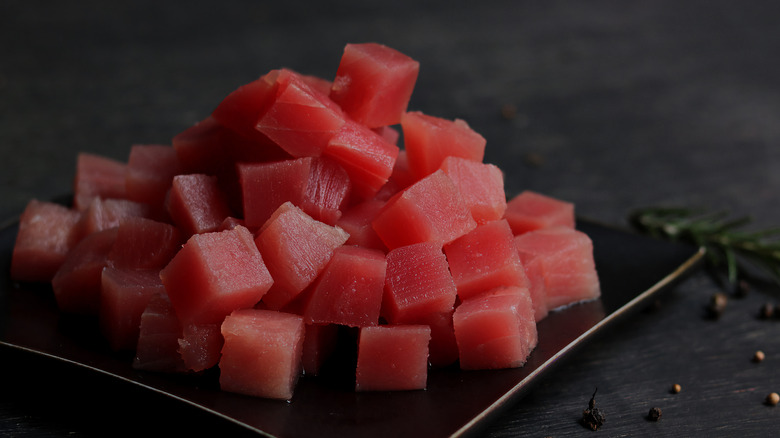
Even enthusiastic home cooks can miss the mark when making poke. Two common mistakes that Ritchard Cariaga sees are not using fresh fish or slicing it too large.
The first mistake compromises safety and flavor. Always use sashimi-grade fish from a trusted source. The second mistake — cutting fish into oversized chunks — ruins the delicate texture of poke. Large cubes are harder to chew and don't absorb the marinade and other seasonings evenly.
Other pitfalls include over-marinating the fish (especially if using citrus juice, which breaks down fish texture), overloading the bowl with so many toppings that the fish gets lost, and using strongly flavored sauces that mask the flavor of the fish rather than complement it. Remember, poke is about celebrating fish, not hiding it. You'll want to cut the fish into cubes about the size of dice, which are small enough to easily enjoy with chopsticks, but not so small that the texture of the fish is lost.
Do your homework and have fun with it
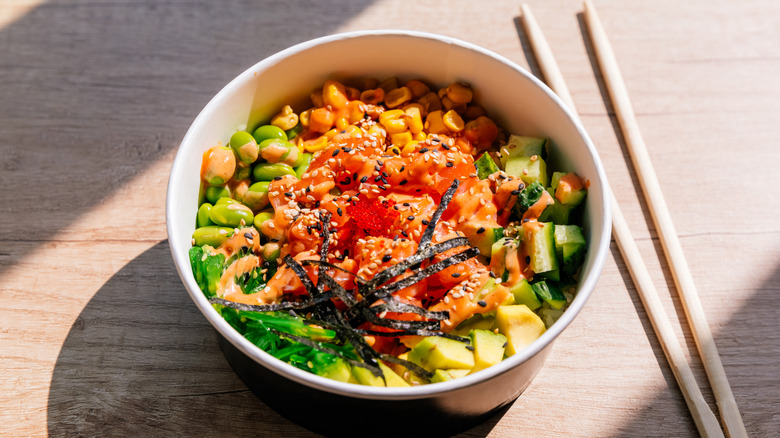
At the end of the day, however, building the perfect poke bowl is as much about creativity as it is about the right technique. Ritchard Cariaga encourages home cooks to embrace curiosity: "Do a little research and have fun with it; balance flavors based on your preference."
That might mean looking up Hawaiian traditions, exploring Japanese condiments, or trying Korean-inspired toppings. It could mean experimenting with different bases like kale and quinoa salad, cauliflower "rice," or even zoodles (zucchini "noodles"). There's no one right way, only the way that tastes right to you. You can even take a class, like "Poke All Around" at the Andaz Maui taught by Cariaga and his team, and learn how to make your bowl with fresh, local ingredients.