

How To Salvage Wet Charcoal (And Tell If It's Worth Saving)
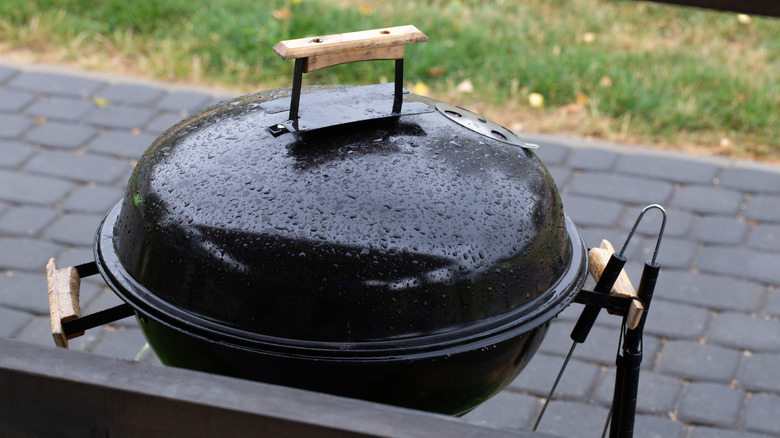
Grilling in the rain, humidity, or a leaky shed — whatever the cause, wet charcoal is a frustrating roadblock when you're ready to grill. And opting for a gas grill isn't always the answer because there are still plenty of grilling mistakes you can make that end in disaster.
The good news is that it's not always a lost cause. Whether or not your charcoal is salvageable depends on two key factors: how wet it got and what type of charcoal you're dealing with. Briquettes tend to absorb water like sponges. If they've gone soft, crumbled, or grown mold, they're done. Moldy charcoal, even when dried, can produce harmful fumes that are definitely not something you want near your food. Lumpwood charcoal, on the other hand, is a bit more forgiving. Made from natural hardwood with fewer binders and additives, lump charcoal may still light and burn cleanly once it's fully dried. If the pieces still feel solid and haven't started breaking down, spread them out in the sun or under cover in a dry, well-ventilated space for a day or two.
Check for signs of damage: if the charcoal crumbles easily or gives off an off smell, toss it. But if it's just damp and structurally intact, it might live to grill another day.
How to dry charcoal out — and how to prevent it next time
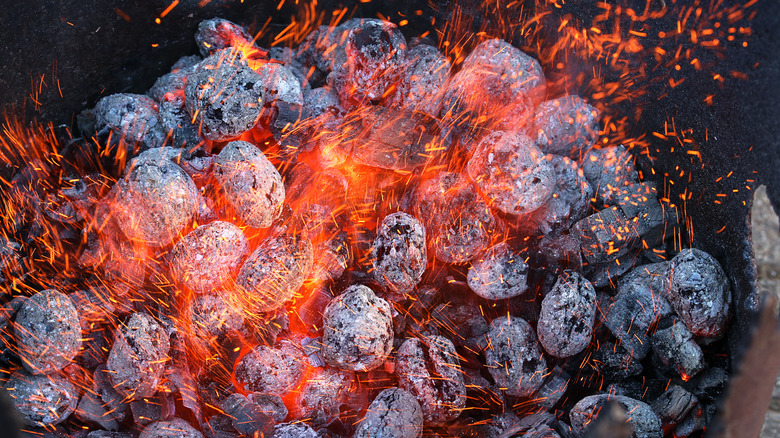
If your lump charcoal seems salvageable, start by laying it out in a single layer in a dry, sunny spot or near (but not too close to) a heat source like a garage heater or fireplace. Flip the pieces every few hours for even drying. Don't use wet charcoal in your grill or smoker — it won't burn properly, and it may give off steam or smoke that messes with your food's flavor.
But really, the best fix is prevention. Store charcoal in a sealed, waterproof container like a metal bin with a tight lid or heavy-duty plastic tote. Keep it off concrete floors, which can wick up moisture, and don't store bags directly on the ground. Even indoors, charcoal can absorb humidity over time. For added insurance, throw in a moisture absorber like silica gel or a charcoal-specific desiccant pack.
Grilling is all about control of temperature, timing, and fuel. Keeping your charcoal dry ensures your fire burns clean and hot every time. A little prep goes a long way in protecting your stash, not to mention your weekend barbecue plans.