

The Safest Portion Size To Serve When Dining Outdoors
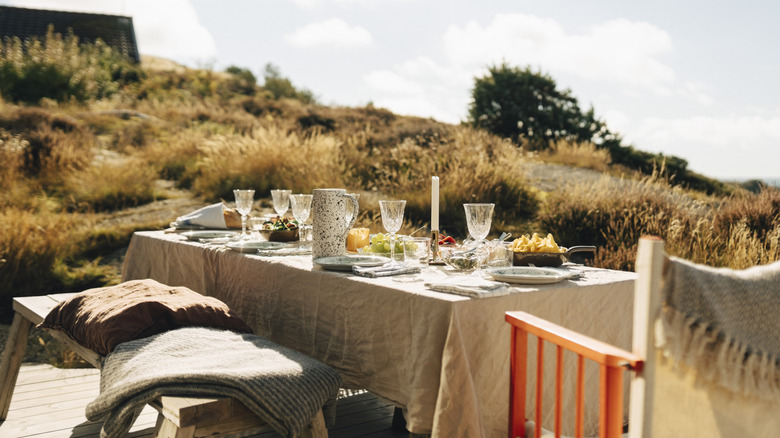
Eating outdoors is a classic summertime activity. With the weather nice and warm, friends like to gather and enjoy the sunshine along with games, conversation, and a good meal. However, eating outside poses risks that eating inside does not. For instance, that nice summer sun keeping you warm can also make your food go bad quicker than it would in an air-conditioned home. Whether you're hosting or just bringing your own cookout contribution, to avoid spoiling and wasting a bunch of your food, consider serving it in small, pre-portioned serving sizes.
When your food is portioned out into small amounts that each person can grab for themselves, food waste is limited. People will most likely just grab one serving at once, rather than overfilling their plate and ending up with a bunch of leftover food. This is a good idea whether you're keeping your food at the beach, a campsite, or just in your backyard. In addition, if you know how many people will be at your gathering, you can prepare just enough portions for each person so there is little to no food left out in the elements. When people are grabbing a small portion size, there's less chance of cross-contamination from people spilling one item into another. This is important if any of your guests have allergies, as cross-contamination could pose a serious risk.
More outdoor serving safety tips
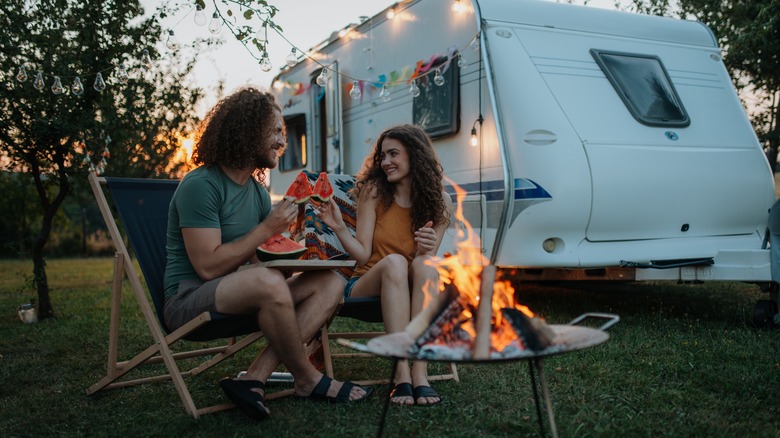
Any perishable food should not be left out for more than two hours if you plan to reuse it as leftovers. Once everyone has grabbed their portions and had time to go back for seconds, go ahead and put your leftovers inside the refrigerator rather than waiting until the gathering ends. Otherwise, you'll end up having to throw out a lot of food, or worse, a guest may grab something spoiled from the table and get sick. Small, pre-portioned sizes help with this, as you can easily just scoop up whatever's left and throw it in the fridge rather than trying to find a new container to put the food in.
If any food does spoil or is simply unsuitable to be eaten as leftovers, be sure to throw it away properly. This is especially important when camping, as animals will get into your trash and leftovers if they aren't properly placed in sealed trash receptacles. Even your car isn't safe if it isn't properly locked — raccoons can open the door, and will if they smell food in the vehicle (this writer speaks from experience, as I've lost an entire load of camp groceries to this exact problem.) Though you can make lots of delicious foods while camping, the experience will be soured if you're invaded by raccoons or bears.