

7 Store-Bought Tamale Brands, Ranked
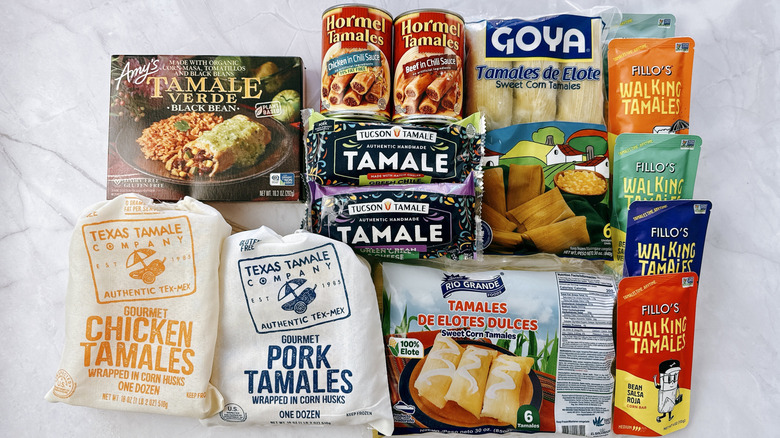
Tamales are a Mexican staple that, at one point, was only available at street vendors, restaurants, and from the kitchens of Mexican cooks. Now, they're widely available in grocery stores and big box stores nationwide. Tamales are a traditional and important part of Mexican cuisine dating back to between 8000 and 5000 B.C. A tamale features corn-based dough (called masa) and a variety of fillings, including meats, vegetables, cheese, beans, and even fruit. The traditional filling is pork, rice, and beans, but there are countless variations. Once filled, the dough is wrapped in a corn husk or banana leaf and steamed until the filling is light, fluffy, and cooked through. Once you remove the husk, a moist pocket of deliciousness awaits. Or that's the hope — and what I sought to find in my ranking of store-bought tamales.
There are many varieties of store-bought tamales — from those with beans and corn to those with meat. And to my surprise, they're not just sold in the frozen food section; you can also find them in the canned food aisle. Canned tamales? I was intrigued. So, I ran around town, grabbed a bunch of tamales, and threw a tasting party (complete with margaritas, of course). Heading to tamale town with friends was indeed a great time. We judged the tamales based on overall flavor, texture, and how closely they resembled a restaurant version. It was also a big plus if we could identify ingredients in the filling. We sampled diligently, judged fairly, and ranked the brands from worst to best.
7. Hormel
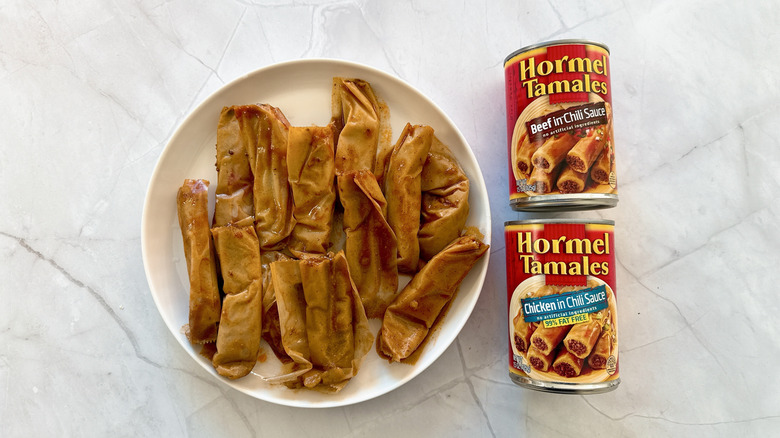
I suppose it's no surprise that a canned food product came in last. I'll hand it to Hormel though; it certainly did its best to make canned tamales a thing. I tried the chicken tamales in chili sauce and the beef tamales in chili sauce, and I'm reasonably confident it's the same chili sauce for both. The instructions suggest simmering the tamales in the chili sauce from the can — either in a saucepan or the microwave, so the tamales end up more "wet" than the other varieties I tested. I mean, the tamales are canned in sauce, so that should be the expectation, but they were unpleasantly drenched — watery almost. Some of my testers said they tasted like canned chili, while all agreed they were oily.
The tamale itself featured grainy cornmeal wrapped around meat; it sort of resembled a dog treat. The tamale was also wrapped in paper, not a husk. My assumption is parchment paper, which makes sense since the tamales are canned. A tamale wrapped in parchment paper simply doesn't exude an authentic tamale experience. If you're looking for a more enjoyable tamale, skip this one and move on to the freezer aisle.
6. Fillo's Walking Tamales
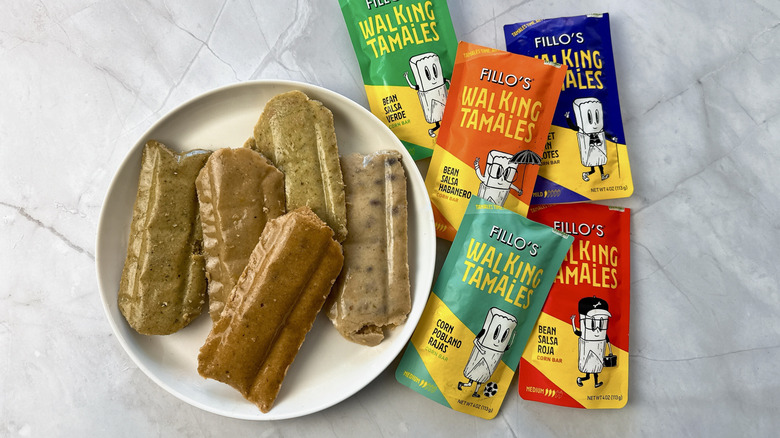
I really wanted to love this brand; ready-to-eat, hand-held tamales are such a great concept. Fillo's tamales are sold in single-serve, shelf-stable packs, which presumably makes them ideal for work and/or school. They're called "walking tamales" and "corn bars" for a reason — you can enjoy them on the move. Plus, you can eat them right out of the sleeve (without heating them first), making them super convenient. I tried their hot, medium, and mild varieties, including sweet corn elote, bean salsa habanero, bean salsa verde, bean salsa roja, and corn poblano rajas. All delicious sounding names, right? The aroma and flavor of these tamales aren't bad, and the hot variety delivered some nice heat.
The problem was the texture. The tamales were decidedly crumbly. Imagine dense masa dough, shaped into a bar and stuffed into a sleeve. And the outside was slick, so the experience was less tamale and more slippery protein bar. For this reason, they ranked second to last.
Ideally, the corn dough of a tamale should be light, fluffy, and almost spongy. That is not the case with Fillo's. One of my testers said they seemed pureed, and "condensed." If you decide to give these a try, keep them in the sleeve (pretend it's a husk) so they don't crumble to the floor. Think of them as seasoned cornbread bars and you'll be fine. And, despite what the packaging says, I do not recommend eating these tamales without heating them up first.
5. Rio Grande
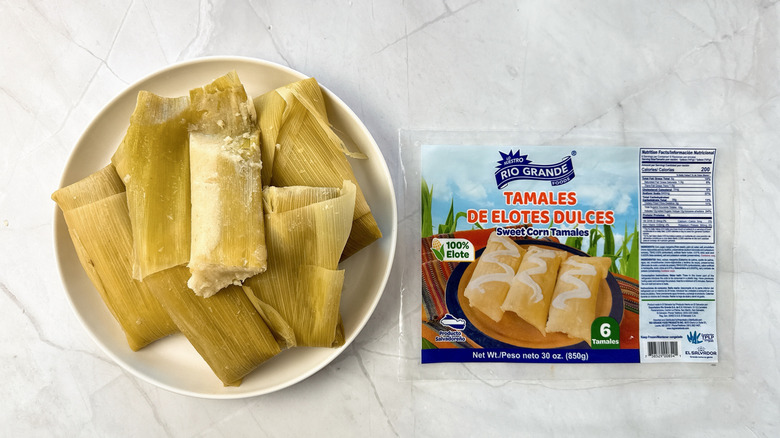
We're starting to get closer to an authentic tamale experience here. I tried Rio Grande's sweet corn tamales, and the dough was moist, mildly sweet, and reminiscent of cornbread. There's no filling in these tamales, and that's the intention. Not all tamales are stuffed, so if you like a simple, sweet corn tamale, you might like this one.
So why did Rio Grande lose points? First, while the dough was sweet like cornbread (albeit bland cornbread), it was too dense instead of light and spongy. One of my testers said it was more akin to mashed potatoes stuffed into a husk. Second, the instructions suggest boiling these tamales in water, which I did. In my opinion, boiling the tamales (versus steaming them in the microwave like the other brands) made the filling more gummy than fluffy. Lastly, these tamales contain TBHQ, a synthetic antioxidant used as a food preservative. TBHQ is used to extend shelf-life and prevent foods from going rancid, but it has also been linked to health issues. If you prefer your tamales with all masa and no filling, there are better options on the market.
4. Goya
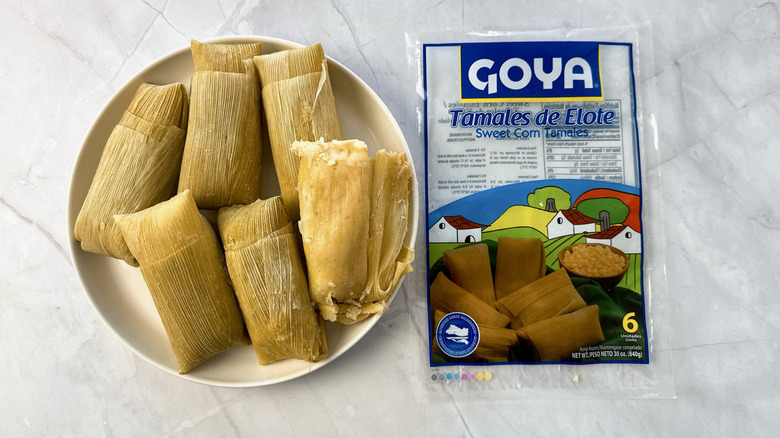
Goya sweet corn tamales are similar to the Rio Grande tamales in that they are not stuffed. Called "blind tamales" (tamales without filling), the husk is stuffed with cornmeal, sweet corn, and butter flavor. Goya's tamale ranked higher than Rio Grande's because my testers found it moist, fluffy, and sweet. It was considerably lighter and airier, and reminiscent of craveable homemade cornbread.
Goya lost points because of the food additives. The sweet corn tamales contain TBHQ (same as Rio Grande), but they also contain BHA and BHT. Butylated hydroxyanisole (BHA) and butylated hydroxytoluene (BHT) are synthetic additives used to prevent fats and oils from going rancid, stabilize flavors, and enhance colors — in both foods and cosmetics. Both additives are banned in the European Union, yet still found in American products. If you're craving a good tamale and want to steer clear of food additives, read on to discover the winning top three.
3. Texas Tamale Company
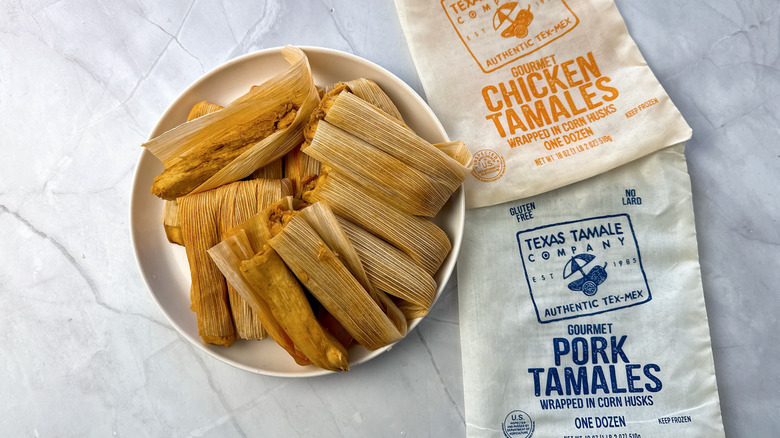
Texas Tamale Company landed in the top three for one reason only: flavor. I'll get to the texture in a minute. I tried the gourmet chicken tamales and the gourmet pork tamales and, to be honest, it was nice to have a pork offering, since that's the most traditional variety. I also liked the simple ingredient list: corn, seasonings, and meat — nothing artificial. They looked like traditional tamales (although small), and they smelled great while steaming in the microwave.
Both the chicken and pork flavors were nicely seasoned, and my testers liked the warm, savory notes. But here's the problem: The masa (cornmeal dough) is too thin — like paper-thin — so the ratio of filling to masa is off. The meat filling itself seems pureed, so there are few detectable pieces that clue you into what you're eating. Even though I reheated the tamales as instructed — in very wet paper towels — the masa and meat were both dry and crumbly. The flavor was good, but the texture was not. Since the flavor was better than all the tamales above, it came in third. In addition, these tamales are small, virtually bite-size. My testers thought they would be great as mini appetizers, but they still weren't sure they would choose them for a party.
2. Amy's
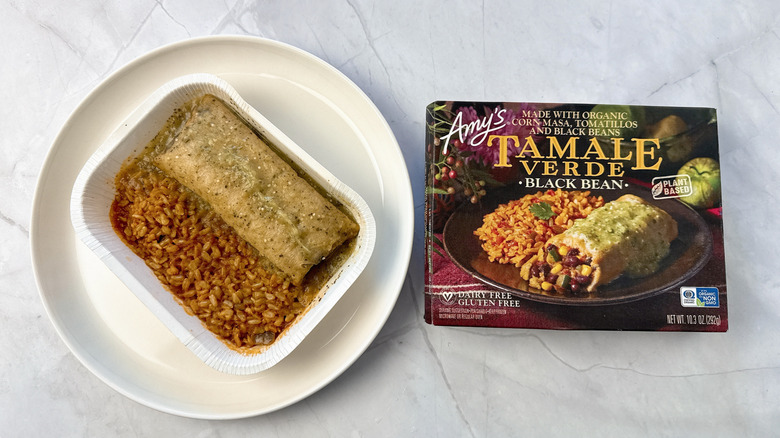
Let's get to the good stuff now. In my opinion, Amy's is a solid, dependable brand across all categories. Its Mexican food, and these tamales, were no exception. I tried Amy's verde black bean tamale, a plant-based meal that comes with a savory verde sauce and side of Spanish rice. The tamale was unequivocally moist and featured fluffy masa enrobing a filling of black beans, corn, zucchini, and chilies. The tomatillo-based verde sauce kept the masa tender, while adding its own amazing flavor. I loved that you could see every morsel in the filling so you knew exactly what you were eating, from the plump black beans to the sweet, juicy corn. The thickness of the masa was also idyllic.
Amy's tamales are dairy-free, gluten-free, made with organic ingredients, non-GMO, and contain no additives or preservatives. All my testers kept going back for more of this tamale, especially after tasting the less desirable ones. The addition of verde sauce and Spanish rice was also a plus (not that we're judging full meals here, but the medley provided a nice balance of flavors and textures on the palate). In fact, it was incredibly hard for everyone to put Amy's in second place.
1. Tucson Tamale
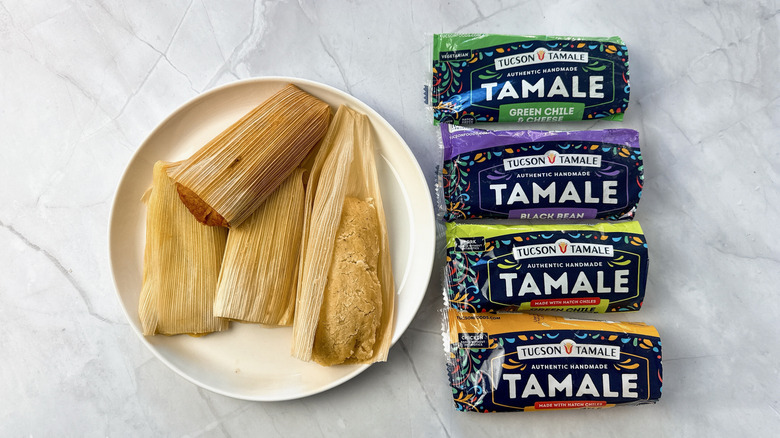
Tamale connoisseurs will find Tucson Tamales the best of the bunch, and it was the ultimate winner for my testers and me. I tried four varieties: the green chile and cheese, green chile, pork and cheese, green chile chicken, and black bean and corn. The label indicates that these tamales are "authentic" and "handmade," and it's apparent that that's the case. The chicken and pork were perfectly seasoned, and the meat was delightfully moist. My testers were thrilled to find meaty, seasoned fillings stuffed inside a generous layer of masa. The black bean and corn tamale delivered discernible whole beans and nuggets of sweet corn. Nothing pureed. The masa was light, fluffy, and perfectly sweet. Two of the varieties incorporated Hatch green chilies, which delivered an earthy balance of sweetness and heat.
I also loved that I could heat (microwave) the tamales right in the packaging; they were ready to eat in less than 3 minutes. This makes them ideal for grab-and-go meals for work and school. I tried four varieties of Tucson Tamales, and I plan to check out the ones I missed, including the tamale with red chilies, and the one with breakfast sausage. Kudos to the brand for crafting a tamale that checks all the boxes — savory, juicy filling and fluffy, spongy masa.
Methodology
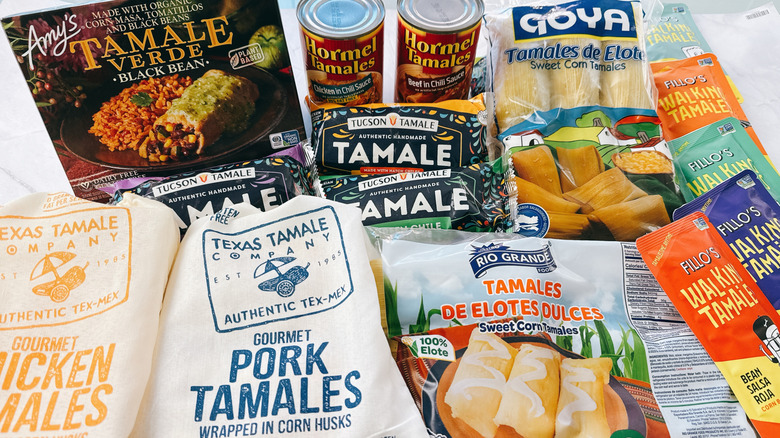
These store-bought tamales were ranked based on overall flavor, texture, and how closely they resembled a restaurant offering or street food tamale. Since each tamale brand I purchased was unique — some were filled with meat, others with corn and beans, and some with no filling at all — I had to make sure I was judging the overall tamale, including the flavor and texture of the masa to the overall seasoning. I also considered the amount of filling in the tamale (if it was filled), as some were more robust than others.
When comparing canned products to frozen and shelf-stable ones, I realized there needed to be some flexibility. Regardless of whether it was canned, frozen, or shelf-stable, the tamale had to meet the requirements of a proper tamale, and taste and texture had to be on point. It was a massive plus if my testers and I wanted seconds and thirds.
Oh, and I didn't try to judge 15 tamale varieties alone. I brought in neighbors and trusted friends for the ultimate tamale tasting party. We took the mission seriously, compared our tamale-stained notes, and developed an honest tamale ranking.