

Colander Vs Sieve: What's The Actual Difference?
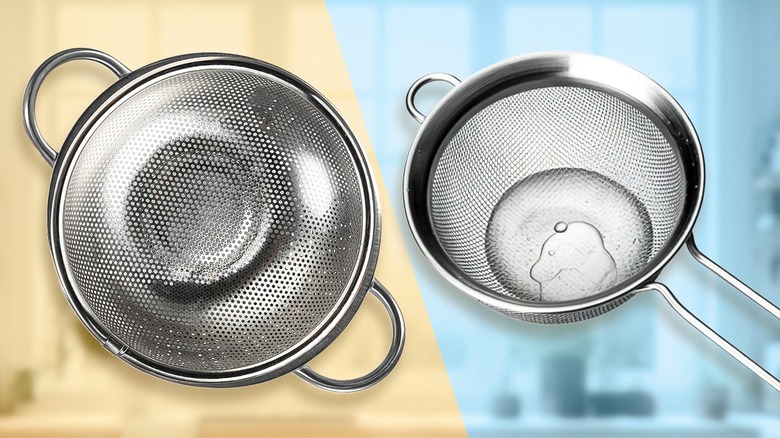
Can you strain pasta with a sieve? Or, should you use a colander? Often mistaken for each other, a colander and a sieve are common kitchen tools with different uses.
A colander is a freestanding bowl often made from food-grade material, such as stainless steel or silicone, with coarse holes. Its day-to-day uses include straining pasta, rinsing produce, or draining canned beans. A sieve, on the other hand, is made from a fine mesh and is ideal for sifting, aerating, or straining smaller particles. Neither colander nor sieve should be confused with a chinois however, an additional type of strainer used in professional kitchens, specifically to create smooth sauces.
Both the colander and sieve are beginner-friendly tools that specialize in separating solids from liquids, and while they are not directly interchangeable, they can be swapped for each other depending on the application. If used often enough, they will need a deep clean, which you can easily achieve with this hack.
How to choose the right strainer
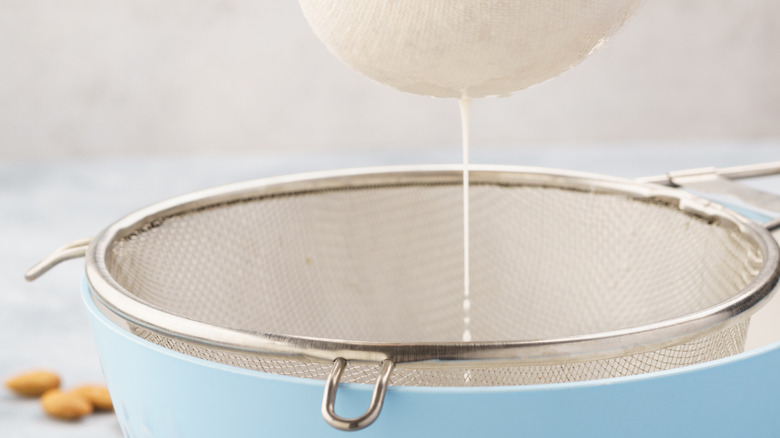
While both colander and sieve are incredibly versatile strainers, it can be challenging to decipher when to use one over the other. A sieve is best used for finer applications, such as to sift flour, strain batter for lump-free breakfast treats, create smooth sauces and jams, or even to make pour-over coffee in a pinch. Because of its precision, a sieve can be used for dusting pastries, rinsing rice, straining cocktails, and creating a smooth finish. For less-precise applications, such as rinsing dirt from your produce, a colander is a better choice.
While both function as strainers, the size of the holes and diameter in sieves determine their application — they're usually assigned a mesh number. A colander typically has a mesh count of 14–16 with larger perforations and can be used to catch pasta, filter solids, and drain canned foods. Sieves come in a variety of mesh sizes. For example, a 40–60 mesh count is used to filter seeds from sauce, while a 100–200 mesh count, used sparingly in the kitchen, is often for ultra-filtration like in purifying broths, straining cheeses, or making silky sauces. For sieves, the diameter also plays a role: A 4-inch diameter might be used for sifting powdered sugar on a chocolate torte, but a 6-inch diameter or above might be better suited for skimming fat from cooled bone broth. Interested in their other uses? We created these handy guides on the best uses for colanders and fine mesh sieves.