

Here's What $10 Worth Of Groceries Looked Like In 1900
It will come as no surprise to the modern, wallet-weary consumer that inflation has metamorphosed into something of a rabid wildebeest over the past century. Still, we invite foodies to glance backward, if they can, to the year 1900. William McKinley was president. Thomas Edison had patented the lightbulb just 20 years prior, and Henry Ford would not release the Model T Car for eight more years.
In 1900, $10 had the same purchasing power as about $382 in 2025. According to the Bureau of Labor Statistics (via WalletHub), the average American household in 2023 spent about $504 per month on groceries. So, in 1900, $10 would have been enough for households to stock up on enough food for nearly four weeks (ouch). The times, they are a' changin'. But, at least modern foodies can listen to the radio and sit in an air conditioned room while they eat.
It's worth noting that grocery costs tend to fluctuate based on the cost of living from one region to the next. But, for reference, we've rounded up a grocery list based on prices at a Walmart in Chicago. In 1900, $10 would have been enough to buy four boxes of corn flakes, three pounds of oysters, five pounds of ribeye steak, 10 pounds of chicken breast, three loaves of bread, three jars of jam, six dozen eggs, four pounds of ham, and seven rolls of breakfast sausage — and still have enough money left over for an errand coffee.
$10 in 1900 was the equivalent of a $382 supermarket run today

In 1900, American dinners centered around some combination of meat, potatoes, and a vegetable. Steak, chicken, roast beef, ham, codfish, and mackerel were common. At restaurants, Oysters Rockefeller was a popular menu offering of yore. Typical veggies included tomatoes, carrots, lettuce, turnips, beets, and asparagus. For fruits, it was apples, cherries, pears, plums, melons, and the occasional orange.
For breakfast, oat-based porridge, bread with jam, eggs, bacon, sausage, and ham were staples. The Kellogg Company was founded in 1906, and quickly began selling corn flakes cereal, which had already been in production since the early 1890s. Post was selling Grape Nuts cereal by 1897, and General Mills joined the cereal game in the early 1900s. Foodies of 1900 also had a generational sweet tooth. Sugary treats like Baked Alaska, fudgy brownies, apple pie, and devil's food cake were popular (and could be made from shelf-stable grains, pre-refrigeration).
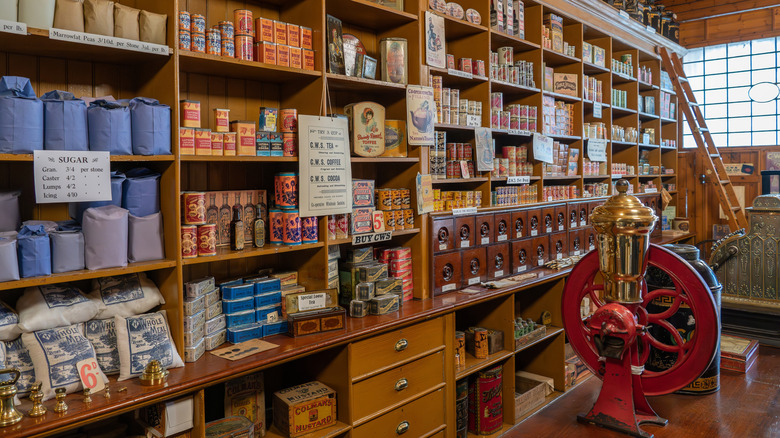
Grocery stores in 1900 also looked nearly unrecognizable compared to modern supermarkets. Most packaged name-brand foods that 21st-century grocery shoppers know and love had yet to be invented (Kraft mac and cheese didn't hit the market until the 1930s). General Electric didn't even release the first electric home refrigerator until 1927. In 1900, milk and dairy products (or anything that needed to be kept chilled) were stored in an icebox, or outside during winter months. Until the freezer arrived, practices like gardening and home-canning were more commonplace.