

Prevent Your Oatmeal From Overflowing In The Microwave With A Simple Trick
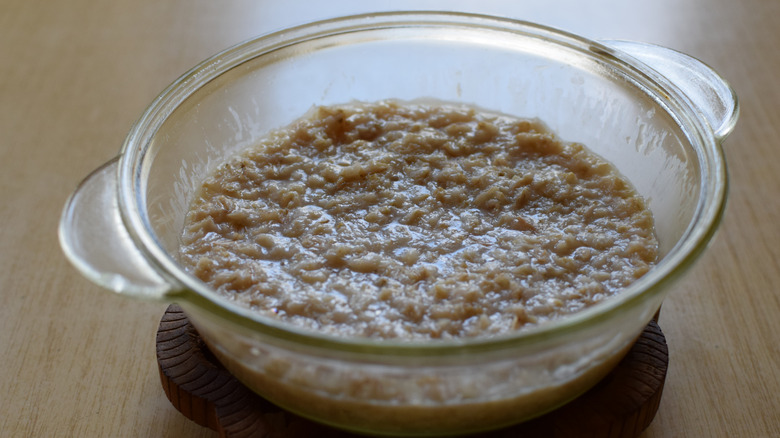
Oatmeal is one of the underrated breakfasts. Not only is it good for you, as nutritionists have been shouting from the rafters for decades, but it's also extremely versatile. Plus, it's straightforward to make, especially if you utilize the microwave. The issue is that when you make oatmeal in the microwave, it can spill over and cause a mess, which is the last thing you want to deal with first thing in the morning. Luckily, a simple trick to prevent this is soaking the oats before cooking.
The reason oatmeal boils over so easily is that there are starches inside oats that swell when heated. As they thicken, they stick together, forming a gel-like structure. At the same time, air bubbles form in the boiling liquid, and they can't rise if they get blocked by that gel. All of that pressure keeps building until it can escape, and there might not be enough room for it to do so if the bowl you're using is too small.
But if you soak the oats in their cooking liquid before heating, they'll absorb it, and you'll avoid all of that. This was actually how it used to be done back in the day – people would prepare oatmeal the night before so that their breakfast would cook faster and be easier to digest. It's still true today, and soaking can also lead to a creamier texture. Plus, it eliminates the need for boiling, thus keeping your microwave clean as a whistle.
Microwavable overnight oats
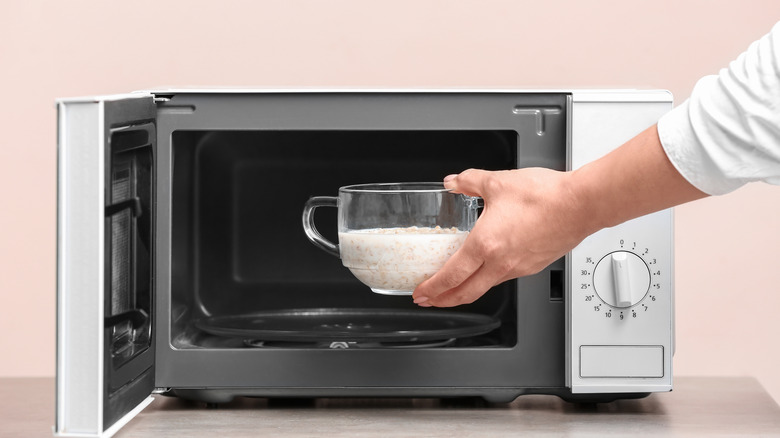
The preparation is similar to an overnight oat recipe, but the oats are served warm rather than cold. All you need to do is stir the oats with water or milk in a bowl and leave them in the fridge for at least six hours. You want to use a little more liquid than the average overnight oat recipe requires: Aim for a ratio of about 1:2.
In the morning, just microwave the oats on low power for about one minute, stirring occasionally. Let them stand and then just add your usual toppings. Some like to soak their oats at room temperature rather than setting them in the fridge, but be careful with this if you're using milk. You can add more liquid to your oats in the morning or rinse them and use fresh water for heating.
Using hot water is also an option, but a lot of it is really about experimentation. The main thing to remember is that you want to avoid using instant oats, as they'll break down too much overnight, so opt for steel-cut or old-fashioned instead. And if all else fails, you can always use a bigger bowl, but hopefully that won't be needed.