

17 Of The Most Iconic Ingredients Native To North America
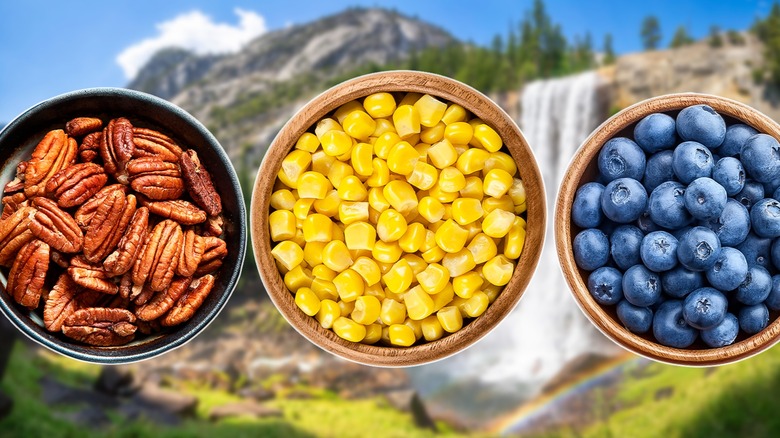
When we think of American cuisine, we usually picture juicy burgers, sauce-drenched barbeque, and hot dogs at baseball games. But long, long before the invention of barbeque sauce and sandwiches — and even agriculture, for that matter — meals were made from hunting and foraging the native flora and fauna that existed naturally all over the continent, from sea to shining sea.
Today, nearly 60% of all the world's food comes from species native to the American continents, many of which come from the diverse regions in the North. These regions, from tropical coasts to rugged tundras and vast deserts to verdant forests, produce thousands upon thousands of species of which modern American cuisine is built on. Although a lot has changed since the days of foraging for berries and spear-hunting bison, there's a good chance you enjoy some Native American ingredients every day, no matter where in the world you live.
In this list, we'll take a deep dive into some of the most iconic plant and animal species that define North America. The species in this list are far from the only foods native to the continent, but they're among those that are the most representative of the many ecosystems that make up North America. These plants and animals nourished the Indigenous populations, helping them thrive here long before settlers arrived. To this day, these plants and animals define the vast biomes, from the Northern Territories all the way down to Central America, that make North America a beautiful, wild wonderland that feeds the world.
1. Corn
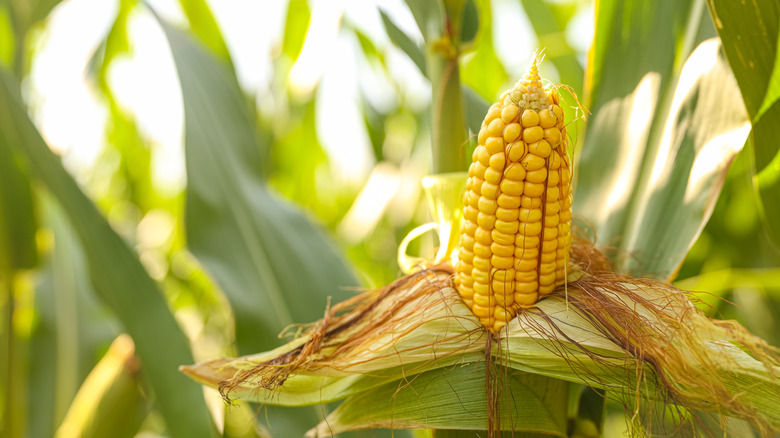
At the heart of all North American cuisine lies one humble grain (well, a grain that's kind of a fruit and kind of a vegetable — corn is complicated) that sustained entire civilizations: corn. Once known as maize, corn was first cultivated in Mesoamerica (present-day central Mexico) and eventually spread across both American continents. It was originally domesticated from wild teosinte grass over 8,000 years ago, and it didn't look much like the yellow sweet corn we know today. Before modern-day agriculture, it wasn't typically cooked and eaten off the cob or shucked into recipes. The grains were ground up to make corn flour, which was used to make breads and tortillas.
By 1,200 B.C., corn had made its way North to the American Southwest, where Native Americans — specifically the Pueblo people — began cultivating it. It continued to spread around the modern-day United States, where it would eventually become a mainstay in the diets of the Creek, Cherokee, and Iroquois tribes, and later, the entire world.
2. Blueberries
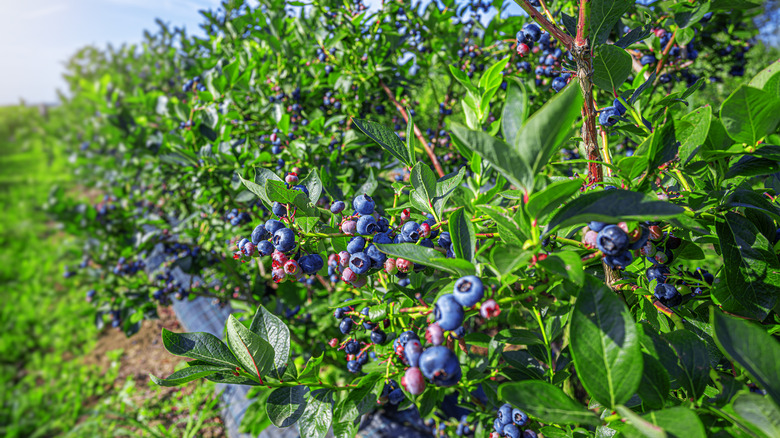
Blueberries are ubiquitous all over the world, so it's easy to forget that they first came from a specific area in the present-day United States. In fact, blueberries are one of the oldest foods in the world to be cultivated, acting as a staple food for Indigenous populations in the region. But despite their long history as a superfood long before the concept of superfoods came into existence, blueberries only started to be commercially cultivated and sold around the world in the early 1900s.
Native Americans used the highbush blueberry plants — including the roots, stems, and leaves of the plant — for medicinal purposes. The berries were then incorporated into a variety of recipes to add flavor and health benefits. Blueberries stayed fresh longer than other native berries, which prompted Native Americans to seek out more of these tiny blue gems of the forest. When they weren't in season, they were sun-dried and stored. Today, wild blueberries are a distinct feature of Maine and are found growing naturally in forests all over the Eastern and Southern U.S. and Eastern Canada.
3. Wild turkey
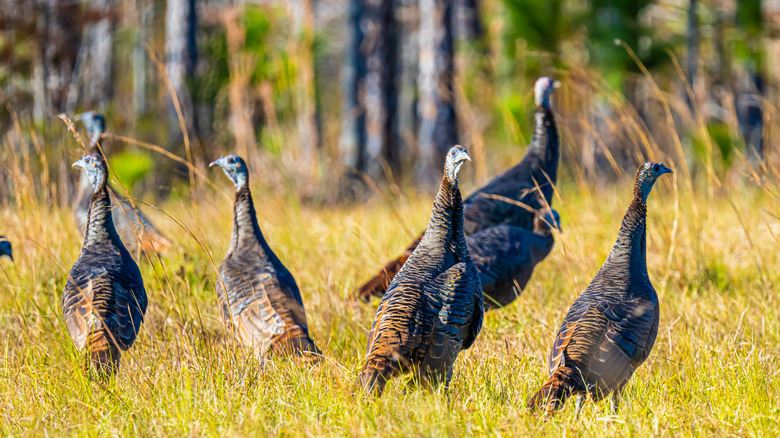
Before slices of salty meat on a deli sandwich or a huge bird wrapped up in the freezer section of the supermarket, there came the wild turkey. The wild turkey is native to North America, although there is one other species of turkey native to South America, with the two being the only turkey species on the planet. But the bird that's a staple of our holiday traditions and a popular food all over the world is a close descendant of the one that still roams the forests of the United States.
Wild turkeys were a mainstay in the diets of Native Americans and colonists alike. The birds were abundant and easy enough to hunt, plus they tasted delicious thanks to their nut-rich, fatty diet. By the 1500s, Spanish traders brought turkeys that had been domesticated by Native Americans to Europe via trade routes that passed through the country of — you guessed it — Turkey. And so, the bird got its common name and the people of Europe got one of their first tastes of the delicious foods of North America.
4. Vanilla
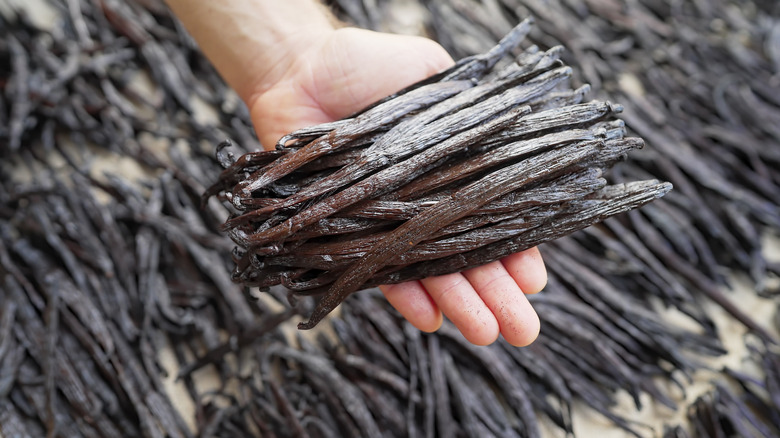
When we think of Mexican foods, we don't often think of vanilla, but the world's favorite flavor is one of the country's most iconic ingredients. Although it's grown in a few regions around the world (you're probably familiar with Madagascar and Tahitian vanilla) the vanilla orchid — the plant that produces vanilla beans — is native to Mexico.
Vanilla was once a staple solely of the Totonac people, until colonists introduced the unique plant to Spain, and later, the rest of the world. But Europeans struggled to cultivate vanilla, mostly because there were no Melipona bees — which were the only bee species that pollinated vanilla — on their continent. Today, modern cultivation practices make it so that most of the world's vanilla is produced in Madagascar, which offers a similar tropical climate to the plant's native home. The Madagascar vanilla that we know today is rich and creamy, but Mexico's original vanilla bean had a spicy, woody, and much more complex flavor profile.
5. Squash
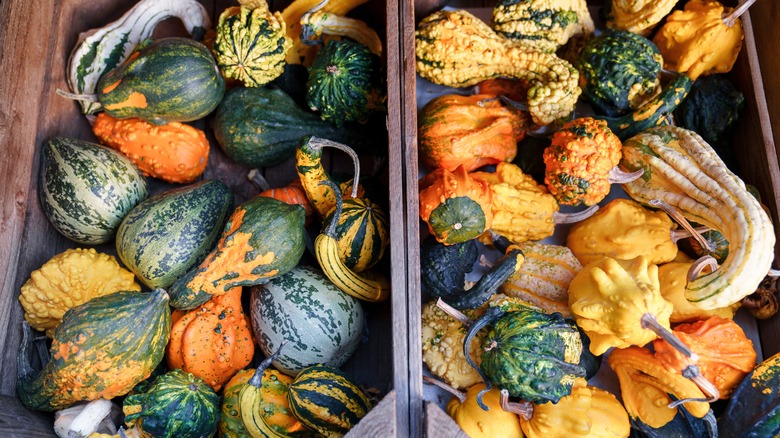
Squash has been a linchpin in North American foodways long before Europeans arrived on the continent. It joined corn and beans to make up the Three Sisters — a staple group of foods cultivated by Native Americans for thousands of years. Squash, which includes pumpkins and gourds, consists of about 20 different species, most of which are thought to have originated in Mexico, although there are some species native to the modern-day United States.
Squash was easy to grow in various climates and germinated quickly, so it provided a valuable source of nutrition for Indigenous populations. The first known cultivation of squash occurred over 8,000 years ago, but it wasn't until the late 16th century that it made its first appearance in the Old World. Today, squash is still a staple in many diets in North America, and it's also a symbol of multiple holiday traditions and seasons, giving it a distinct spot in our continent's legacy that stretches far beyond just a nutritional source.
6. Blue crabs
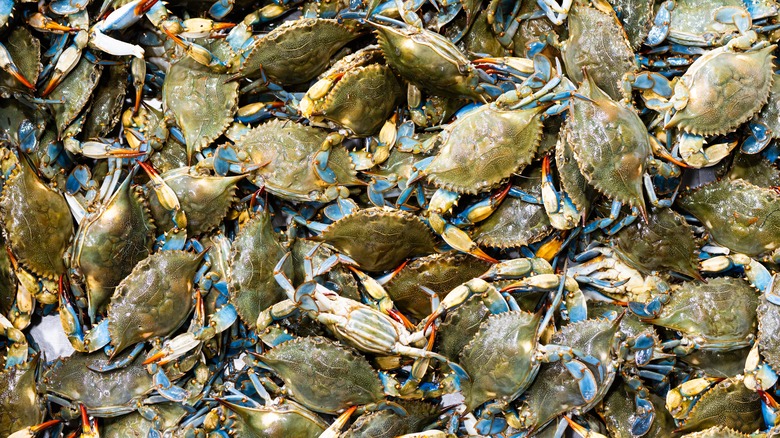
It's a little hard to believe that Native Americans and early colonists saw a blue crab and thought "that looks like it would make a tasty meal." It was actually long thought that they relied on other food sources before they ever resorted to eating not-very-appetizing-looking crabs, but that theory was recently disproved when crab remains were found at archeological sites.
Blue crabs are found all along the Eastern seaboard, from the Northern part of the coast in New England down to the Gulf of Mexico. Today, they're a delicacy that's heavily associated with the state of Maryland, where crab cakes and other dishes made with their meat are famous around the country. The nearly 9-inch wide, iridescent blue and green crabs have quite the legacy to live up to as the official state crustacean of Maryland — not to mention their scientific name, Callinectes sapidus, which translates in English to "beautiful savory swimmer."
7. Huckleberries
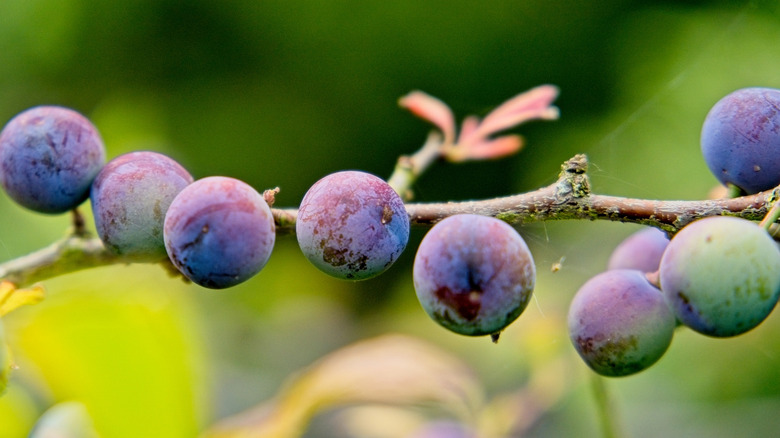
Based on iconic characters like Mark Twain's Huckleberry Finn and Hanna-Barbera's Huckleberry Hound, you might have thought that huckleberries were fictional. But the very-real berry isn't just a deliciously-sweet, juicy treat that's been consumed for thousands of years; they're also a symbol of state pride, specifically for Montana, Oregon, Washington, and Idaho.
Huckleberries are incredibly unique, despite looking nearly indistinguishable from blueberries. They're one of few native North American berries that has yet to be cultivated commercially, making them a rare treat for those who enjoy summer foraging in the Rockies. The Yakama people and other Indigenous tribes, once thrived on these berries, and even made a point to live near areas where they were abundant. Huckleberries are only around in August and September, so communities hold huge festivals for the humble berry during this time to celebrate their cultural and historic significance and their unique, extra-juicy taste.
8. Wild rice
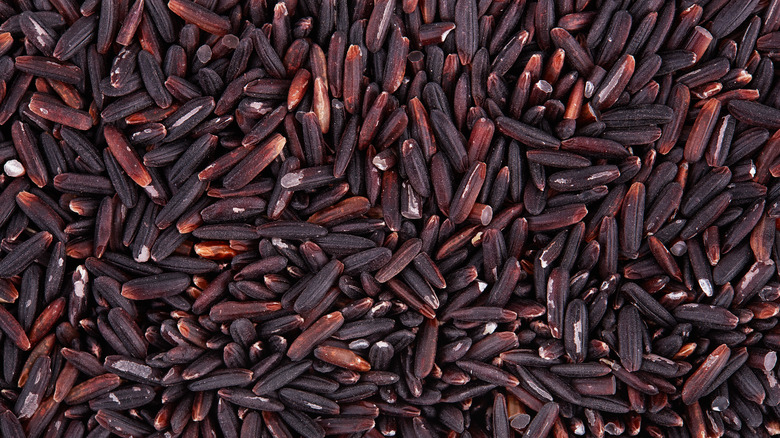
Wild rice is sometimes put on the back burner in favor of maize and squash as iconic North American foods, but it has a rich, storied history, despite being hyper-regional. Wild rice isn't actually rice — it's a semi-aquatic grain grass that's native only to the Great Lakes region. This simple grain is heavily associated with the Ojibwe people who still, to this day, harvest it from a canoe, just like their ancestors once did. They call this nutritious, staple crop "manoomin."
Wild rice is defined by its deliciously-bold, earthy flavor and crisp texture. In the 1960s, the University of Minnesota initiated an operation to domesticate (not-so) wild rice in paddies — a much different practice from the Ojibwe people's gathering via canoe. However, it kept its name to distinguish it from other rice varieties despite becoming a cultivated commodity.
9. Maple sap
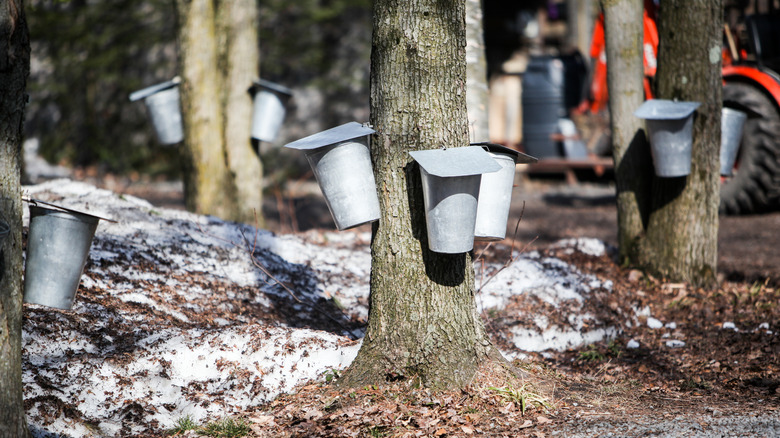
Maple trees, leaves, and syrup are arguably the most defining feature of Canada (where most of the world's maple syrup is produced) and the Northeastern United States. There's no other place on the planet where sugar maples — which are the trees that famously produce the sap and subsequent syrup — grow naturally, making the tree and the foods it produces so iconic in the Northern part of the continent. Other maple trees can be tapped for syrup, but the aptly-named sugar maple produces the most sap, making it possible for syrup to be collected in vast quantities without the use of commercial agricultural equipment.
For thousands of years, the Indigenous tribes of the Maple Belt (yes, that's really what it's called) used maple sap to produce one of the only natural sweeteners in the area. But it wasn't just for sweetening food, curing meats, and its medicinal benefits; tapping trees for maple sap was also a spiritually-significant ceremony to mark the seasonal cycles.
10. Tepary beans
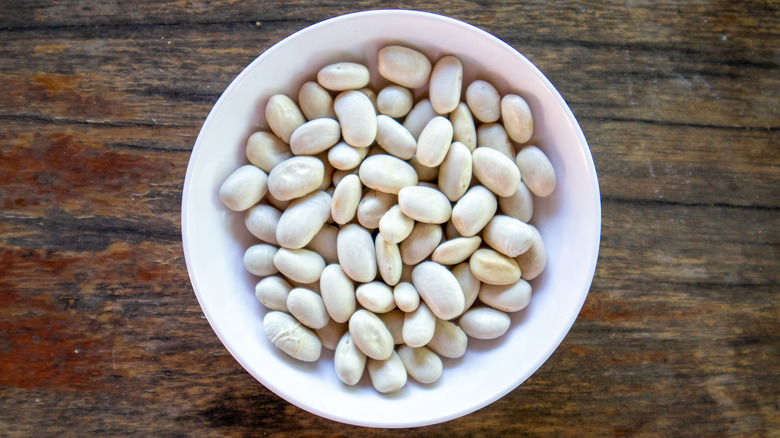
Beans are one of the Three Sisters crops that were crucial to sustaining Native American tribes all over the continent. However, the common beans that we're most likely to use today — like black, pinto, and kidney — are native to South America, not North America. But tepary beans — which are indigenous to the Sonoran Desert of Mexico and Arizona — were a mainstay in the diets of Native American tribes from the region, despite being largely unheard of outside of Arizona and Sonora, Mexico, today.
Tepary beans have been cultivated by tribes like the Tohono O'odham and Akimel O'odham for over 4,000 years. They were (and still are) prized for their particularly high fiber content and vast nutritional profile. They're beginning to fall into favor once again after modern agricultural practices made them nearly non-existent by the mid 20th-century in favor of other bean varieties.
11. Bison
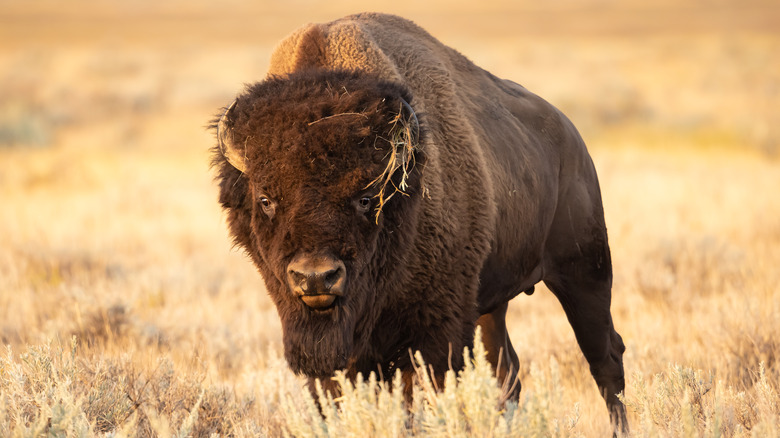
Today, bison is the food most heavily associated with Indigenous Americans. The idea of bison hunting conjures up images of Native people hunting the huge animal on horseback, armed with spears, chasing them across vast plains. Bison (colloquially known as buffalo) played a major role in the lives of Indigenous people, and briefly, for colonists as well.
Native Americans of the Great Plains region thrived thanks to bison meat. The tribes knew how to live symbiotically with the large North American animal — something that was necessary for the bison's survival, and therefore, their own. But when colonists arrived, gun in hand, they overhunted them with no regard for the delicate balance of the ecosystem; they even deliberately killed bison in order to deprive Native Americans of food. And so, bison were nearly eradicated. But thanks to recent conservation efforts, the animal — a symbol of our continent, representing the resilience and power of nature — is starting to come back to graze in huge herds like it once did thousands of years ago.
12. Agave
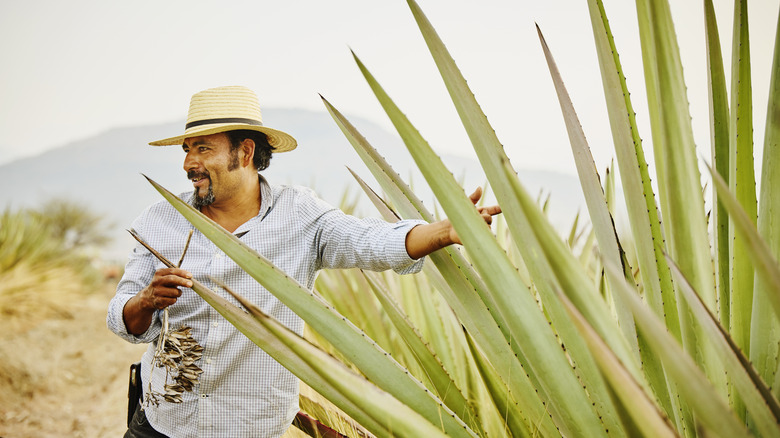
Long before margaritas existed, agave was a major food source for the people of ancient Mesoamerica and the Sonoran Desert. The agave plant is a succulent, similar-looking to aloe, that takes roughly eight years to reach maturity. Today, we associate agave with tequila and mescal, both of which are made up of agave nectar; to make mescal, the plant is smoked, and to make tequila, it's steamed.
Agave has been used ceremoniously and medicinally for at least 10,000 years. It was (and still is) sometimes consumed as pulque — an ancient, medicinal drink made from fermented agave, famous for its use as a sedative. There are over 200 species of agave plants, with blue agave being the most well-known thanks to its contribution to tequila production. To be considered real tequila, the liquor must be made mostly of genuine blue agave, which comes primarily from Jalisco, Mexico.
13. Cranberries
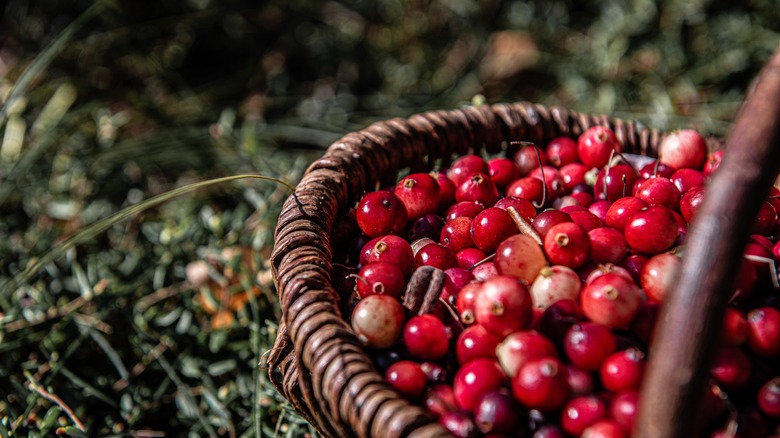
The extra-tart berry that's a staple at every Thanksgiving dinner table is one with a storied past. Cranberries are closely associated with New England, most notably Massachusetts, where the first commercial cranberry farms were born in the early 1800s. Unlike most berries in the region, cranberries famously grow in bogs, where they stretch out like a sea of shiny pink gems for several months out of the year. The sight of a cranberry bog attracts tourists from all over the world, and has become a major attraction in places like Cape Cod.
Native Americans have been harvesting cranberries for over 12,000 years. They relied on them for antioxidants to fight off disease, as well as other medicinal benefits, like preventing urinary tract infections. They included the berries in pemmican, a staple high-calorie food for travelers that was similar to a modern-day protein bar.
14. Pecans
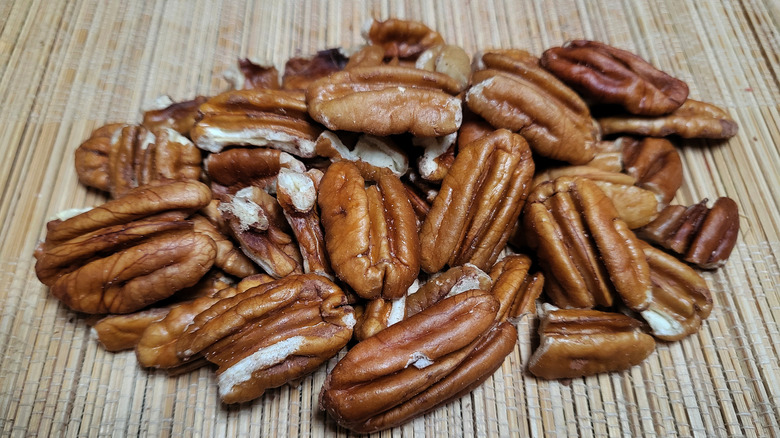
Pecans are closely associated with the Southeastern United States, where they're made into classic desserts — like a traditional Thanksgiving pecan pie — although they're also native to Northern Mexico. In pre-colonial times, pecans sustained whole populations and were defined by their quick and easy shelling, abundance, and distinct buttery taste. Their name comes from the Algonquin language and was used to describe a variety of shelled nuts, but today, the pecan is just one iconic species that's indicative of cozy autumn weather.
Settlers began cultivating pecans starting on Long Island in the late 18th century. By the early 1800s, pecans were a major income source for colonists, who sold them domestically and to their home continent, where they were considered a delicacy and could fetch a high price. Cultivation practices continued all along the coast, and now, pecans are closely associated with New Orleans. Praline — which is like peanut brittle made with pecans — is a traditional candy in the city.
15. Avocados
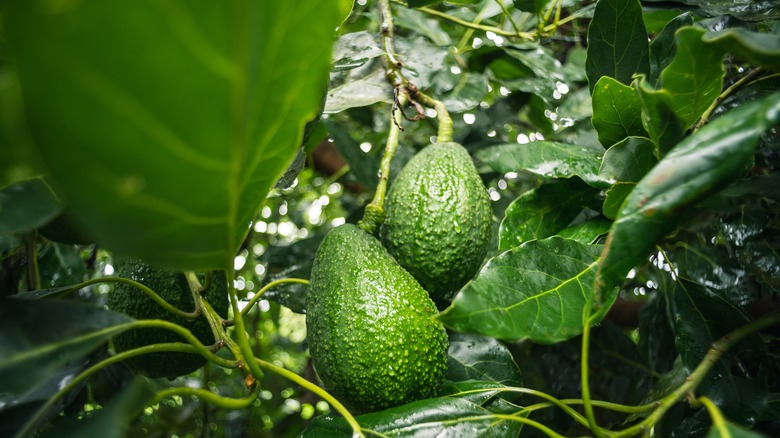
Avocados were a relatively obscure superfood for quite some time, but in recent decades they've absolutely exploded in popularity, and for good reason. Avocados are native to Mesoamerica, with the modern-day city of Puebla in South Central Mexico thought to be the original origins of the green, fatty fruit. Evidence suggests that Indigenous people tended to wild avocado crops 11,000 years ago. Research also points to ancient populations intentionally breeding larger, healthier fruits as far back as 7,500 years ago — for reference, this predates the arrival of maize to Mesoamerica and the invention of the wheel.
Just like we do today, ancient people incorporated avocados into their diets for their wide variety of health benefits. The high-calorie and high-fat fruit provided a much-needed energy source, not to mention plenty of B vitamins, vitamin E, antioxidants, and fiber. Although there are multiple varieties of avocado, most (about 90%) of the world's avocados are of the Hass variety, which are derived through cloned populations, making them more susceptible to eradication by disease.
16. American lobster
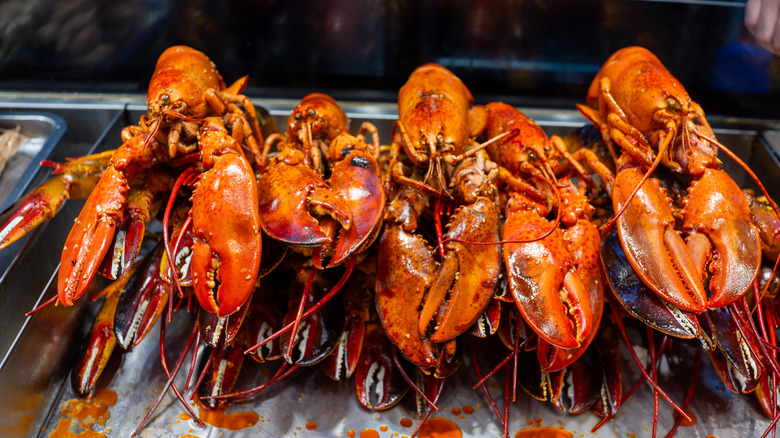
The most iconic species of lobster native only to North America — the American lobster — is found in Atlantic waters along the Eastern seaboard from Maine to the Carolinas. It has close ties to the state of Maine, where lobster bakes, rooted in tribal tradition, are still a cornerstone of the state's culinary scene. Traditionally, lobsters were covered in seaweed and seawater and cooked slowly on hot rocks, which isn't much different from how it's done today. In pre-colonial times, Native Americans also used the sweet, delicate meat from the crustacean as bait for catching much larger, more substantial sea creatures.
It's hard to believe nowadays, but there was a time when lobsters were so abundant that they would literally pile up on American beaches, earning themselves the designation of a "poor man's food", only eaten by settlers in times of great scarcity. But starting around the mid-20th century, they became a delicacy, served at bougie functions and as the center of a rare, celebratory feast.
17. Tomatillos
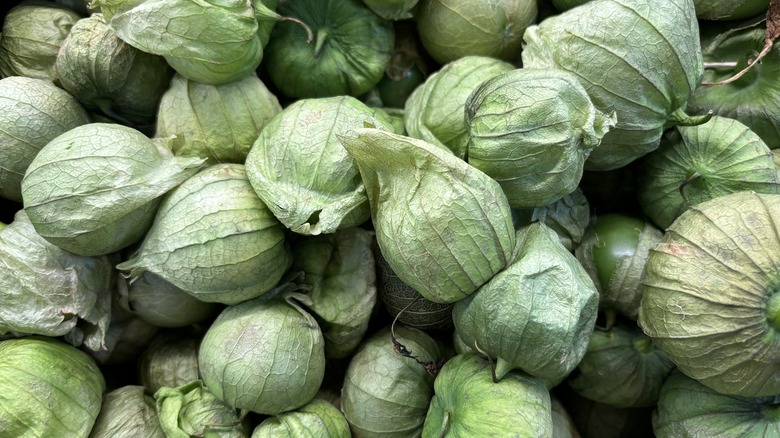
If you're not from Mexico or the Southwestern United States, you might have no clue what a tomatillo is. This fruit belongs to the nightshade family, just like tomatoes, and is native to Central Mexico. It grows on vines, much like their bright red cousins, and resembles a miniature green pumpkin wrapped in a papery husk. It's thought that about 3,000 years ago, the Aztec people cultivated tomatillos (which translates to "little tomato") in the Tehuacán Valley. Indigenous people incorporated the tart, citrus-like fruits into meals for their high vitamin content, antioxidants, and bold flavor that paired well with spicy peppers.
If you've ever poured salsa verde (or "green sauce") all over a plate of enchiladas, then you've encountered tomatillos — sometimes known as husk tomatoes. In the U.S., you'll usually only find them pre-cooked in a sauce or stew, because they're not particularly pleasant to eat raw. They're usually bright green in color, but some varieties are red, yellow, or purple.