

What Is A 'True Lemon' And How Is It Different From A 'Rough Lemon'?
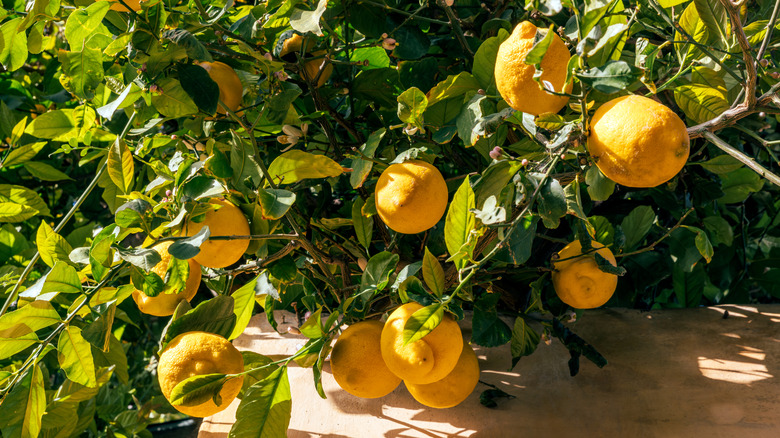
There are many different kinds of lemon breeds out there, though you probably only know about two or three off the top of your head. There are the ones you see in the produce department of the grocery store, pink lemons (which may have been created by accident) for pink lemonade, or even the Buddha's hand lemon (which is technically a citron). What most people don't know about these 30+ lemon varieties is that they all fall into three general categories: true lemons (such as Eureka-type and Lisbon-type), hybrids, and rough lemons.
A true lemon is different from a rough lemon for several reasons, but the most obvious is the difference between the way the two fruits look. A true lemon will be relatively small, smooth, oval-shaped, and come to a delicate point at the end, whereas a rough lemon will be larger, bumpy, and more leathery-looking. True lemons have more fruit and less pith, while rough lemons have the opposite. Taste-wise, true lemons are notoriously sour with a small to moderate number of seeds, but rough lemons taste sweeter despite being more acidic and containing more seeds.
A deeper dive into true lemons and rough lemons
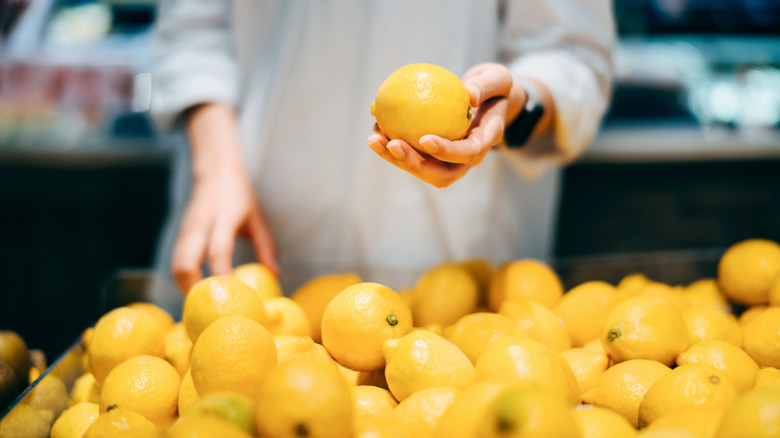
True lemons are the ones you unintentionally buy more often, specifically Lisbon lemons, Eureka lemons, and Meyer lemons, which are the most common types of lemons at the grocery store. There are several subspecies of Eureka lemons, such as the Allen Eureka lemon or the Frost Eureka lemon, which are also fairly common. There's some controversy about whether or not Meyer lemons are considered true lemons, with many people believing the fruits should fall into the "hybrid" category. True lemons, like the Eureka and Lisbon types, are grown domestically in the U.S. and often cultivated specifically for cooking and baking.
Rough lemons, though belonging to the same Rutaceae family as true lemons, are technically a cross between a mandarin and a citrus. Sometimes referred to as "bush lemons," these trees were typically only planted in the U.S. to serve as rootstock, a process that involves grafting a different tree onto the hardy roots of the rough lemon, which can sustain harsher conditions. Thanks to a sweeter flavor, rough lemons and their rinds can be used at any point of ripeness for baking and cooking, though they can be harder to find than true lemons. There have even been studies, such as one from the Journal of Chemical Natural Resources, which found that rough lemon rinds contain exceptional antibacterial properties. These trees may be a tad unsightlier than their perfectly-shaped counterparts, but they have their uses just the same.