

Tahini Vs Peanut Butter: Which Has More Protein?
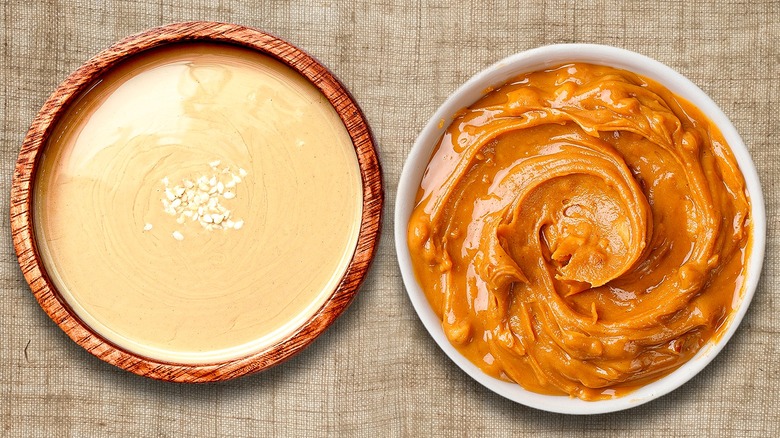
Peanut butter and tahini have a lot in common: Both are made by grinding seeds or legumes into a thick paste, both can be spread on toast, whisked into dressings, or blended into smoothies, and both are calorie-dense staples that pack a mix of fat, protein, and minerals. On the creamy surface, they might even look interchangeable. But when it comes to their nutritional profiles, there are some key differences that can be helpful to know about, especially if you're tracking your macros or just trying to stay aware of what fuel you're giving your body.
Peanut butter provides about 6 to 8 grams of protein per two-tablespoon serving, while tahini comes in closer to 5 to 6 grams, depending on density. That may not sound like much, but if you're leaning on nut or seed spreads as a protein boost, peanut butter does more of the heavy lifting. Calories are pretty close, roughly 190 in peanut butter to 170 in tahini, so the distinction is in composition, not energy.
Where tahini pulls ahead is in micronutrients. Made entirely from sesame seeds, it's especially high in fiber, as well as calcium, magnesium, and iron, nutrients important for bone density and blood health. It also contains lignans and other antioxidants linked to anti-inflammatory benefits. Peanut butter, meanwhile, is richer in monounsaturated fats, the same heart-friendly kind found in olive oil, and delivers vitamin E and niacin. Both are nutrient-dense, just in different directions.
A tale of two spreads
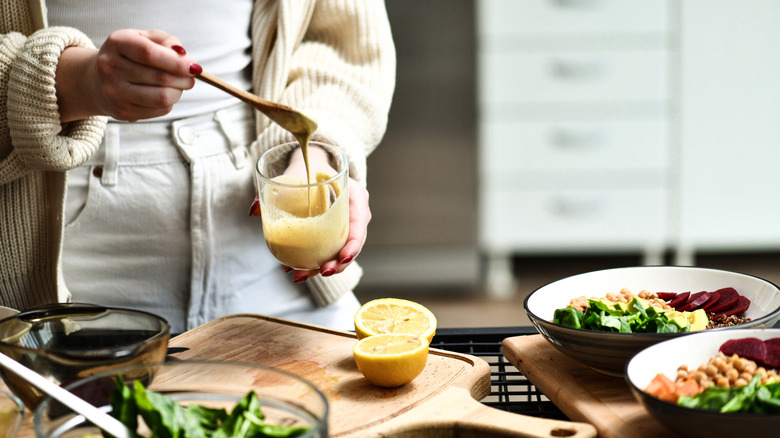
One caveat worth underscoring: Nutritional comparisons don't make them interchangeable in the kitchen! You can compare them by the numbers, but in practice, each spread plays its own role in cooking, flavor, and culinary tradition.
Sesame seeds are among the oldest cultivated crops, with tahini showing up in medieval Arabic cookbooks and cementing itself as a staple throughout the Middle East and North Africa. Grinding sesame seeds into a smooth paste made them versatile, moving from savory dips to confections like halva. Peanut butter, by contrast, is relatively new. Indigenous communities in South America had long consumed ground peanuts, but the spread as we know it emerged in the late 19th-century United States, promoted as an easy-to-digest protein source. From there, it quickly became a cultural fixture, especially in North America, where it's still a default sandwich filling.
Tahini is earthy, nutty-bitter, with a more fluid viscosity, making it a natural fit for sauces, dressings, or desserts where its intensity balances sugar or acidity. Peanut butter, thicker and sweeter, has a creamy mellowness that reads as comfort food to many Western palates. Used thoughtfully, both spreads can stretch further than their clichés. Tahini, despite its usual savory profile, makes a rich addition to brownies or cookies, deepens the flavor of cold sesame noodles, and adds body to creamy soups. And peanut butter can do more than balance jelly, shining in savory cooking too, from West African groundnut stews and deeply flavored meat marinades to spicy Thai satay sauces, and can even anchor salad dressings with nutty depth.