

How To Keep Fruit Salad Fresh In Your Mason Jars
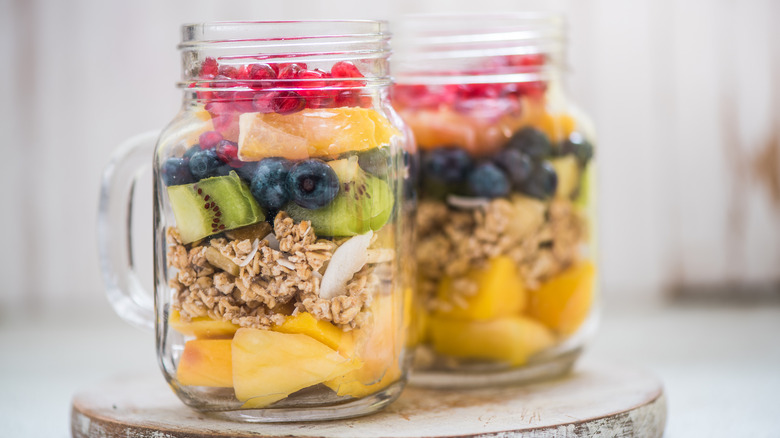
Colorful and vibrant one day, a soggy, browned mess the next. The sad reality of fruit salads is that they don't stay fresh for long after they are made. Berries grow soggy. Apples turn brown around the edges. Melons lose that juicy crisp we adore so much. While it's impossible to stop this from happening, you can always slow it down and keep the salad fresh longer — giving you just enough extra time to enjoy all that goodness once again. The only things you'll need are lemon juice and a mason jar.
Start by selecting and cutting your fruit before scooping it into a mason jar. Once you've loaded the fruit salad into the jar, squeeze lemon juice over it, and store it in the fridge. Properly sealed, the fruit salad should remain fresh for at least three days — although, if you're making it ahead of time, limit to one day to be certain. Make sure you opt for wide-mouthed jars so you can add the ingredients easily, and maybe even skip the bowl entirely to enjoy it directly from the jar.
Of course, for the best result, choose fruits that handle long-term storage well. This could be sturdy ones like apples, berries, and melons, or citrus varieties such as grapefruits and oranges. It also goes without saying that storing fruit salad in the fridge (or freezer) is crucial to maintaining its freshness. This means you don't want to keep it at room temperature for too long — especially not overnight. The refrigerator's stable, cool temperature is key to inhibiting bacterial growth and, therefore, extending the fruits' freshness.
Why lemon juice works so well
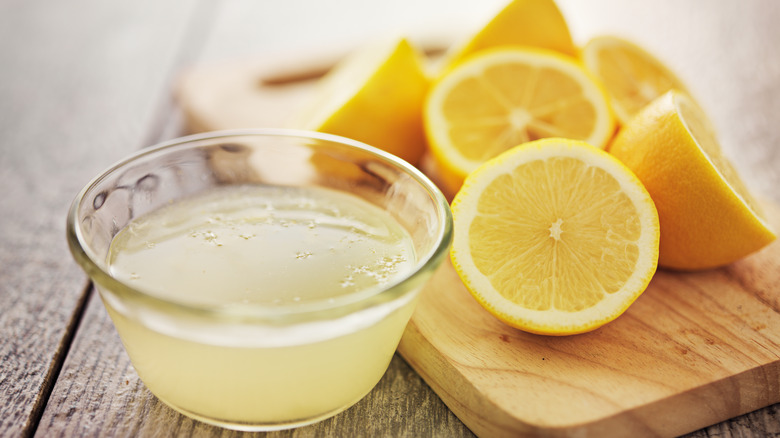
One of the main concerns with fruit salad's freshness is the browning that occurs due to oxidation of the polyphenol oxidase (or PPO) enzyme (via Elsevier). Sure, it's still safe to eat, but the unappetizing appearance alone can dwindle the enjoyment. Citrus juice — often lemon — is an easy fix for this issue. A lot of the time, it's the only ingredient you need to keep fruit salad fresh.
According to Scientific American, this happens because lemon juice, with its citric acid and low pH level, can render the enzymes inactive and significantly slow down the browning process. This reaction is the key factor behind other kitchen tricks, like stopping your avocado dressing from turning brown. And you best believe it will work just as well on the myriad of fruits in your salad lineup.
Minimizing the oxidation process is also one of the reasons a mason jar is a great pick. Tightly sealed, it's perfectly efficient at limiting the fruits' air (and, therefore, oxygen) exposure. Moreover, glass is a preferred material for fruit salad storage since it limits moisture build-up that could potentially lead to slightly mushy, bacteria-prone fruits. All without the unpleasant scent that plastic containers sometimes imbue onto your food.