

How The LTLT Cooking Technique Makes A Difference In The Quality Of Your Cooked Meat
We may receive a commission on purchases made from links.
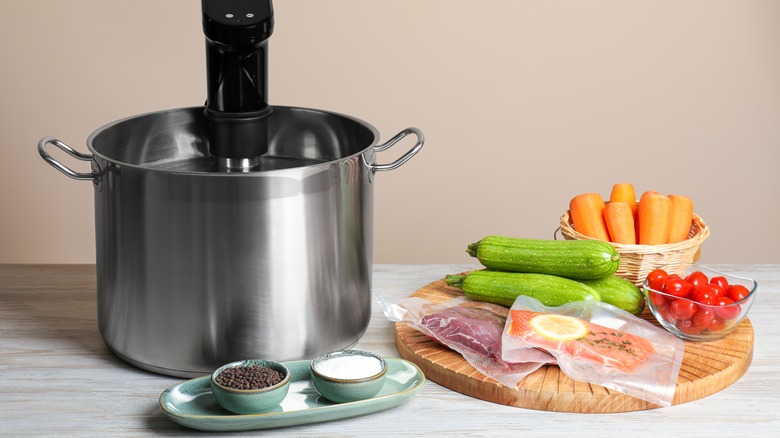
In a world obsessed with speed, some of the most extraordinary culinary results come from doing the exact opposite: cooking things very slowly. LTLT cooking — or low temperature long time cooking — transforms ingredients through gentle, extended heat application at precisely controlled low temperatures. This method involves cooking food at heat typically regulated between 120 to 140 degrees Fahrenheit, for periods ranging from one to several hours. The best-known application of LTLT cooking is sous vide, which translates to "under vacuum" in French. Meat — or even fish, poultry, and vegetables — are marinated, sealed, and then immersed in a temperature-controlled water bath for hours.
Despite the fact that it takes so long and requires specialized equipment, there are two reasons LTLT cooking is popular, especially in high-end restaurants. The first is the quality of the finished product, and the second is the ease with which it can be replicated.
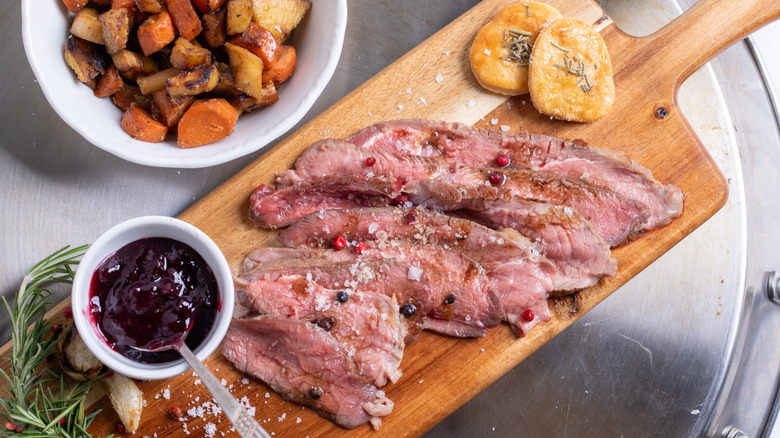
The extended cooking time at low temperatures gradually breaks down tough fibers and connective tissues in meat, and the result is the kind of melt-in-your-mouth tenderness that is practically impossible to achieve using traditional high-heat methods. Additionally, once you get the combination of temperature and time right on your sous vide steak, you can replicate the exact same level of tenderness every single time. Once the meat reaches the perfect consistency, it is common to sear it over high heat for a few minutes to achieve a caramelized crust.
Sous vide experiments at home
Yes, you can use this technique at home. Unlike precision baking or cooking delicate sauces that will curdle if you look away for a second, you do not need to worry too much when trying your own sous vide experiments. This is because LTLT cooking operates at dramatically lower temperatures than conventional methods. While sous vide maintains a gentle 122 to 140 degrees Fahrenheit, traditional techniques demand much higher heat: Poaching liquids reach 160 to 170 degrees, simmering occurs at 180 to 205 degrees, and pan searing can soar to 400 to 450 degrees Fahrenheit or higher.
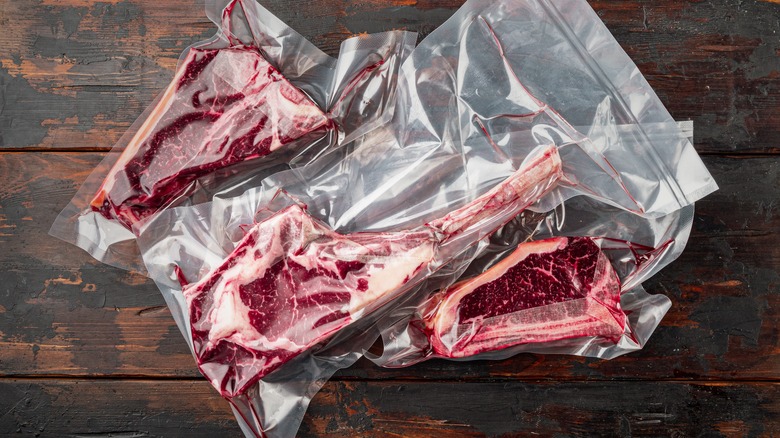
Needless to say, you must be able to monitor the water temperature. You can do this either by investing in a hand-held sous vide machine (under $150 on Amazon) or by using a simple digital thermometer, which typically costs about $30 to $50. You do not need a fancy vacuum sealer — simple freezer bags will do just fine. Apart from that, all you need is a large stock pot to heat water and a timer. For your sous vide experiments, use this as a starting point and adjust as you go along: Cook beef at 140 degrees Fahrenheit for 1 hour, chicken at 150 degrees for 1 hour, and fish at 120 degrees for 1 hour.
How and when sous vide got so popular
While the tale of scientist and inventor Benjamin Thompson accidentally slow-cooking meat in the early 1800s is a popular origin story, the principles of LTLT cooking are far older. This foundational cooking method has been used for centuries across cultures, from traditional pit-roasting to overnight oven cooking, all based on the simple principle of applying gentle heat for an extended period.
The specific process of sealing and cooking meat was invented in the 1970s in France, where chefs Pierre Troisgros and Georges Pralus were searching for a new way to prepare foie gras. Half a century later, you cannot watch 15 minutes of a cooking show without a sous vide machine making an appearance. In fact, Heston Blumenthal, the godfather of molecular gastronomy, has called it the greatest advancement in cooking technology in decades — as good a reason as any to give low-and-slow a shot.