

Here's Why You Should Never Reuse A FoodSaver Bag, Even If You Take Precautions
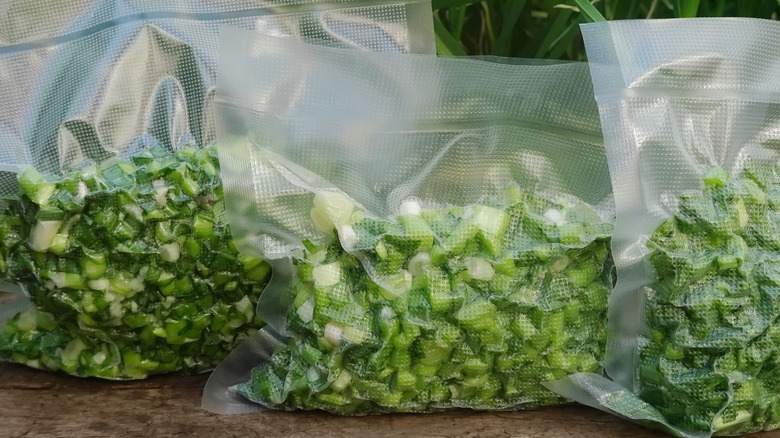
We may receive a commission on purchases made from links.
Reusing vacuum seal bags is a clever way to save money and an easy way to reduce waste in the kitchen, but it's not always safe. Even the most thorough washing can't fully eliminate the risk when certain foods are involved. We've admitted before that the FoodSaver is the vacuum sealer you need for maximum flavor and freshness, but if you're in the habit of rinsing and reusing your FoodSaver bags, it's important to know where to draw the line, or you might make a cleaning mistake that could get toxic.
According to FoodVacBags, you should never reuse bags that were used to seal raw meat, fish, eggs, or soft cheeses. These foods can leave behind microscopic traces of bacteria like salmonella, listeria, or E. coli — and even a high-temp scrub won't guarantee those pathogens are gone. Reusing bags that have touched raw animal products risks cross-contamination and foodborne illness, especially if you're planning to seal ready-to-eat foods the second time around.
So while it might feel wasteful to toss a thick plastic pouch after one use, it's a far safer choice than taking a chance with bacteria that could spread throughout your kitchen.
How to safely reuse food storage bags
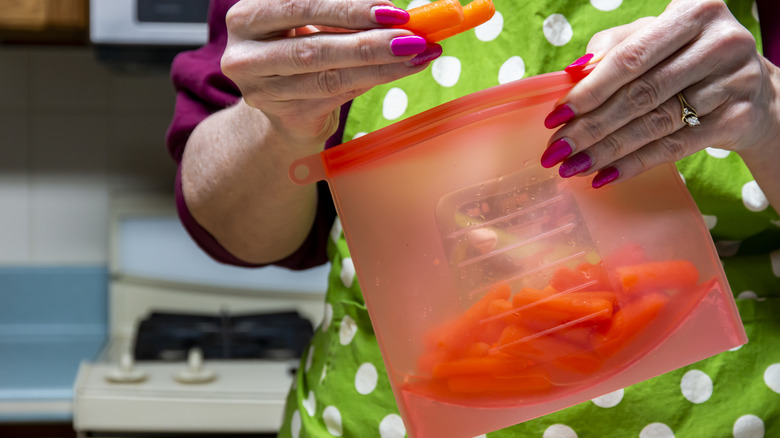
Not all bags are one-and-done. If your vacuum seal bags were used to store dry goods, pre-cooked meals, or produce, they're generally safe to wash and reuse as long as they're still in good condition. To do it properly, wash the bags with hot, soapy water and let them air-dry completely. If your bags are marked "dishwasher safe," you can also put them on the top rack of your dishwasher to clean them. If they've developed creases, discoloration, or punctures, it's best to recycle or discard them rather than risk a broken seal or contamination.
Keep in mind that FoodSaver bags get slightly shorter every time you open and reseal them. After a few uses, you may not have enough material left to form a tight seal. For that reason, many people choose to reuse bags for similar foods — for example, always using a particular bag for baked goods or frozen fruit — and marking the contents and original use date with a permanent marker.
Reusable vacuum bags made specifically for multiple uses are also available, like these BPA free vacuum sealer bags on Amazon, and may be a better long-term option if you're sealing food frequently. But when it comes to raw meat or eggs, just cut your losses and toss the bag. Your gut will thank you.