

Is This Really The Worst Day Of The Week To Buy Seafood?
We may receive a commission on purchases made from links.
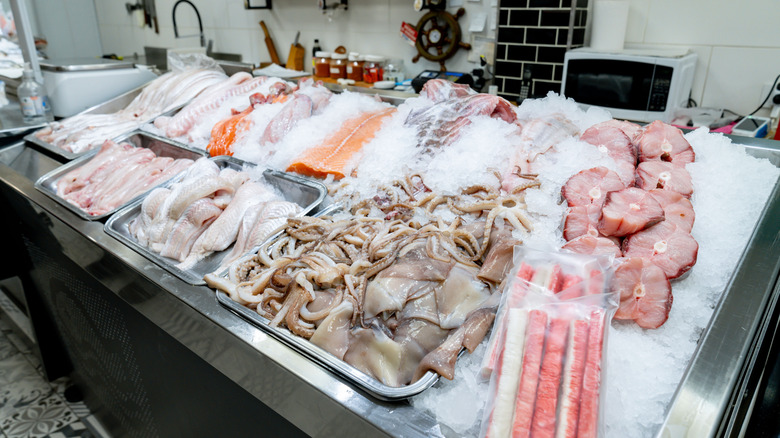
Mondays have long carried a bad reputation in the seafood world, but if someone's telling you to avoid fish that day, they're a little behind the times. Nearly a decade ago, Anthony Bourdain himself admitted that his famous warning to not order fish on Mondays didn't really hold up anymore. The caution first appeared in 1999, when he urged readers to skip Monday seafood specials in his New Yorker essay "Don't Eat Before Reading This." He expanded on it a year later in his seminal book "Kitchen Confidential," a deep dive into the restaurant world's dark underbelly.
His argument boiled down to this — there were no seafood deliveries over the weekend at the time, so most chefs ordered fish on Thursday for a Friday delivery, planning to sell it over the busy weekend. Whatever didn't move on Friday or Saturday would reappear as brunch or specials on Sunday, and by Monday the last of the leftovers were being pushed out before fresh deliveries could be ordered. In other words, the fish on the Monday menu had likely been sitting around since Thursday in less-than-ideal conditions. Over time, this warning was applied not just to restaurant menus, but even buying fish at the fishmongers and markets itself, since they too were getting rid of stock after being closed for the weekend. But in 2016, he retracted that warning in a video, stating his new position in no uncertain terms: "People, please do me a favor. Order that fish on a Monday."
Why Anthony Bourdain retracted his statement
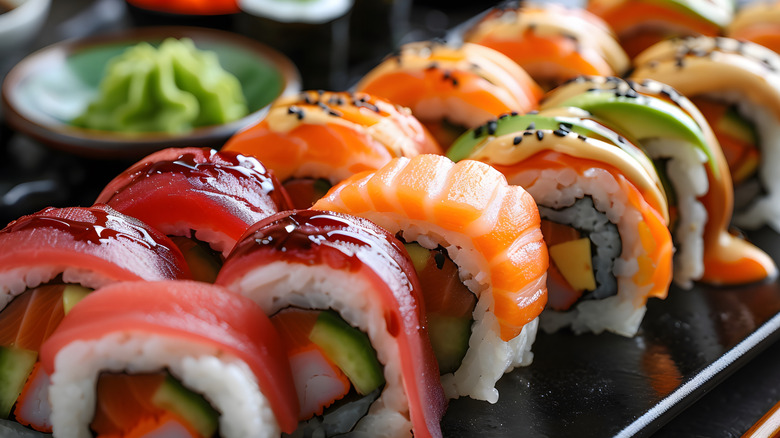
While a lot of his advice on what not to order at restaurants has stood the test of time, the warning about seafood and Mondays is one he regretted making, saying it was bound to be on his tombstone. So, what changed? A lot. Bourdain explained in the video that the restaurant landscape had transformed, and food standards had risen dramatically, with diners expecting much higher quality across the board. Bourdain used America's love for Sushi as an example, saying eating raw fish would've been unimaginable for many people in the nineties.
This change in standards and expectations meant that restaurants could no longer get away with serving four-day-old fish. "They can't get away with selling us the crap they used to. We now know what good fish should look like and smell like," Bourdain said. Fish suppliers and restaurants raising their game meant fresher seafood every day of the week whether you were ordering a special at a restaurant or buying fresh fish at the market.
Another reason the "don't buy seafood on Mondays" rule has largely lost its bite is the rise of flash-freezing technology. Commercial flash-freezing methods chill seafood to sub-zero temperatures almost instantly, locking in its texture, flavor, and nutrients for up to two years without compromising quality. Thanks to this tech, fresh doesn't have to mean local anymore, and we can now savor top-tier seafood from the farthest reaches of the globe, making the old Monday-fish myth feel even more outdated.