

Why You Should Never Store Cold Cuts Like Bologna Next To Raw Meat
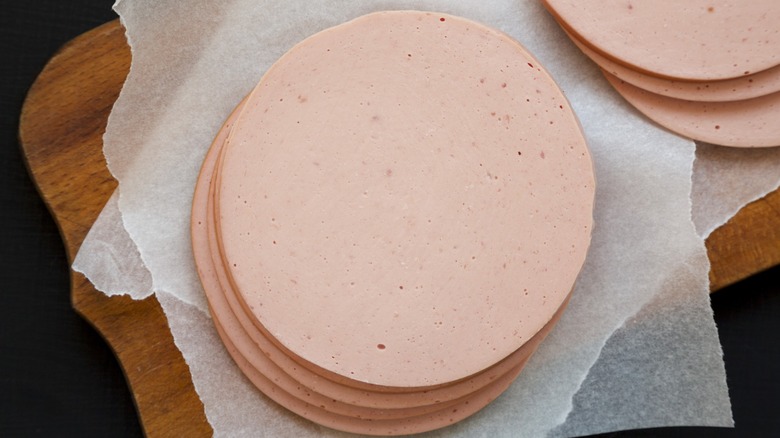
No one wants to eat contaminated food, but 2022 data shared by Environmental Health Insights shows that between 12% and 20% of food-borne outbreaks start at home. Unfortunately, it's easy to overlook important details, and best practices aren't always clear, especially regarding different kinds of meat. One way to cut down on risk is to make sure you never store raw meat near ready-to-eat cold cuts like bologna.
Because cold cuts don't need any additional preparation before eating, you should keep them separate from any raw meats and their juices. A 2001 study from Applied and Environmental Microbiology showed that over 70% of chicken tested in the Washington, D.C. area was contaminated with Campylobacter and nearly 39% contained E. coli. These bacteria — along with Salmonella, another common bacterial contaminant — were also detected in pork, turkey, and beef (albeit in lower numbers). Cold cuts stored anywhere near raw meat can therefore become contaminated with these bacteria.
While proper cooking can make chicken or pork safe to eat, cold cuts generally aren't cooked, so you have no extra layer of protection and risk illness if these foods become contaminated in a shared space. They must stay separate in your prep area, your fridge, and even your shopping cart if you want to be as safe as possible.
The threat of cross-contamination
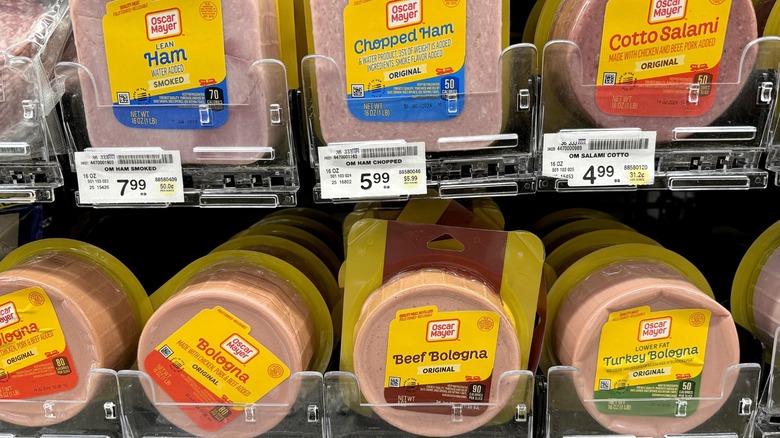
Cold cuts and other processed meats have a bad reputation, especially bologna. Long-standing belief dictates that bologna is cheap, low-grade meat made from undesirable cuts and leftovers. One fact about bologna is that it's very misunderstood. Just like any other meat, this deli cut has to meet some strict USDA requirements, and many companies take pride in using quality ingredients. Nevertheless, the reputation persists.
Because of bologna and other cold cuts' poor reputation, cross-contamination may seem to indicate that bologna itself is the source. Even as far back as 1978, however, research from the Journal of Food Protection showed that packaged meats such as bologna contained relatively low levels of dangerous pathogens such as Salmonella and E. coli. This is not to say that these meats never become contaminated — sometimes they do. Cross-contamination, however, can significantly increase this risk.
Make sure you're keeping your raw meat stored safely away from any other foods. It should be in its own sealed bag or container, as should your deli meats and bologna (in case you'd like some guidance, here are the deli meats that will last the longest in your fridge). When preparing foods, use separate utensils and surfaces for raw meat and cold cuts. A little prevention can go a long way toward ensuring your health and safety.