

Not Every Green Tomato Is Waiting To Ripen. Here's Why
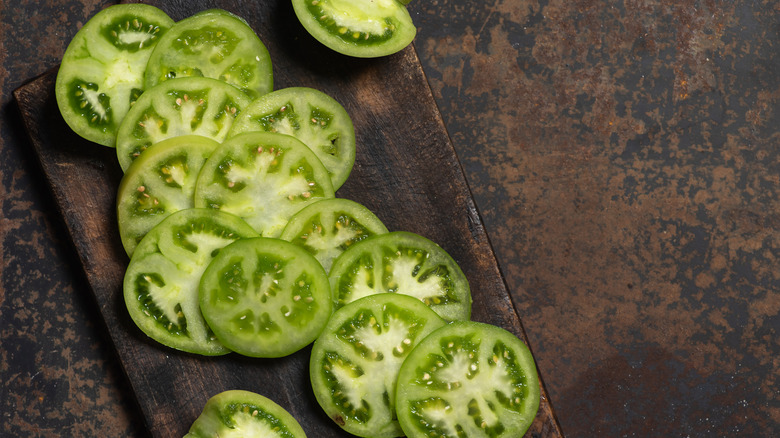
At first glance, green tomatoes can be a bit confusing — aren't they just red tomatoes that haven't yet ripened? Sometimes, but there are actually two distinct categories in which you can place green tomatoes. On one side, you've got red tomato varieties picked early while they're still unripe, pale, and mostly firm. These green tomatoes are destined to turn red if left to Mother Nature's timetable. On the other hand, heirloom or specialty varieties are bred intentionally to remain green even when fully ripe, soft, juicy, and flavorful. These include numerous distinct varieties with names like Green Zebra, Aunt Ruby's German Green, and Green Moldavians.
You may well have eaten unripe green ones in the form of Southern-style fried green tomatoes, made famous in the Alabama-based film "Fried Green Tomatoes" and the 1987 novel "Fried Green Tomatoes at the Whistle Stop Café." Apart from literary shenanigans, these deep-fried, battered, spicy tomato slices typically appear as appetizers or side dishes. To achieve the intended tangy flavor and crunchy texture, fried green tomatoes specifically require the firm, unripe tomatoes.
Like any heirloom tomatoes, the clan of green-when-ripe tomatoes are much more nuanced, each bringing its own taste, characteristics, and appearance. These varieties are often cloaked in interesting patterns or subtle color variations. For example, green types such as Green Zebra showcase distinct yellow stripes over more than half of the light-green skin. When ready to eat, the taste transforms from a typical unripe tartness to sweet, tangy, and fruity flavors.
How to use green tomatoes, ripe and unripe

Eating and cooking with green tomatoes varies considerably between the two types: traditional unripe tomatoes or ripened heirlooms. When craving crispy Southern classics like fried green tomatoes, reach for unripe ones, as the firmness helps them hold up under the batter and fry into tangy golden goodness. Beyond frying, unripe tomatoes thrive when pickled or turned into relishes and chutneys. You can also swap them in for recipes requiring apples, such as pies or cakes; puree them for cold gazpacho; or grill them in a veggie medley. For more ideas, check out our list of 15 easy ways to use up green tomatoes before summer is over.
As for the stay-green tomatoes, typically heirloom varieties, they ripen and soften just as red tomatoes do. They bring a range of flavors and characteristics, from sweet to spicy, complex, tart, meaty, juicy, and more, depending on the type. They can grow quite large as well, such as the Green Giant, a beefsteak tomato weighing up to 32 ounces. Like other green heirlooms, they're good for eating fresh, turning into sauce, juicing, and topping sandwiches or salads. Then there's the petite, juicy, and mild "blue sun" tomato, which features a green lower body draped with dark blue "shoulders," a trait credited to high levels of the beneficial antioxidant, anthocyanin. All the ripe, colorful, and patterned green tomatoes are an excellent choice for vibrant showcase salsas, bruschetta, and pasta salads.