

The Easiest Way To Get The Food Smells Out Of Glass Jars You Want To Reuse
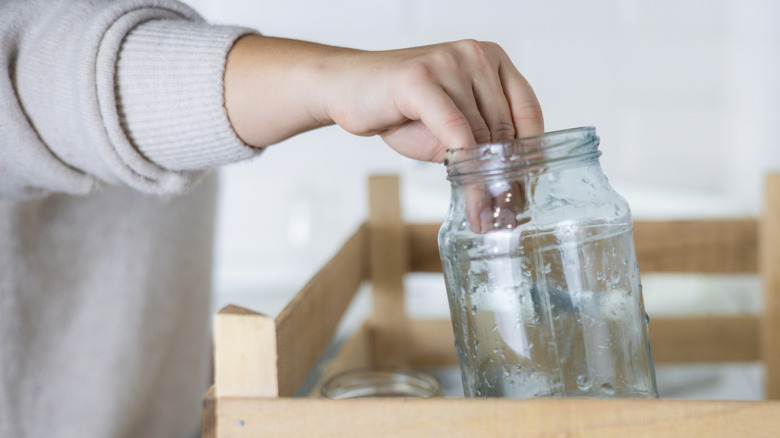
What better catch-all tool is there than the mighty glass jar? It's perfect for sipping a cold beverage, preserving precious garden bounties, packing portable meals, and storing well-sealed leftovers. But even with a vigorous scrub or dishwasher session, you may still notice the lingering scent of the jar's previous contaminants. No one wants last night's spaghetti sauce transferred into today's jarred sangria, so let's discuss how to get that pesky smell out.
There are plenty of methods for removing odors from food containers in a pinch, like a vinegar cleaning treatment or a baking soda paste. But when you want a simple, free solution, don't dig through the pantry or endlessly scrub that jar. Instead, harness solar power, and leave your glassware in a sunny area outside. This chemical-free, low-labor method not only works, but it also lets you focus on other kitchen tasks while nature takes care of the rest.
The sun's powerful UV rays can expertly disinfect jars by killing off any bacteria growing on the surface. You'll need to place jars in direct sunlight for a few hours to get the job done. If possible, choose the brightest, warmest time of the day, and be mindful to move the jars to a new spot if a shadow drifts over them. Since glass is non-porous, it carries far fewer scents than its plastic and silicone counterparts, but that doesn't mean it's smell-proof. You'll probably notice a faint odor when using potent ingredients that have oily residues or are highly pigmented, like curry or coffee.
The other culprit that keeps food odors on glass jars

So, you've placed your jar in the sun and maybe even implemented another tip or two for removing unwanted scents, but you still notice a smell. This may be because it wasn't the jar itself that was smelly but rather its lid. There are a handful of reasons why lids contribute to this problem. They may have grooves or gaps, like those between the metal disc and threaded ring of traditional canning jars, that can catch food bits and therefore retain smells.
Some lids also have silicone gaskets. These are meant to help keep jars airtight, but they also harbor scents. Even if you're working with a high-quality, food-grade silicone lid, the material is still porous. Hot water can make the situation worse, since heat expands the material's pores and allows odors to penetrate even deeper. Thankfully, the sun also helps here and is best paired with a deep clean. Plastic lids can benefit from the same solar treatment.
As the adage goes, an ounce of prevention is worth a pound of cure. So, instead of spending extra time getting scents out of your glass jars, try avoiding their pungency in the first place. Since food contact causes odor absorption, especially near or on lids, consider placing a barrier down before sealing a jar. Wax and parchment paper make great shields, creating a protective layer that resists food particles and oils. If you're using glass jars for leftovers, don't let them drift to the back of the fridge only to be excavated six months later. The longer food sits in a container, the more deeply the smell will penetrate. Plus, bacteria growth significantly increases three or four days after storing leftovers and contributes to the scent when left long-term.