

The One Type Of Canned Olives You Should Leave On The Grocery Shelves
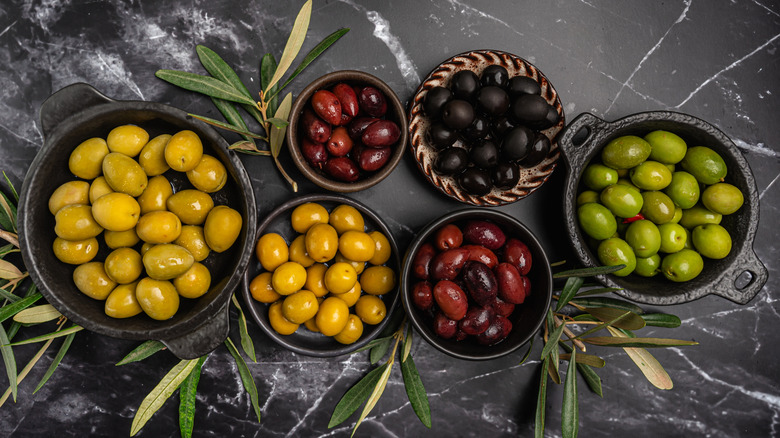
Olives are an ideal choice for many people who prefer savory over sweet when it comes to their snacks. In fact, according to data recently provided by YouGov, 55% of people in the United States said that they liked green olives. Perfectly salty and briny straight from the jar or aesthetically spread across a charcuterie board, pre-packaged olives add a unique and powerful flavor to a wide variety of dishes. That said, you may want to skip out on the pitted canned olives you'll find on your next grocery trip.
Pitted olives — those with the hard inner seed removed — typically come out of the jar or can with a different flavor profile and texture than their whole counterparts. That inner seed, referred to as the "pit," keeps whole olives firm in texture and helps to preserve the integrity of their natural flavor without too much brine soaking into their skin. With pitted olives, on the other hand, the absence of the pit allows more of the brine in the jar to soak up in them, including inside their fleshy center, and break down a bit of the olive itself. This can sometimes cause a mushier, saltier texture that some may find unappealing.
Alternatives to buying pre-pitted olives
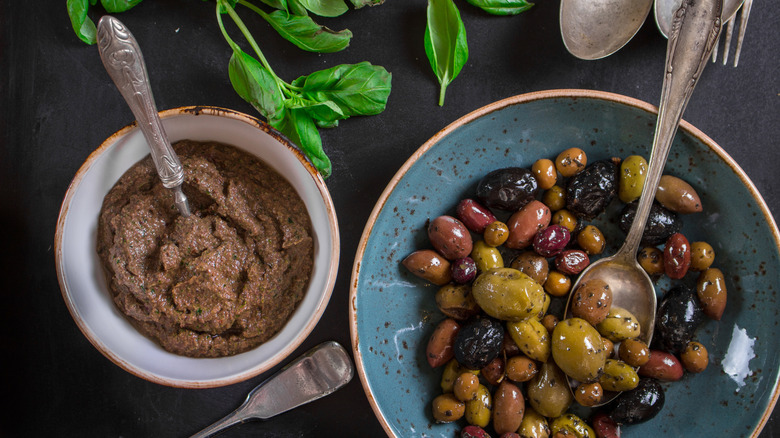
Many foodies who are particular about the natural flavor profiles of some foods, like olives, might shudder at the sight of canned pitted olives. They could be on to something, though, when you consider other options. Many specialty shops or even your typical chain grocery store will have an olive bar or at least a few freshly prepared cartons of whole olives. Sometimes soaked in a mix of oil, brine, and spices, fresh whole olives are a great option.
If you're building a charcuterie board or a table full of tapas in particular, you may want to go with whole olives, whether they're canned or fresh from the deli section. You can also use unpitted olives for snacking or even as a garnish for things like hummus or salads — just be sure you warn any unwitting guests or people sharing a meal with you to avoid an unpleasantly crunchy surprise.
You can also buy whole olives and pit them yourself to preserve the natural flavor but give them more versatility. The choice between pitted and unpitted (whole) olives really boils down to what you're going to use them for; if you want to use the olives for a salad or a tapenade, for example, you'll definitely benefit from cutting them into tiny pieces for more spreadability and an easier bite. Try your hand at DIY olive pitting and make our easy olive tapenade recipe.