

The Overlooked Grocery Pricing Detail That Matters More Than Size

With grocery prices constantly on the rise, it is more important than ever that you are careful in how you shop. There are plenty of ways to save money at the grocery store, like buying marked-down items and avoiding unnecessary purchases, but the best way to save is also the most basic. Many folks try to save money at the grocery store by buying products in packages that contain larger quantities or volumes. Buying in bulk at the grocery store like this can save you money, but unfortunately, those larger packages are not always actually the cheapest option. To really determine the best deal, you need to look at unit pricing.
Unit pricing refers to the actual price per unit of whatever product you are buying. If you're looking at a $6 box that has four granola bars in it, for example, the unit price for those granola bars is $1.50. These same bars may sell singly for $2 each, and in a 12-pack for $15. In that case, you have three options, the single bar for $2 per unit, the 4-pack for $1.50 per unit, and the 12-pack for $1.25 per unit. It isn't until you have this per-unit cost that you can accurately compare those granola bars to the other options available. Typically, things sold in larger packages come with a lower unit price, as they are cheaper to package and ship, but that is not always the case — especially when one or both of the packages are on sale.
Weighing unit prices for discrete grocery items
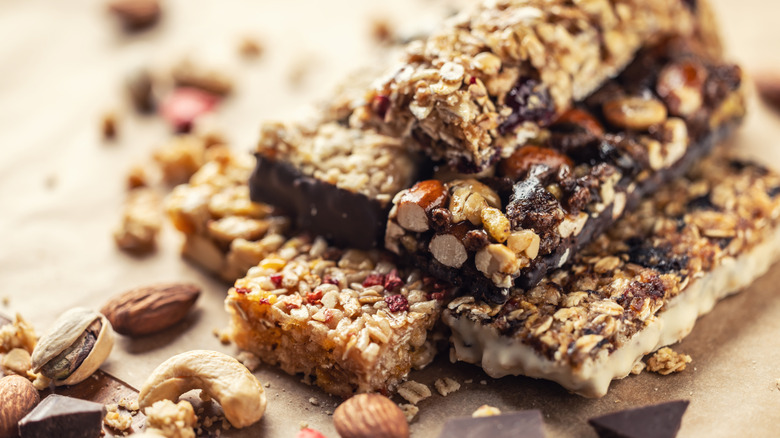
There is good and bad news about shopping by unit price. The good news is that it will save you money on the products you enjoy and help you practice your basic arithmetic skills. The bad news is, well, you'll have to practice your basic arithmetic skills.
Before you start doing the math, check the price tag on your grocery store item. Some grocery stores do the math for you and list a unit price next to the actual cost of an item. In some scenarios, like the aforementioned granola bars, unit price is relatively simple. If you are talking about one granola bar going in each lunchbox each day, the bars are discrete and interchangeable items, and all you have to do to determine the unit price is divide the cost of the box by the number of bars — pretty simple. But as soon as you start to deviate from discrete units and get into weights and volumes, everything gets a bit more challenging.
Let's say that those granola bars we've been talking about (henceforth referred to as bar one) are each 2 ounces in weight, but a competing brand (bar two) offers bars that are 2.5 ounces and sell in a 4-pack for $7. Is that a better deal? Well, it's complicated. Bar two has a unit price of $1.75, which is 16.6% more expensive than bar one, but bar two is 25% larger. In theory, that's a better deal, because you are getting more product for your money. But does that increased size actually result in increased value for you as a consumer? Not necessarily. If you are talking about eating the same number of granola bars on a daily basis regardless of size, bar two is just increasing your cost for the same number of items.
Determining unit price for bulk items
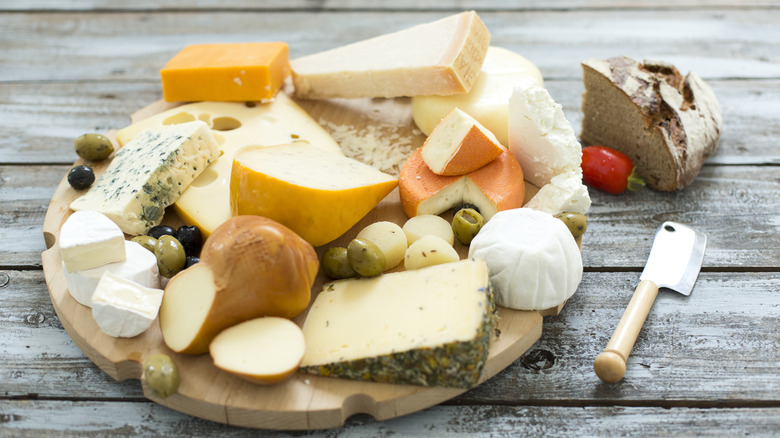
For items that you buy in bulk and use in changeable quantities, like flour, milk, or cheese, things are both simpler and more complicated. The contents of these packages are easily divided into whatever size you need for a given recipe, so you don't need to make a decision about, for example, how large a granola bar you actually want to eat each day. But the math for these products is slightly more difficult.
With grocery items that can be used in variable quantities, the unit price will be determined by weight or volume. For example, if a one-pound block of cheddar cheese from your preferred brand costs $12, then you can obviously say it's $12 per pound. But if you want to compare that to the price of a 12-ounce block on sale for $8, you'll need to put things in ounces. There are 16 ounces to a pound (one of the basic measurements all cooks should know), so the unit cost of the one-pound block is $12 divided by 16 ounces, or $0.75 per ounce. The other cheese was on sale for $8 for 12 ounces, which comes out to $0.66 per ounce. So, in this case, the smaller block is a better deal.
In the end, unit price is the top tool for bargain shoppers, though it does require a bit of mental labor. But if you learn your measurements (16 ounces to a pound, 32 ounces to a quart, etc.) and brush up on your arithmetic, you'll be saving heaps at the grocery store before you know it.