

The Biggest Mistake You're Making With Your Pizza Stone

We may receive a commission on purchases made from links.
You don't have to be a culinary genius to make a delicious gourmet pizza, but you do need a few tricks up your sleeve to turn "meh" pizza into an authentic-tasting, nonna-approved masterpiece that's crisp and bubbling with cheese and toppings that taste like they came straight out of a wood-fired oven in Italy. We asked Robbie Felice, whose restaurant pastaRAMEN is making its U.S. Open debut, how to avoid the most common pizza-making mistake. His answer? It's all about nailing the process, starting with properly preheating your pizza stone, a crucial step many new chefs overlook. "You want that crispy undercarriage, and the only way to get it is by making sure your stone is fully heated before the dough ever touches it," Felice told Tasting Table.
According to Felice, a fully preheated pizza stone "gives you that beautifully crisp undercarriage, the foundation of a great pizza." How does this make a difference? The even heating of the pizza stone is what mimics a traditional brick oven, allowing the dough to rise up instantly and develop that perfect harmony of soft chewiness and crispiness, while preventing your favorite pizza toppings from overcooking before the base is done.
Investing in a good-quality pizza stone will help you achieve a crisp, evenly baked crust. Although they're called "pizza stones," these tools can be purchased in a variety of materials, including steel, ceramic, and cast iron. You'll want to try out a few different options to see what you prefer to cook with, as different cooks have different pizza stone preferences.
Restaurant-quality pizza in a few simple steps
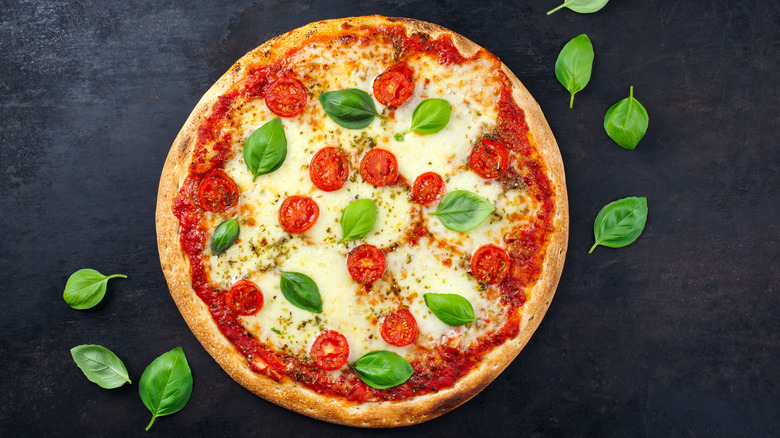
What do you do after you've chosen your preferred pizza stone and it is fully preheated? It's time to make sure your oven is set to the right temperature, and for gourmet pizza, the hotter your stone gets, the closer you are to replicating that wood-fired pizza. Most home ovens can reach up to 550 degrees Fahrenheit, and it's recommended you use the highest safe setting available."If it's not hot enough, you'll end up with a soggy, undercooked base. The stone has to be at temperature to do its job properly," explains Felice.
Once both your stone and oven are preheated, it's time to get cooking. Although the cooking time will vary, depending on your oven's output, the method is always the same. Gently place the pizza in the center of the pizza stone, on the bottom oven rack, where the heat is the strongest and most controlled. Then rotate your pizza 180 degrees midway through baking to avoid uneven heating. This rotation helps the crust to crisp evenly and ensures the toppings cook uniformly from edge to center. Simply implementing these steps in your pizza-making process can be the difference between a good pizza and one that looks and tastes like it came straight out of a professional kitchen, a true chef's-kiss-worthy pie. Bellissimo!