

This Bell Pepper Color Has The Most Nutrients
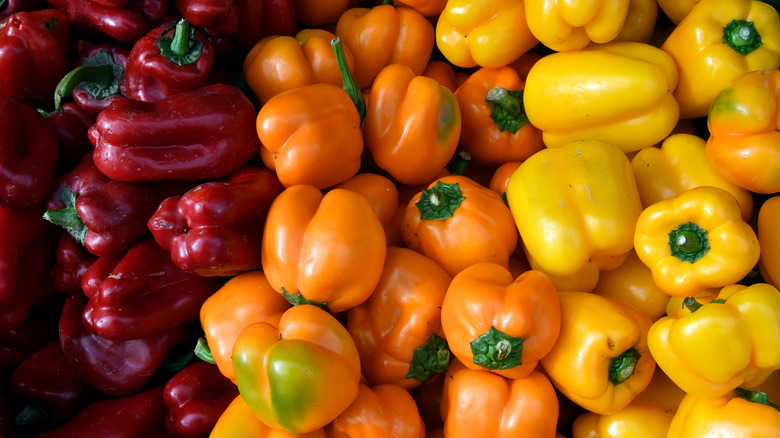
Have you ever stood in the produce aisle wondering whether to toss red, yellow, orange, or green bell peppers in your grocery cart? They may look similar, but each color comes with its own unique nutrient profile — and yes, one stands out from the rest. It may come as a surprise, but all bell peppers are actually the same exact vegetable (or technically a fruit), but it changes colors as it ripens. It starts off green and then ripens to become red, with other varieties ripening to become yellow or orange. That ripening process is not simply a fun aesthetic. It significantly boosts the nutritional value as it evolves through the rainbow journey. As for which one packs the mega nutrient punch, it's unmistakably the red bell pepper, sometimes referred to as a sweet red pepper.
In fact, that bright-red beauty carries nearly 11 times more beta-carotene and 1.5 times more vitamin C than its green counterpart. It also harbors more vitamin C than what's often considered the citrus C-queen, oranges. A single cup of diced bell peppers carries 190 milligrms of vitamin C, 3 times more than an standard medium-sized orange. Bell peppers are also full of antioxidants, such as lutein and zeaxanthin, and again, the riper the pepper (red versus green), the higher the antioxidant content. Consequently, all those things combined mean that the riper, more colorful red bell pepper gives your immune system a big boost, supports good vision, skin, and brain health, and much more. Plus, there's another big bonus: The reds are bursting with extra sweetness from longer ripening.
Green bell peppers shine in other ways
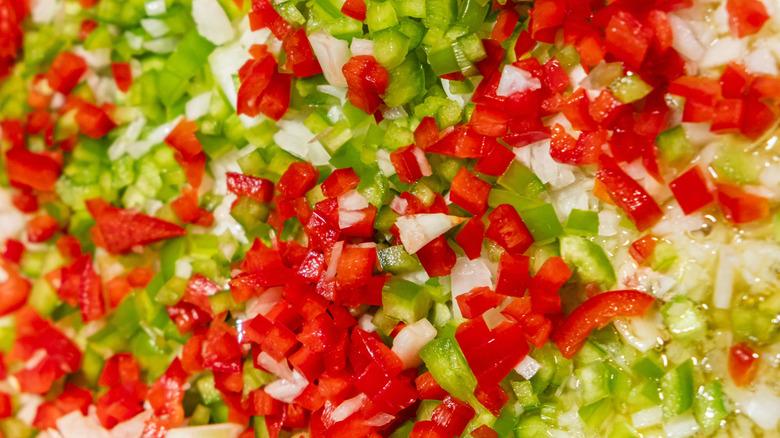
Before eschewing green, yellow, and orange bell peppers in deference to sweet reds, there's something you should know. Those other colors have their own distinct characteristics and their own place in the nutrition game. For example, green bell peppers offer less vitamin C, but they're lower in sugar, roughly 2.4 grams of sugar per green compared to 4.2 grams per red. The greens still contain valuable vitamins, plus smaller amounts of the same antioxidants in the reds. According to a scientific lipidomics study, although pickled red peppers have more carotenoids in general, the green ones show higher antioxidant activity on other levels.
Green bell peppers have a sharper, fresher, grassier flavor than sweet reds, making them excellent choices for savory dishes such as stuffed peppers, fajitas, omelettes, curries, and chili recipes. Yellow and orange bell peppers fall somewhere between greens and reds in term of nutrition and flavor, so they are adaptable to either end of the spectrum of bell pepper recipes. All the colors contribute to heart health, reduce inflammation, support digestion, and more — so mixing the green, yellow, orange, and red colors can provide the best overall nutrition and complex range of flavors. For an in-depth at the nuances, check out our Tasting Table article on the difference between red, yellow, and green bell peppers. When choosing the super-nutritious reds, we also have some suggestions on mistakes to avoid when cooking when red bell peppers.