

How Yeast Actually Works (And Why It Matters For Successful Bread)
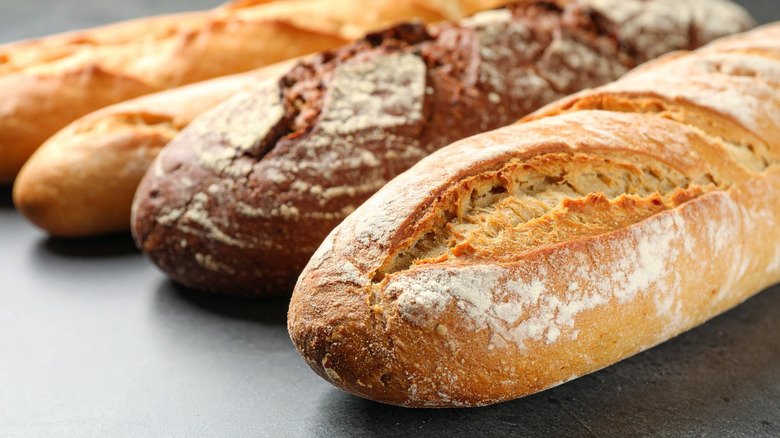
Ask most home bakers what yeast does, and you'll probably hear that it makes bread rise. That's like saying a computer lets you type — it's true, but it's also a lot more than that. Yeast is a living organism orchestrating a complex chemical performance that shapes not just height, but taste, aroma, and texture. If knowing how flavors and textures interact is the difference between cooking dinner and consistently serving up storms, understanding how yeast actually works is the difference between following a recipe and mastering the craft.
When it comes to yeast and its role in baking, plenty of external factors come into play, from the temperature of your kitchen to how often you bake. The tips and measurements here are a starting point, but you'll need to adjust based on your own experience to get the perfect loaf.
Let's start with a very frequently asked question: What's the difference between baking soda or powder and yeast? The main one is their origin. Baking soda and baking powder, while different from each other, are both man-made chemical compounds. Yeast, on the other hand, is a living, microscopic fungus found in nature, used for centuries in baking, brewing, and fermentation. While both can make dough rise, baking soda acts through a simple chemical reaction, whereas yeast works through a biological process of fermentation, creating complex flavors.
Breaking down the science
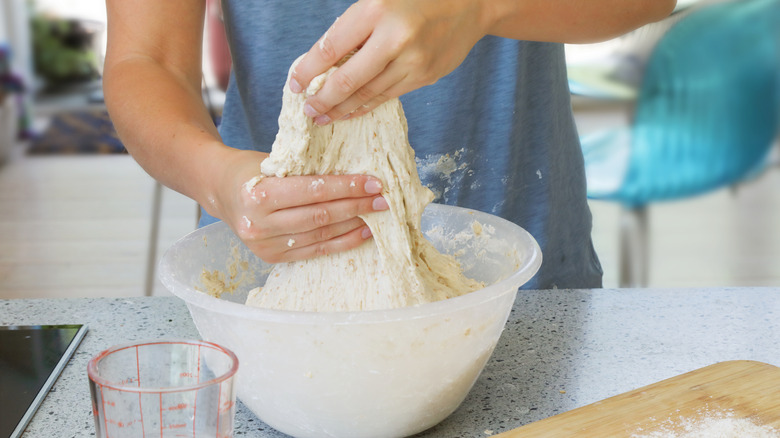
When yeast ferments, it produces carbon dioxide. But gas alone won't make bread rise. It needs something to trap it, and that's where flour comes in. The types of flour you use will affect the final result. Most raised breads use wheat flour because it contains two proteins that form gluten when mixed with water. As you knead the dough, this gluten network becomes stretchy and strong, creating pockets that capture the carbon dioxide from fermentation. Enzymes break down some of the starch into sugars that the yeast feeds on, while the remaining starch helps reinforce the gluten and absorb water, making the dough stable enough to hold its shape.
Many bakers let dough rise more than once to build both structure and flavor. Once the dough goes into the oven, steamer, or over a fire, the yeast keeps producing gas for a short while, causing its final burst of expansion. As the temperature climbs, the yeast dies, the gluten sets, and the bread's airy structure is locked in place, ready for that first warm slice.
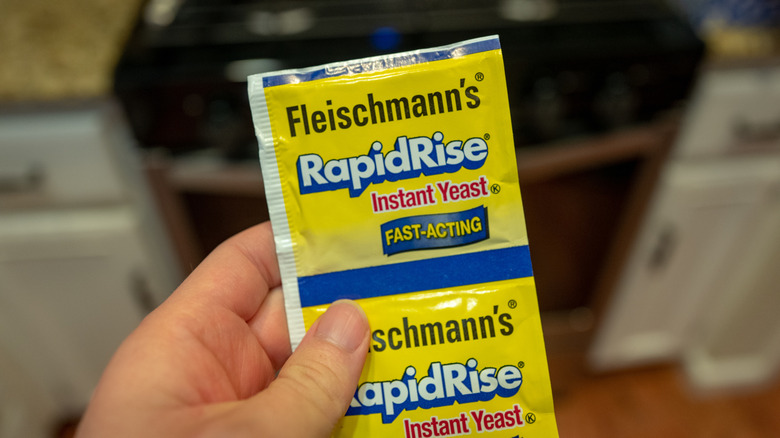
If you're wondering what the difference between active yeast and instant yeast is, active dry yeast needs a quick wake-up call before it can get to work. This step, called proofing, involves dissolving it in warm water with sugar before mixing it with the rest of your ingredients. Instant yeast, on the other hand, has finer granules and can be added straight to the dry mix. It also produces carbon dioxide more quickly, which often leads to a slightly bigger rise.
Why didn't my bread rise as expected?
The type and condition of your flour can make a big difference to your bread's rise. Whole-grain flours, like whole wheat or rye, contain bran that cuts through gluten strands, which can lead to denser loaves unless the recipe is adjusted. Dough that's too dry won't expand easily, since gluten stretches best in a well-hydrated environment. And if the surface of the dough dries out during proofing, it can form a crust that blocks further expansion in the oven.
The amount of yeast you use directly affects how fast your dough rises, and how it performs in the oven. More yeast means a quicker rise, but weaker gluten, which might leave the dough porous and unable to hold its shape. Using less yeast slows fermentation, giving the gluten more time to develop and resulting in a stronger dough with better oven spring. For 1 pound of dough, start with between 1/2 and 1 teaspoon of each packet of yeast (which contains close to 2 teaspoons today).
And finally, your kitchen's environment plays a bigger role than you might think. In a space where bread is baked regularly, the air and surfaces are likely rich with wild yeast, which can give your dough an extra boost during rising. In contrast, a kitchen where bread baking is rare tends to have far fewer of these natural helpers, so dough may take longer to rise than it would in a more yeast-active setting.