

Why Is Milk The Go-To Addition To Cereal?
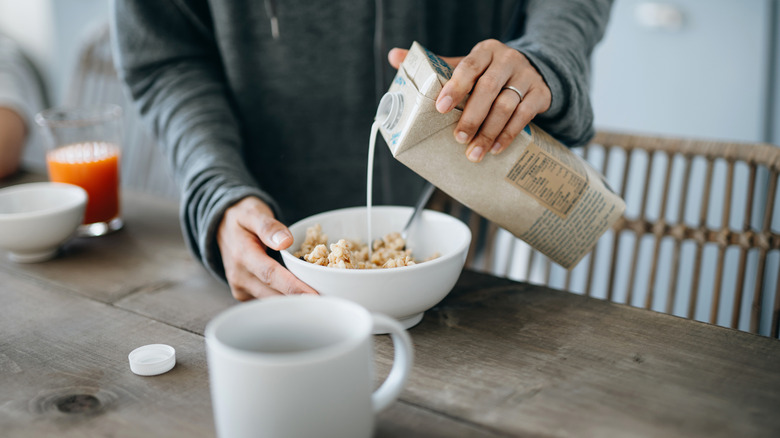
Sometimes there's really nothing better than hearing that cold splash of milk hit your favorite cereal. The familiar crackle brings a sense of comfort no matter your age, and whether you're the sugary Lucky Charms type or an old-fashioned Corn Flakes connoisseur, there's no denying that a bowl of cereal is never complete without milk. But have you ever thought about why exactly we put milk in our cereal?
The history of the pairing actually dates back all the way to the 1860s, when one of the first types of breakfast cereal was popularized in the U.S. The invention was called "granula" and it consisted of chunks of dried dough made from graham flour, the unrefined, coarse wheat flour used to make the first graham crackers. The cereal was made for the patients of a medical facility in New York, and it was so tough that it needed to be soaked overnight before it was eaten. Milk was the liquid of choice as it made the cereal taste better and softened them just enough.
A few years later, a surgeon named John Harvey Kellogg (yes, that Kellogg) made an improved version of granula called granola, which was also soaked in milk. The combination was seen as a healthier alternative to heavier foods, like meat and eggs, that were being eaten by Americans for breakfast at the time. Corn Flakes came around a short while later, and the milk trend continued.
Does milk change the taste of cereal?
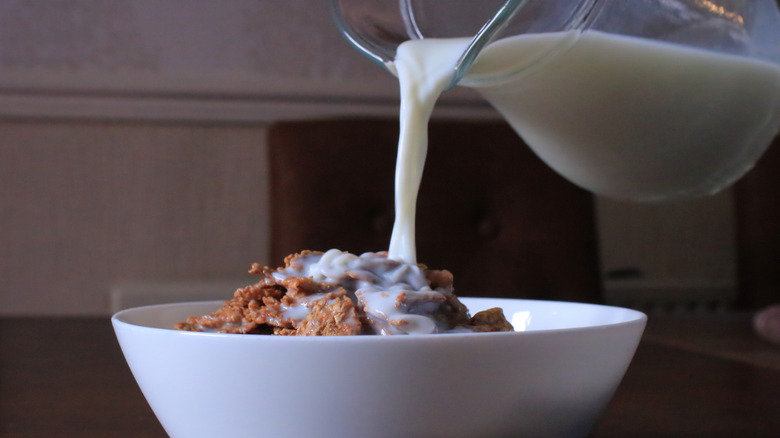
We don't know exactly why milk has stuck around as such a strong partner for cereal. Yes, it's rich, nutritious, and complements a lot of different flavors, but cereals taste much better today than they did in the 1860s. A lot of people like to snack on dry cereal, and you'll often see parents giving young children something like Cheerios to play around with.
However, cereal does usually taste better with some form of liquid, as its texture changes when soaked. The pieces become softer and easier to eat, which most people find more enjoyable. In a 2011 study by the Institute of Food Technologists, researchers found that milk penetrated the structure of cereal slightly less than water, clinging to the edges instead of completely breaking it down. Water was found to cause the pieces to fall apart entirely — and no one wants soggy cereal.
Can you eat cereal with anything but milk?
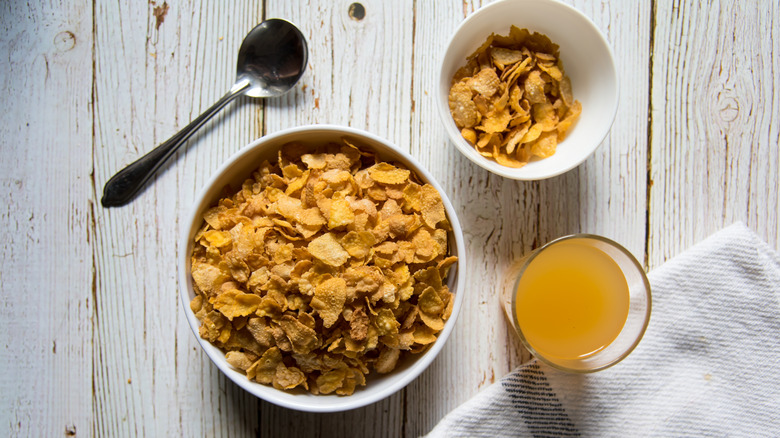
Milk also contains fats that carry and hold on to flavor, which can improve the taste of any cereal and leave you with that delicious cereal milk at the bottom of your bowl. If you've ever had your cereal with nonfat milk versus whole, you'll know there's a big difference. And most of us would never dream of even thinking about adding water to the mix.
There's nothing stopping you from doing it, but it also won't add any flavor. If you really want to change it up, you could add orange juice to fruit-flavored cereals, instead. The customization doesn't end there, as the British Weetabix cereal brand is often mixed with warm tea instead of milk. Yogurt is always an option too, especially for something like a homemade crunchy granola. And there are so many plant-based options to try nowadays, so the options are endless.
It's all up to preference, but there are a lot of reasons that we've stuck with good ol' milk. It could all lie in comfort and marketing (cereal companies have been advertising the combination for generations), but either way, there's no denying that it's incredibly tasty.