

Most People Overlook This Crucial Piece Of Information When Reading Microwave Cooking Instructions
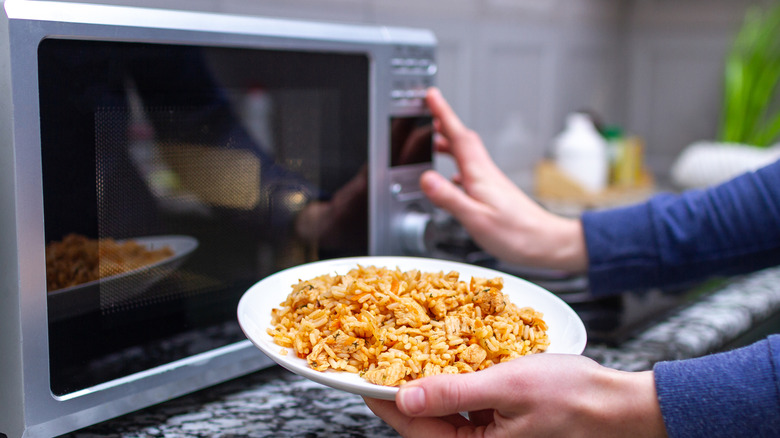
The microwave can be a quick and convenient option for cooking, reheating, and thawing a wide variety of foods — from weeknight leftovers to meal solutions for college students beyond ramen noodles (think: scrambled eggs, quesadillas, grain bowls, or burritos). But while it's relatively easy to cook something delicious like frozen lasagna in the microwave, most people mistakenly overcook or undercook their food by overlooking one crucial piece of information when reading microwave cooking instructions: microwave wattage.
The wattage indicates how much power a microwave exudes, and therefore, how quickly it cooks food. To account for the variability in microwave wattage strengths, which can vary from 600 to 1,700 watts depending on the appliance, microwave oven wattage is typically included on cooking instructions for packaged frozen and ready-to-heat foods. Still, the microwave wattage and associated cooking times listed can vary from brand to brand, as well as the type of food. This means your frozen pork chops could very well turn out rubbery and dry if you cook them as directed in a microwave that's higher in power than what's instructed.
Alternatively, if you have an 800-watt microwave and your frozen mac and cheese calls for a 1,000-watt appliance, it could turn out cold in the center due to the wattage discrepancy. The good news is, you can avoid poorly cooked (or ruined) microwaved food by noting the recommended wattage for heating your meal, then adjusting cooking time and power as needed.
How to account for wattage when microwaving food
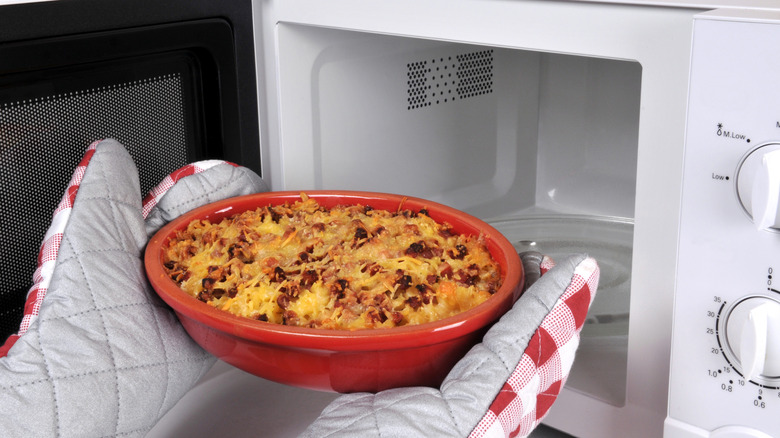
When microwaving food, make sure to read the wattage on the cooking instructions and cross-check it with the wattage listed on the back panel or the inner door of the appliance. To easily determine your own microwave's wattage, you can also test the power of your microwave by heating cold water and seeing how long it takes to boil. From there, adjust your cooking time or intensity based on your particular microwave's strength compared to the recipe instructions.
For instance, if your microwave's wattage is lower than what's recommended for your frozen veggies, simply add extra cooking time (starting with 10 seconds more per every 100 watts per minute). If you have a higher wattage microwave than listed, adjust the power settings — for instance, lowering it to 60% or 70% strength, as needed — to cook your food more gently. You can determine this power level by dividing your desired wattage by your microwave's actual wattage. For example, you'd use 60% power to mimic a 600-watt microwave with a 1,000-watt microwave. Alternatively, you can start with less cook time, then "add 30 seconds" until it's properly heated, or to cook something like a lemon mug cake. Gradual heating is also useful if your food package doesn't indicate microwave wattage, or if you're heating delicate foods like seafood or eggs.
For easy reference, online microwave wattage converters can help adjust cook times based on microwave strength. Wattage adjustments considered, remember to still check and stir the food between heating increments. Plus, packaged recipe instructions often also include internal temperature targets, so you can test meals precisely for doneness.