

How Peppers Keep Your Tomato Plants Pest-Free And Thriving

Tomato plants are the stars of the garden with their stunning hues, fragrant vines, and rich flavors. But pests can thwart your dreams of savory sauces or caprese salads by getting to your nightshades before you do, which can often spoil the whole bunch. The solution doesn't start with heavy pesticides, but rather with another famous garden plant — the pepper.
Peppers are more than colorful (and often spicy) culinary companions; they're an ancient line of defense for your tomatoes. Their secret power for repelling pests lies in the capsaicin molecule, which causes a burning sensation when eaten. However, it also serves as a biochemical pesticide that inhibits insects by disrupting their cell membranes and nervous systems.
It's more than folk wisdom, and capsaicin's protective powers have been thoroughly researched and classified as a biochemical pesticide by the Environmental Protection Agency (EPA) and was officially registered for this use in 1962. The compound doesn't kill pests outright, but instead makes the plant less appealing and highly irritating to critters. And not only does it protect tomatoes, but researchers believe that capsaicin can protect seeds inside the pepper plant from developing fungus. Want the benefits of capsaicin but don't plan on growing peppers in your tomato bed? You can make a DIY concoction that helps keep pests away by simmering red pepper flakes in hot water, straining them, and combining the leftover liquid with castile soap in a spray bottle.
How to side with peppers by interplanting
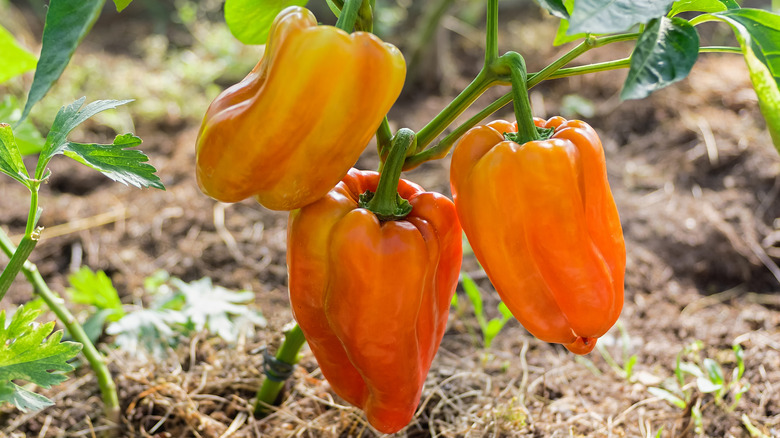
What's the best way to form a protective barrier with capsaicin-filled peppers? By planting them between and around each tomato plant, they share the same garden bed and grow alongside each other. This is known as interplanting, an organic planting pattern that doesn't rely on straight rows of crops. This agricultural practice has persevered throughout centuries, and several crops benefit from interplanting, such as the Three Sisters Indigenous planting method that synergizes corn, beans, and squash in one earthen bed.
Since peppers and tomatoes are both members of the nightshade family, so the required growing conditions are similar. This makes it easy to manage light, nutrient, and water requirements for both plants at once. Pepper seeds take between 60 and 150 days to ripen fully, and tomato plants mature in 60 to 100 days, so you can harvest your interplanted produce at about the same time.
A bountiful, pest-free harvest begins with the quality of your garden bed's soil. Both plants are considered heavy feeders, which means you'll need to use nutrient-rich dirt to get your plants to fruit. Use high-quality, nightshade-friendly soil, and consider adding fertilizer when the first peppers and tomatoes start showing. It's also helpful to test your soil's pH level, which should be somewhere between 6 and 7, slightly acidic.
Common mistakes when co-planting tomatoes and peppers together
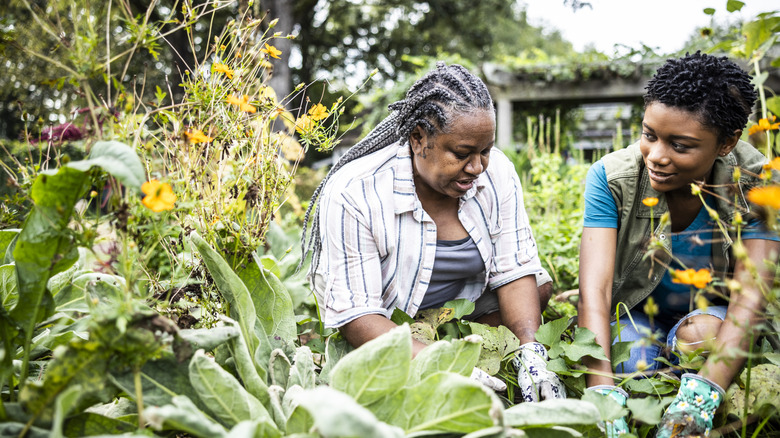
Planting tomatoes alongside peppers can make your gardening rituals more efficient by saving time and protecting your crops. But it's important to also know the pitfalls of this method. Firstly, these plants are meant to be companions, not competitors for the same space. Make sure to read your seed packet to determine the spacing for planting. And if measuring isn't your thing, a good rule of thumb is to place each plant about two feet apart.
Another way to ensure proper space is to use supports. Trellises, stakes, and cages help keep pepper and tomato plants upright, so fruit isn't damaged and each plant has access to light, wind, and water. It's also essential to rotate your crops seasonally. Think about it — a plant can't just get up and walk away when pests swarm. By planting in new beds or containers each season, you stay ahead of the soil's insect buildup while introducing plants to fresh, nutrient-dense soil.
Although tomatoes and peppers are a perfect match in the garden, they share one vulnerability. Since they both belong to the nightshade family, they're susceptible to the same diseases and infestations. Common culprits are tomato worms, aphids, and spider mites. You can mitigate this with additional interplanting, adding basil, garlic, marigold, and parsley to the bed for additional pest control. Now, all you need to do is sit back and let nature do its work until harvest season arrives.