

The Reason Your Foil Packet Meals Aren't Cooking All The Way Through
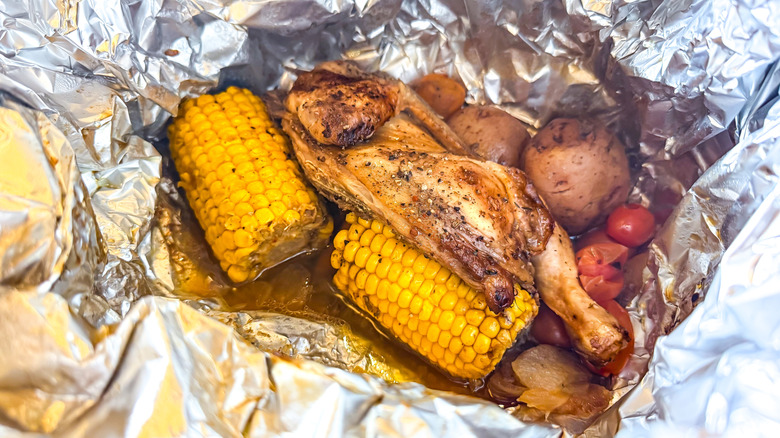
If you're short on time or just want to simplify the cooking process, there are plenty of ways to cut corners in the kitchen without sacrificing quality. Foil packet meals are one great way to create an easy and delicious meal in fewer steps, whether you're using an oven, a grill, or even cooking over a campfire. However, it can be tricky to ensure your food cooks all the way through with foil packets, especially if you don't space everything out properly. Rather than tossing most (or all) of your ingredients into a pile, wrapping up, and cooking, it's important to spread the food in one thin layer, spaced out evenly so everything is heated and cooked all the way.
If you're making a meal that includes meat or other raw foods that must be fully cooked before eating, cut them into small pieces and be sure not to overcrowd them when packing them into the foil. Getting your ingredients to the necessary temperature (without making a mess through punctures or spills) is also far easier when you use either a heavy-duty foil or double-layer a thinner foil before putting it in the oven or on your grill.
Considering the temperature needs and typical cooking time of the foods you're using is also crucial to making a successful foil packet meal. Cooking delicious salmon and raw potatoes together, for example, may not be wise since the salmon will need less cooking time than the potatoes. The same is true of sliced vegetables and raw meat. In this case, either cook them separately and set them at different temperatures or set two timers so you can pull the vegetables out first. This way, the meat can still finish without burning the produce.
Other points to consider when cooking with foil packets
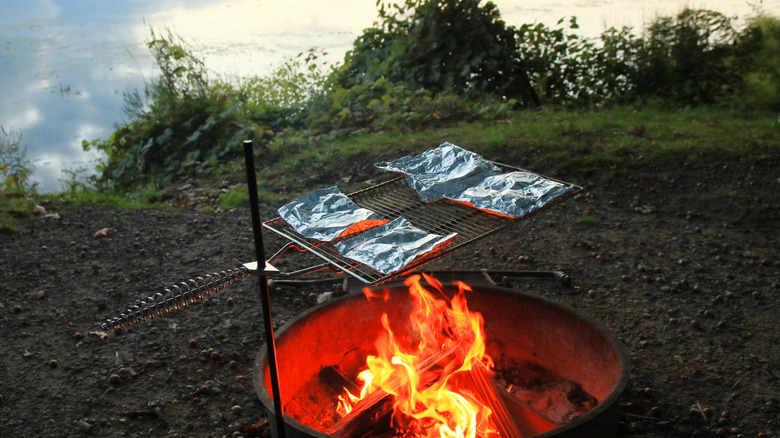
Even meals that seem the simplest can require a bit of preparation and mindfulness. While cooking with foil can prevent a pile of dirty dishes and take away some extra steps required by other methods, it's also easy to burn your food, undercook it, or end up with a soggy or greasy mess. Keeping a close eye on the cooking progress and flipping over your foil packet every few minutes can keep you from either drying out or even scorching your dinner. This is especially important if you're cooking over direct heat on a grill or over a campfire. Incorporating a liquid like a broth, butter, or condiments like soy sauce will help reduce the chances of burning your food or making it too dry.
Properly cooking raw foods in a foil packet can often take at least 30 minutes or more, so if you want to make things easier on yourself, consider using packaged ingredients like pre-cooked meats. Pre-cooked sausages or poultry are easy and quick to heat through the foil, and they can help prevent other food safety issues that may arise due to undercooking raw items. In short, foil cooking can be helpful in the long run, but it's a process where you'll need to be aware of each and every step.