

These Are Hands Down Some Of The Most Annoying Things About Shopping At Whole Foods
Since its founding in Austin in 1978, Whole Foods has grown from being a local natural food store with 19 employees to an international grocery juggernaut that Amazon paid a cool $13.7 billion to acquire. Originally called Safer Way in a dig at the mainstream supermarket Safeway, it catered to a clientele that was looking for fresh, organic food that they couldn't find at major grocery chains. By the time the company went public in 1992, it was well on its way to becoming a major chain itself.
Whole Foods shoppers tend to fit into certain boxes — the hipsters, the yoga crowd, the young professionals swarming the hot bar at lunchtime. One through-line is that they usually have disposable income. For decades, one of the store's most persistent criticisms has been that it is much more expensive than its competitors. Another through-line is that many of the customers are committed to buying specialty products that fit under the broad umbrella of natural or organic foods. The company has leaned heavily into that murky realm, and in doing so, it has earned a passionate customer base.
Inevitably, Whole Foods has its flaws. Even if you love shopping there, you have probably, on one trip or another, struggled to find a particular item where you think it should be or felt a cold sense of dread when the cashier tells you your bill. From confusing layouts to dubious marketing, we're digging into the worst things about America's only certified organic grocery chain.
You can't always take the marketing claims at face value
When you stroll through the aisles of a Whole Foods, you're guaranteed to see a lot of products labeled as "natural," "local," and "superfoods." But what do those words actually mean? Not a lot, it turns out. Both the USDA and FDA define "natural" as foods that don't contain artificial or synthetic ingredients. However, this is vague enough to have become a largely unregulated marketing term. The same is true of words like "local" and "superfood." One longtime employee told The Guardian in 2023 that the use of the word "local" meant nothing. "Most of it is bulls***," he said. "Every retailer has a different definition. Even the retailers themselves will have different definitions, depending on where they are, and the original purpose of localization has totally gotten lost."
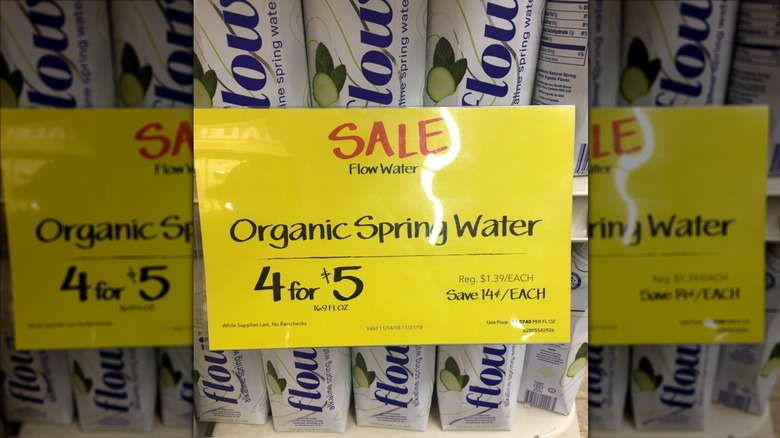
Whole Foods is by no means alone in selling products through marketing spin, but it has taken the escapade farther than many of its competitors. For example, in 2025, a group of customers filed a lawsuit against the company regarding its "non-GMO" baking soda, alleging that the labeling is misleading given that baking soda is a mineral, not an organism, and is therefore impossible to genetically modify. Customers have also questioned the word "organic" on certain Whole Foods bottled water products. Water does not contain carbon, making it, by definition, inorganic. All of this is pretty harmless, unless those marketing terms are used to justify a hefty price tag.
The Whole Paycheck moniker is justified
It didn't take long for Whole Foods to earn a reputation for being on the painful side of pricey. In 1997, it launched its own store brand, 365 Everyday Value. And though the maker of Whole Foods' private label products isn't readily disclosed to shoppers, they still certainly came in handy when the company earned an unfortunate nickname: "Whole Paycheck." Those sky-high prices might have worked back when Whole Foods was one of the few stores offering fresh, organic food and niche products, but when more affordable options like Trader Joe's began expanding around the country, it became a conspicuous feature of the brand.
According to an analysis in the Wesleyan Business Review in 2020, Whole Foods' store-branded products are 15% more expensive on average than Trader Joe's. Similarly, private chef Fatima Khawaja shared on Business Insider that she experimented with doing her weekly shopping at both stores in 2024, finding that a list of groceries that cost her $48 at Trader Joe's cost $60 at Whole Foods, which is a 20% difference.
It's worth noting that both of these analyses came after Amazon's acquisition of Whole Foods in 2017, which saw the company move towards slashing prices and expanding its 365 brand to keep up with the competition, suggesting that the differences may have been even starker before. Shopping through Whole Foods' expensive items remains a luxury for many people and an impossibility for others.
The bakery has gone downhill

As you would expect from such a high-end brand, the Whole Foods bakery isn't just selling your standard sandwich breads and hamburger buns. It offers everything from multigrain sour batards and mini palmiers to tiramisu and peach marionberry pie. It's a wonderland for the sweet tooths and gluten fiends among us, and it offers plenty of savory and gluten-free options, too.
However, if you have a favorite bakery item, don't get too attached, because you might show up one day to find that your most beloved product is no more. In 2024, a change to the store's famous Chantilly cake left customers so outraged that they took to social media, blasting the company for replacing the decadent almond-flavored cake and mascarpone frosting with a smaller version that used jam instead of berries. The outrage was so severe that Whole Foods backed down and returned to the original recipe.
It is also worth noting that, according to confessions from a former Whole Foods employee, many of the store's supposedly freshly made bakery items are made off-site. In a 2024 Reddit thread, an employee claimed that this was a new phenomenon. "I used to work in prep about 15 years ago and we'd make like 85% of the food from scratch..." they wrote. "[N]ow it's probably 85% pre-made/precooked." This does not make the company an outlier compared to other grocery stores, but given the fact that the brand revolves around freshness (and sets prices accordingly), it might come as an unwelcome surprise to some customers.
Some of its products are downright brazen
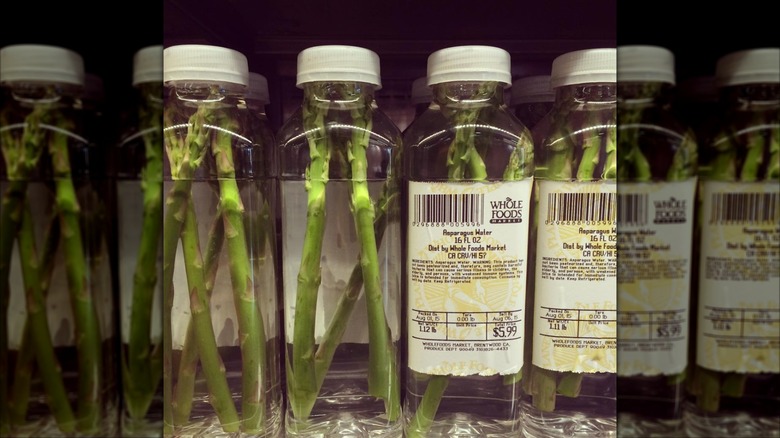
If you were alive and connected to the internet in 2015, chances are you saw something about the Whole Foods asparagus water. The product cost $5.99 (about $8 in 2025 money) and consisted of a bottle of tap water and three stalks of raw asparagus. That was it. A customer alerted the internet about the Gwyneth Paltrow-coded beverage, and it quickly spread across social media, forcing a Whole Foods spokesperson to disown the product in no uncertain terms, claiming that it had all been a mix-up at one branch of the store. "It was meant to be water with the essence of vegetables and/or mushrooms (similar to bone broth), which is typically made over a long period of time soaking in water," spokesperson Liz Burkhart told CBS at the time. "It was made incorrectly and has since been removed."
Still, it wasn't the store's first or last time cloaking everyday items in brazen marketing spins. In addition to "organic" water, it has labeled water as "gluten-free sparkling water" (not to be confused, apparently, with all other water, which is also gluten-free) and "made in house cauliflower steaks," which appeared to be nothing more than slices of raw cauliflower. Making it through your weekly Whole Foods shop without an eye-roll or two is a challenge.
The store layout often defies logic
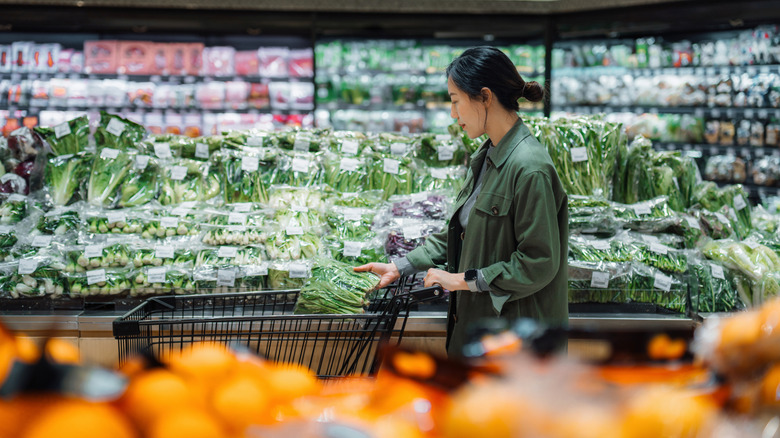
Most grocery stores have a standard layout in which the produce section and flowers are at the front, the rest of the fresh food, such as meat and dairy, is around the perimeter, the bakery is located behind the produce, and packaged food is in the center aisles. All of this is deliberate and based on psychology. The produce and flowers suggest freshness and abundance, while the bakery offers enticing smells to get your appetite going. Dairy and eggs, which are staple ingredients for many households, are often located in the back corner of the store, forcing customers to wind their way through tempting buying opportunities to get there.
Many Whole Foods stores follow this blueprint. However, niche items are not always in intuitive places. In one Reddit thread, an Instacart shopper complained that they had been tasked with finding eight different specialty chocolate bars, only to discover that they were peppered around the store rather than grouped together in a single chocolate section. In another Reddit thread, a Whole Foods employee revealed that their store did layout resets every two to three weeks, making it challenging to navigate even for the people who work there. Then, there's the rogue clothing and jewelry section, which might be a nice oasis for the leisurely minded, but it feels more like a never-ending maze for those on a tight schedule just looking for pantry staples.
Niche items are plentiful, staple items are not
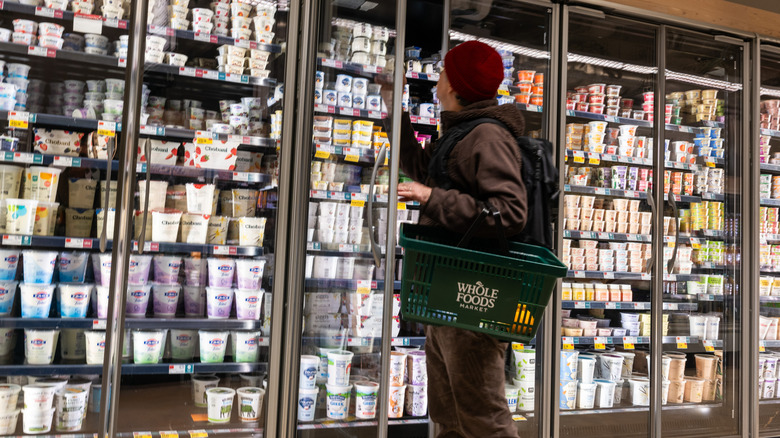
Whole Foods has moved quickly since the Amazon acquisition to shore up its 365 brand offerings, which has led to a much more robust selection of relatively affordable pantry staples. That said, it still pales in comparison to many other grocery stores, especially when it comes to mainstream brands. This is fantastic if you're looking for luxe stocking stuffers for foodies and want to support small businesses, but it's not ideal if you're trying to do a weekly shop for the family. For those looking for dozens of options of mushroom coffee and CBD-infused water, it's second to none, but you might find the options to be more limited when it comes to pantry basics.
This reality has led to the unfortunate fact (as far as the company is concerned) that most Whole Foods customers complete their shopping at other stores. There are a few factors that might be driving this. The first, of course, is price. You might be willing to pay a little extra for the organic seasonal produce and niche pantry items at Whole Foods, but you'll probably get more bang for your buck buying milk, flour, eggs, and other essentials from more affordable retailers. Another factor is that Whole Foods doesn't carry a lot of popular brands. You won't find Coca-Cola or Doritos there. You won't find many Heinz condiments, either. If you're partial to products from mainstream brands, you'll have to go elsewhere.
The toiletries and household sections are limited and pricey
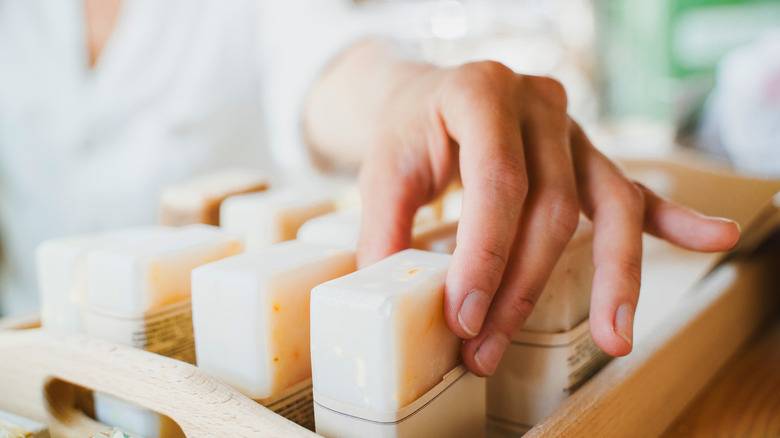
One of the most notable limitations of shopping at Whole Foods is the toiletry and household offerings. You might be able to get used to the 365 version of peanut butter or a more expensive brand of cheesy corn chips in lieu of Doritos, but some people draw the line at natural deodorant. You won't find familiar, ironclad standbys like Dove or Old Spice at Whole Foods. You'll find the so-called natural brands that tout all the ingredients they don't contain. Depending on your personal sweating situation, you might need the aluminum. Added to that is the fact that (to continue with the deodorant example) you'll be paying a higher price than you would for big name brands. Even a stick of Whole Foods' own 365 deodorant will set you back nearly $8 compared to less than half that for Old Spice.
Household items are the same. Whole Foods' selection of cleaning products tends to be more limited and more expensive than at larger chains. If you're looking for options that are easy on the environment and don't contain certain chemicals, you will find a great selection at Whole Foods, but if you're trying to stock up on everyday household cleaners like Windex and bleach, you'll have to go elsewhere.
The produce isn't what it used to be
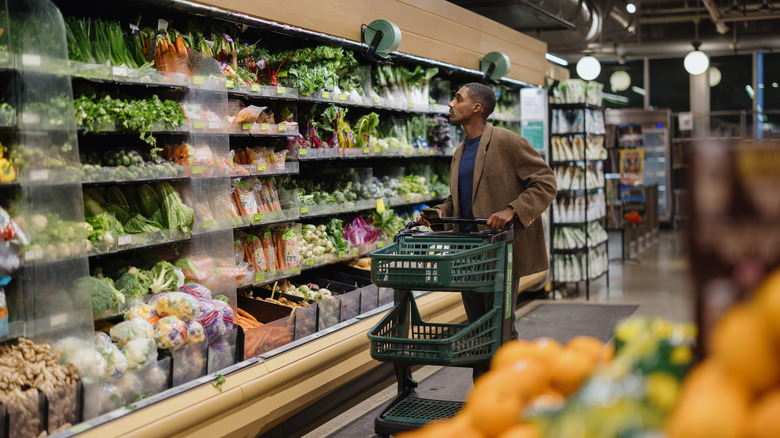
One of Whole Foods' main selling points is its produce section, where organic options abound. In fact, that's one of the company's biggest marketing angles. According to its website, it is the first and only certified organic national grocery store, and for people who value food within that category, it's hard to argue that Whole Foods is the best store for organic shopping. However, just because produce is organic doesn't mean that it's going to be fresher or of higher quality. A 2023 Reddit thread questioning whether the quality of the produce section had gone downhill generated dozens of comments, with shoppers sharing their own observations of moldy, overripe, and even rotting fruits and vegetables. One user who identified themselves as an employee said that their store "used to be good" but went into a decline after the management began to emphasize getting all produce onto store shelves "whether it's fresh or not."
Many of these complaints cropped up after the Amazon acquisition in 2017. Disappointed customers complained to Business Insider of "apples that tasted like water" and "bone-dry" beets. Meanwhile, analysts at the banking firm Barclays reported (via Business Insider) that, since the acquisition, Whole Foods was starting to feature conventionally grown items more prominently. This, combined with the fact that many stores like Trader Joe's, Sprouts, and Aldi carry a wide selection of organic foods, makes it slightly less enticing than it might have been in the early 1990s.
It hasn't always included allergens on its labels
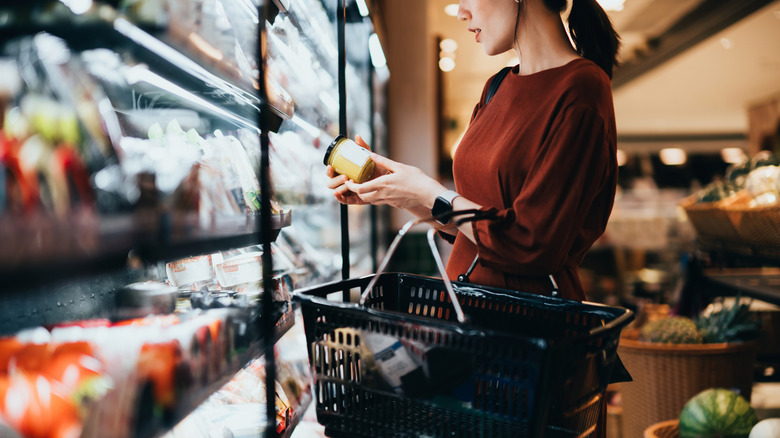
Whole Foods has been chastised for many snafus over the years, including for routinely overcharging customers for prepackaged foods by mislabeling weight. As if that weren't enough, the company has also been caught underreporting potential allergens on its labels. In 2020, the FDA blasted the company for repeatedly failing to state allergens on food packaging, saying in a warning letter to then-CEO John Mackey that the company's repeated recalls over missing allergy information "demonstrate that your corporation engaged in a pattern of receiving and offering for sale misbranded food products."
One violation might be easy to excuse. Everyone makes mistakes. But according to the FDA's letter, Whole Foods had issued no fewer than 32 recalls over omitted allergy information between October 2019 and November 2020, more than two per month on average. The administration also stated that the pattern extended further back as well.
Depending on your reasoning for avoiding particular ingredients, this might not be a huge deal. But all of this is pretty concerning if you have a food allergy or might be serving food to someone who has one, as the consequences could be life-threatening. Luckily, Whole Foods seems to have gotten on top of the issue since the FDA's reprimand, but it's hard to see past that years-long pattern of mislabeling if you or someone you love relies on accurate allergen information.
The Amazon acquisition has changed things
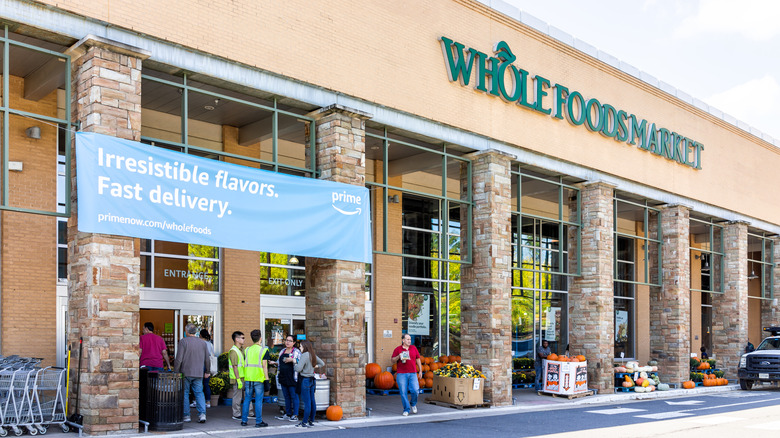
There are many reasons to reconsider shopping at Whole Foods now that it's owned by Amazon. Aside from the concerning labor conditions and impact on the environment throughout the company, it has changed Whole Foods shopping in some specific ways. Within six months of the acquisition, an analysis by Barclays found (via Observer) that Whole Foods had already faced a sharp deterioration in customer experience. Aisles were blocked by boxes, shoppers faced long waits for the service counters, and items had been moved to unusual places, such as eggs being relocated from the dairy section to the meat section. It attributed some of these issues to staff cuts.
Step into a Whole Foods now and you'll be bombarded with Amazon Prime deals, creepy biometric machines that let you pay for your groceries with the palm of your hand, and employees reciting a monologue to convince you to sign up for a Prime membership.
In a 2023 Reddit thread dedicated to the perceived deterioration of the grocery chain, one user identified themselves as a former worker for both Amazon and Whole Foods and argued that the former's focus on profitability was in direct opposition to the latter's original ethos. "The atmosphere [at Whole Foods] used to be nice, friendly, and they used to have a philosophy about who they were," they wrote, adding, "The portions [now] are smaller, at the same price. The food is gross, and there's no quality control. Just like Amazon."