

6 Restaurant-Brand Seasonings, Ranked Worst To Best
We may receive a commission on purchases made from links.
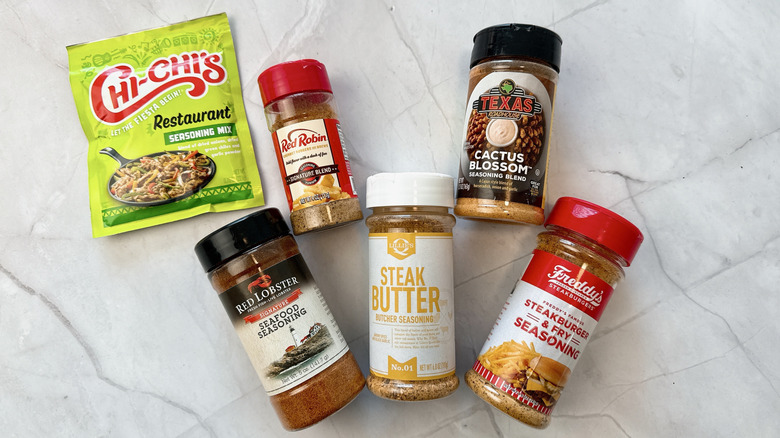
Chain restaurants realize customers may have a hankering for their iconic flavors but can't always make the trip to dine in at their locations. If you're dreaming of your favorite fast-casual restaurant's perfectly seasoned food long after you leave, take note, as some of them may offer their seasoning blends for purchase. Since many of these spice mixes are proprietary, it may be nearly impossible to recreate them in your own kitchen. But with these bottled blends, all you need to do is sprinkle them on your steak, seafood, burgers, tacos, and even French fries to get restaurant-worthy food within the comfort of your own home.
Can you really recreate authentic Chi Chi's fajitas without leaving the house? What about a Red Robin burger and fries? In some cases, yes. I tested (and retested) the seasonings according to each restaurant's recommended use — on foods like burgers, fries, seafood, and nachos. I brought in some trusted taste-testers, and we ranked the seasonings based on their overall flavor profile, versatility, and resemblance to the dine-in version. Some are better than others, and there are some true winners in the category.
6. Lillie's Q's steak butcher butter seasoning
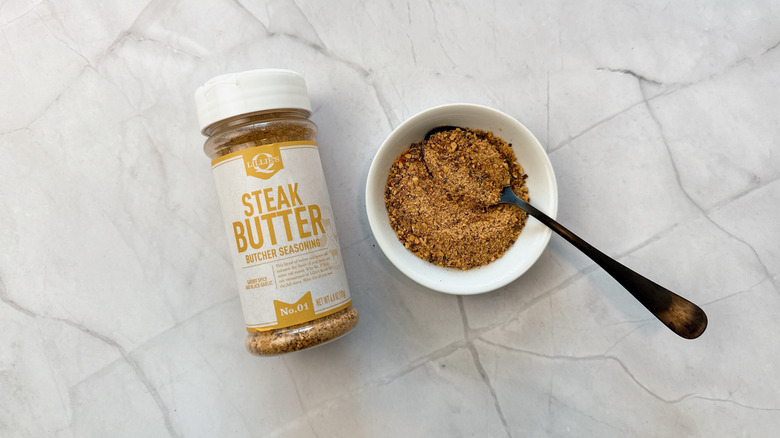
Lillie's Q steak butter butcher seasoning is decidedly buttery. The ingredient list contains salt, garlic, natural butter flavor, dill, and onion, among other ingredients. To be honest, I couldn't get past the intense butter flavor to notice the dill or onion. I suppose turning this seasoning into a compound butter would work with different cuts of steak, chicken, seafood, and pasta. But I used the seasoning on burgers, and it was too buttery.
Lillie's Q says the seasoning is great sprinkled over duck, chicken wings, popcorn, potatoes, scrambled eggs, and steamed or roasted vegetables. That might work, since a strong butter flavor is welcome in those dishes. It also suggests using the seasoning as a base for dips, dressings, and marinades, but I don't know if it would work, seeing how buttery the flavor is. Granted, "butter" is in the name, but the strong overtones make it less versatile than the other higher-ranked seasonings on this list.
One ¼-teaspoon serving (1 gram) has 0 calories and 250 milligrams of sodium. Since Lillie's Q emboldens you to sprinkle the stuff on everything, you're likely to use more than ¼ teaspoon, so be careful if you want to keep sodium in check. If you're a hardcore butter enthusiast, you'll probably enjoy this seasoning – it just wasn't my favorite.
5. Freddy's famous steakburger and fry seasoning
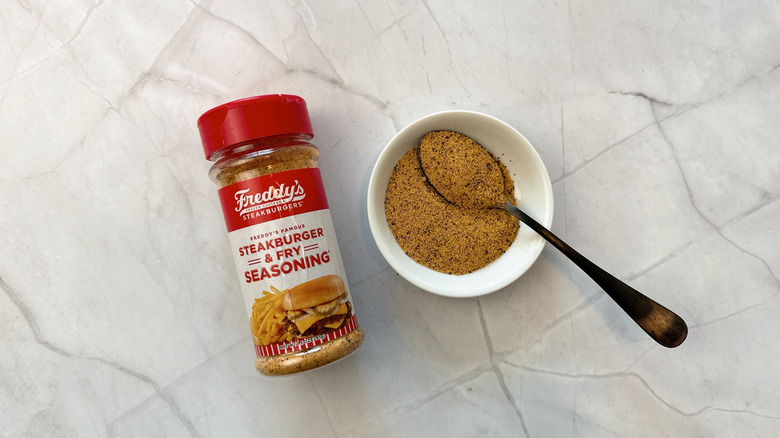
The bottled Freddy's steakburger and fry seasoning is purportedly the same signature blend the restaurant uses on its classic burgers and fries. The first ingredient is salt, followed by garlic, onion, spices, and sugar. There's also plenty of paprika. I tested it on shoestring fries and my first reaction was, "Salt!" After the sodium bomb, you get strong notes of garlic, followed by all the other seasonings. I didn't mind the pungent garlic, especially because it was followed by sweetness from the sugar. I liked the balance of savory and sweet, but the salt was off the charts for me. Next time, I'll try using a pinch on roasted sweet potatoes, baked potatoes, or roasted chicken, and use it sparingly. You can use the seasoning on steaks, chicken, seafood, and pasta, just note that the dish can get overly salty if you're not careful. I'm not sure it would work with pasta, but you can certainly give it a go.
One ¼-teaspoon serving (1 gram) has 0 calories and 320 milligrams of sodium (the highest that I tested). Since the first ingredient in the mix is salt, it should be no surprise that the sodium is high. That said, all the spices I tested list salt first, but for some reason this tastes ultra-salty.
4. Texas Roadhouse Cactus Blossom seasoning blend
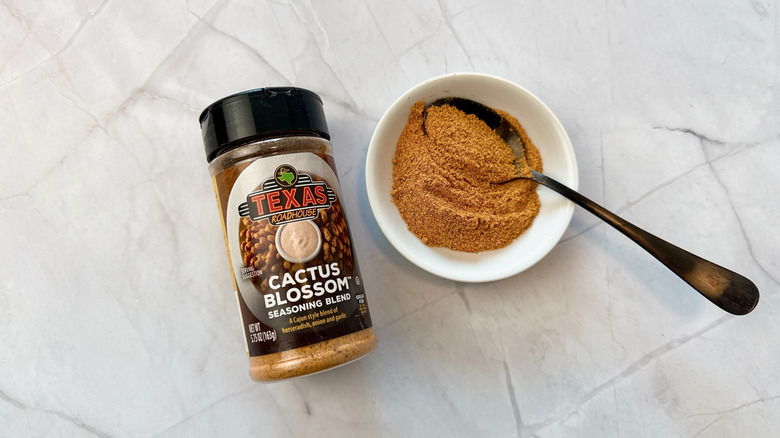
This Cajun-style blend is what Texas Roadhouse uses on its Cactus Blossoms: large, deep-fried battered onions. Aside from salt, the ingredient list includes sugar, garlic, onion, mustard, chili pepper, horseradish, vinegar, and cayenne pepper. I tried the seasoning on onion rings for a restaurant-worthy Bloomin' Onion vibe, and found it piquant and vinegary with notes of mustard and horseradish. After the immediate hit of vinegar, the seasoning turns sweet, thanks to the addition of sugar. The horseradish and cayenne pepper deliver some heat, which will appeal to some eaters. The reason it lost points was I didn't find the flavors as nuanced or dynamic when compared to the other seasonings. I had to keep adding more seasoning to get a flavor punch.
This was the only brand that didn't contain an anti-caking agent like silicon dioxide or tricalcium phosphate. Since both agents are considered safe to eat, I don't have a problem with them. That said, food additives may not be suitable for all people, as they can interact with certain medications and have negative side effects. If you're looking to cut down on the additives you consume, it would be a good choice.
One ¼-teaspoon serving has 5 calories and 70 milligrams of sodium. I like that the sodium level is lower than most of the others on this list, considering you'll likely need a large amount for the best flavor.
3. Red Lobster signature seafood seasoning
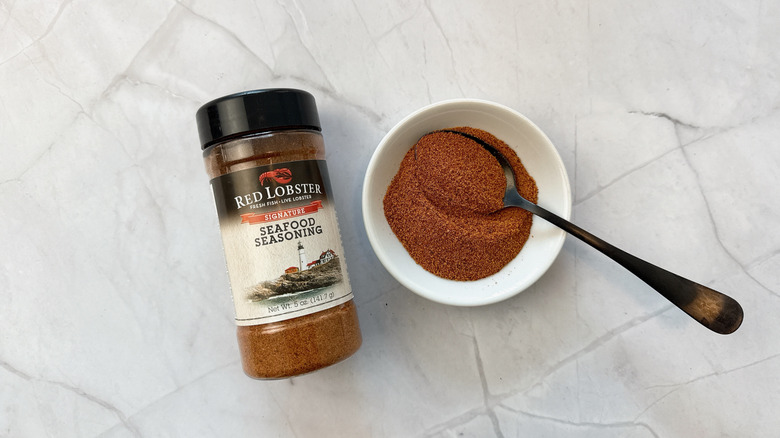
Seafood fans love getting their fill of lobster, shrimp, and crab claws at Red Lobster — and they can enjoy those same flavors at home. The Red Lobster signature seafood seasoning contains a myriad of seasonings, and while we can't know what they are because it's proprietary, there's no denying that one sprinkle of the blend catapults you straight to this popular seafood chain. The ingredients include salt, spices, onion, and garlic — and it definitely has a little kick to it. Add a heavy sprinkling and you'll get some serious heat. My son said it tasted like "spicy Old Bay." It's also clearly spiked with plenty of garlic. While we can't know exactly what spices are included, they're zesty and playful and balance nicely on the palate. Its multi-dimensional flavor helped it rank higher than some of the other spices. The only reason it's not in the top two is it's fiery, which makes it slightly less versatile. I used the seasoning on a roasted branzino fillet, and I plan to try it on salmon, shrimp, and lobster, as well as in my crab and corn chowder.
The nutrition label states that one ¼-teaspoon (0.6 grams) serving contains 0 calories and 180 milligrams of sodium. A ¼-teaspoon of the other spices weighed a gram, while this one was only about half that. This may be because other brands were denser and more granular than this seasoning, which appears lighter and more paprika-based.
2. Chi Chi's restaurant seasoning mix
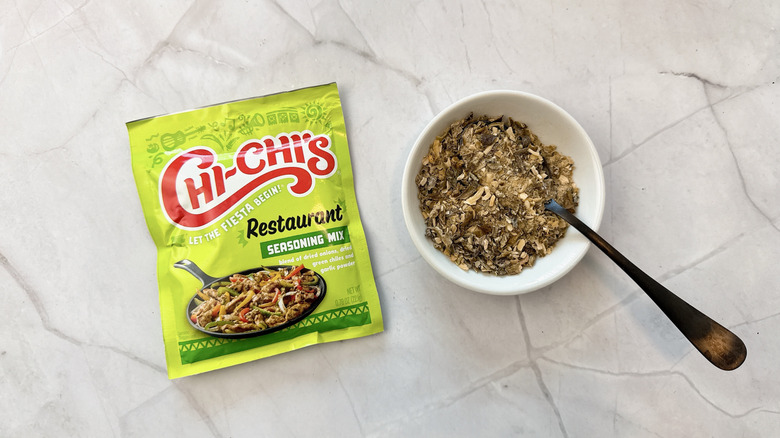
Chi Chi's restaurant seasoning mix is like a party on the palate. The zesty blend is made with dried onions, green chilies, and garlic. The ingredient list also includes MSG (monosodium glutamate), which is important to note. Chi Chi's mix is coarser than the others, with plenty of detectable bits of onions and chilies. I sprinkled the seasoning over cheesy tortilla chips and it enlivened every bite. I think it would be excellent over easy baked nachos.
I also envision folding the spirited mix into mashed avocado to make unbelievably delicious guacamole. Or you could do the same with a bunch of diced tomatoes and make a flavor-packed salsa. Chi Chi's says you can add the spice blend to everything from beef and chicken to pork, seafood, and even Mexican pizza. It definitely works in a variety of ways. I loved this seasoning, so it was tough to give it second place. Ultimately, the fact thats its flavors are Mexican-inspired diminished its versatility, pushing it out of the number one spot.
One serving (one-eighth of a packet) has 10 calories and 290 milligrams of sodium. But according to the packet instructions, the mix is used to season 1 pound of meat (which typically serves four people), so I think it's more accurate to say one serving is a quarter of the packet — not an eighth. The extra serving only adds 10 calories, but ratchets the sodium up to 580 milligrams.
1. Red Robin Red's original seasoning
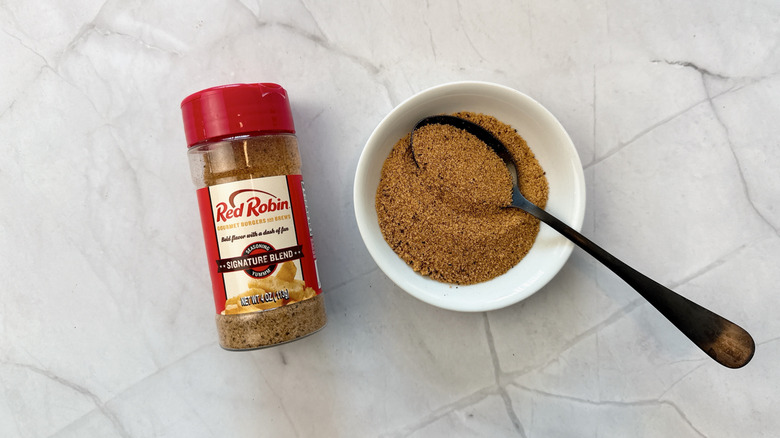
Red Robin's Red's signature blend brings back great memories for me because my kids used to sprinkle the stuff over everything — from fries to burgers. On one restaurant visit, our server suggested I tuck the bottle in my bag so we could enjoy the same flavors at home. I indulged, and we shook that seasoning over everything — from fluffy scrambled eggs to roasted potatoes — until there wasn't a fleck left. Thankfully, you don't need to smuggle a bottle from the restaurant because the spice blend is available for purchase.
Red's signature blend contains salt, sugar, spices, dehydrated vegetables, and natural smoke flavor. The first and third ingredients are salt, but surprisingly, the blend isn't overly salty. Red Robin found a way to equalize the spices in this seasoning so you can't detect its individual components. The other brands were dominated by one element or another, including by salt, garlic, horseradish, or butter. Red's blend is a perfectly balanced, beautiful medley, making it wildly versatile.
One serving (¼ teaspoon) has 0 calories and 260 milligrams of sodium. Considering salt makes up two of the first three ingredients, I was surprised to find that Red Robin's blend has less sodium than Freddy's. Red Robin's balanced flavor made it the undisputed winner. I tasted it on burgers for this ranking, and my son sprinkled it over his eggs the next morning. My family will be shaking the bottle until it's empty yet again.
Methodology
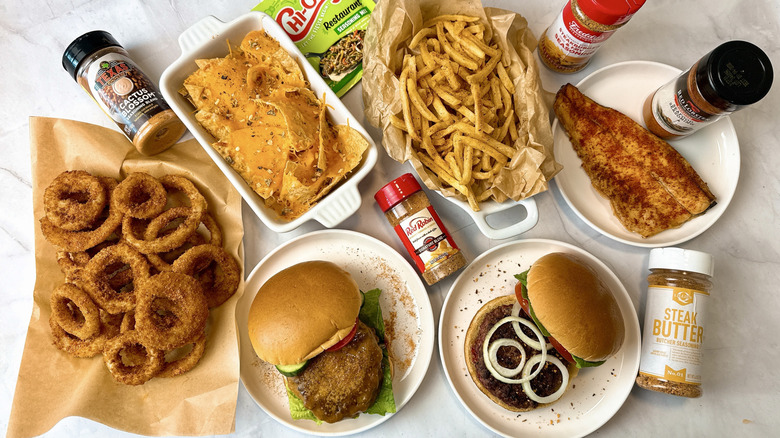
Comparing these seasonings was like comparing apples to oranges. For example, Red Lobster's seafood seasoning is mostly intended for seafood (even though it works with other foods), while Lillie's Q's steak butter seasoning is steak-focused, even though it's great on popcorn. With that in mind, I focused on taste profiles and balance of flavors in each one. If one had a strong component (garlic, for example) that overpowered the other flavors, it lost points.
I also considered the uniqueness of the seasoning blends. I asked myself, "Could I make this at home with what I have in my spice rack?" A truly outstanding spice blend is one with flavors that are so complex, you'll find yourself trying to determine each component as it hits your palate. It shouldn't be easy to duplicate. I also considered the versatility of the seasoning. If the restaurant says it's good on everything, then it should be good on everything. I tested the products on the recommended foods, but I also sprinkled them on eggs and vegetables. If one of the blends didn't pair well with one of its suggested uses, it ranked lower than one that was more versatile.
Lastly, I didn't try to judge these products alone. I had my food-savvy sons with me, two young men who have been testing recipes and tasting ingredients for me for over 20 years. I appreciate their input because it's honest, valid, and sometimes quite different from mine.