

What Happens If You Don't Boil Pasta In Enough Water

Boiling water for pasta is an imperfect science. There are seemingly countless rules to live by when it comes to making the perfect pasta, with each home cook, professional chef, and Italian Nonna having their own special tips, tricks, and hacks.
One of the undeniably biggest mistakes you can make when cooking pasta, though, is using too little water. If you've ever strained pasta only to realize the noodles are clumping together, then you've likely fallen victim to this trap. When you don't add enough water to your pot, a few things could potentially happen. One, the water could quickly become oversaturated with starches from the pasta, which is what leads to the pasta clinging to both itself and the pot. In addition, the right volume of water allows space for a proper rolling boil, so the pasta can be constantly moving while it cooks. This can also help prevent sticky pasta and lead to a more even overall cook.
It should be noted, though, that there is such a thing as too much water for boiling pasta. While the noodles themselves will boil just fine in a deep bath, too much water can dilute the starch concentration and render the precious pasta water useless as a thickening agent in your sauce. Using the right amount of water is a simple way to make a big difference in your next batch of creamy garlic butter noodles or summer garden pasta salad.
Does every kind of pasta need the same amount of water?
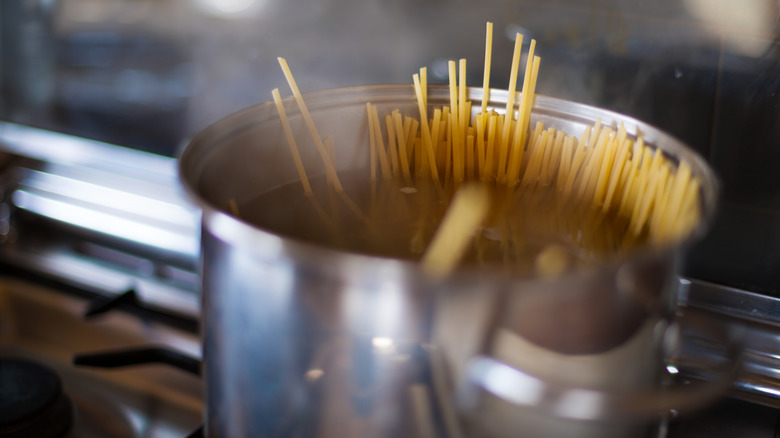
Making restaurant-worthy pasta at home really isn't complicated. In fact, the beautiful simplicity of pasta is what makes it so versatile and beloved. Using the proper amount of water is the first step in setting yourself up for success during your next Italian-themed dinner party. But, does the amount of water needed vary depending on the kind of pasta you're making? The short answer is yes, absolutely. There are so many different types of pasta out there (thank goodness for that), and each one is a bit different when it comes to cooking.
Overall, though, the biggest rule of thumb is that the pasta needs to be fully submerged in the boiling water. Types of pasta that are long like spaghetti, linguini, bucatini, and fettucine require a bigger pot and enough water to cover the pasta. If you really have to, you can break the pasta to make it fit, but this is widely regarded as a major faux pas and may earn you some sideways looks from any professional chefs at the dinner table. It's best to invest in a large boiling pot and just use enough water — not too much and not too little — to make your favorite pasta recipe.