

Don't Throw Away That Unsalted Peanut Butter - Put It In Your Bird Feeder

We may receive a commission on purchases made from links.
If you'd like to prudently feed the bluejays, sparrows, and finches in your backyard, look no further than your own pantry. Instead of throwing away that unsalted peanut butter that didn't quite live up to your tastes, put it in your bird feeder during colder months. Unsalted peanut butter is a safe alternative to what's referred to in the bird-feeding world as suet. Suet, or hard animal fat, is an ideal feeding supplement for birds during winter, when other nutrient-rich foods sources are scarce. Unsalted peanut butter works great due to its firm texture and high fat and protein content, even if it's not as tasty as the salted variety for us humans.
While some people misguidedly recommend putting soft or even liquid fats like bacon grease in the bird feeder (or worse, on trees or pinecones), this can actually be extremely dangerous – even fatal — since the fat can easily transfer to birds' wings, hindering their ability to fly and stay warm. For this reason, solid and crumbly fats are ideal. That jar of firm peanut butter without added sugars, salt, or preservatives is a good alternative since, like suet, it stays solid and has a high meltpoint. If it's natural, just make sure the butter's mixed thoroughly so you're not left with liquid fat. Or alternatively, mix peanut butter with birdseed or a solid fat like lard before giving it to your feathered friends.
How to feed birds wisely
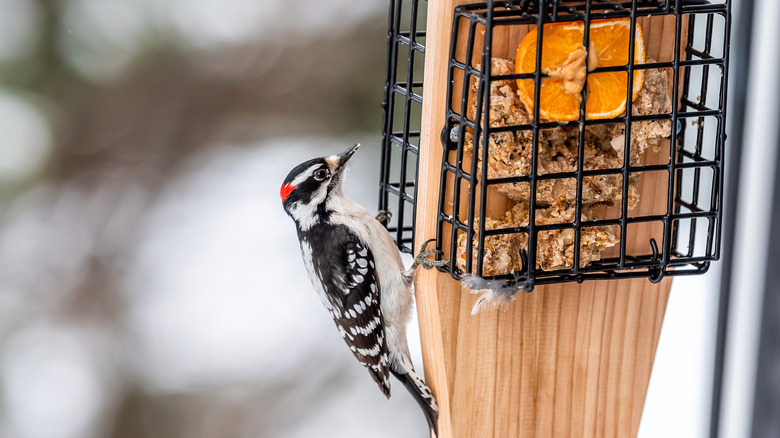
To keep suet-inclined birds like woodpeckers and starlings fed and safe, place the peanut butter in a caged bird feeder, which holds the feed in a closed-off, separate container. That way, even if it melts or softens slightly, the birds have less chance of stepping in it or brushing it with their feathers. Though you can repurpose kitchen items like egg cartons to make your own charming bird feeder, during the colder months it's best to feed birds with a well-made and maintained caged feeder to avoid fat getting on the birds. Luckily, you can find affordable and durable outdoor bird feeders specifically designed for suet and other hard fats, like this Kingsyard feeder with a roof and perch on Amazon. It's easily placed in your yard by hanging it from a tree branch or a post.
While salvaging salt-free peanut butter that could have gone to waste, don't throw away that metallic pie tin in your kitchen either. Aluminum's shiny look and crinkly noise can deter squirrels and other pests from disturbing your bird feeder. You can also save the last bits of cheese in your fridge, and feed them to the birds. Place tiny bite-sized pieces of hard cheese in the caged bird feeder as a good source of fat and protein. Just be careful to choose a low-moisture cheese because highly perishable leftovers can spoil and attract pests.