

Why You Should Skip Glass Doors On Wine Chilling Appliances

When it comes to safely storing and aging your wine collection, the type of door on your wine chilling appliance is more important than you may think. While glass doors offer a sleek, modern aesthetic, allowing you to show off your carefully curated collection of bottles, they often come with a hidden flaw — a lack of adequate UV protection. This can allow harmful ultraviolet rays to penetrate the appliance, which can cause wines to degrade over time by affecting the chemical compounds within the bottle, potentially leading to premature aging or spoilage.
Solid doors, on the other hand, block all light and offer great thermal insulation. By keeping the environment completely dark and stable, solid-door wine chillers create ideal storage conditions that mimic those of a traditional wine cellar. Light exposure, especially UV light, is one of wine's biggest enemies — just behind heat and vibration. A solid door ensures your wine is not exposed to this kind of damage, especially if the appliance is placed in a bright kitchen or a room with large windows that allow natural light to stream inside.
Aside from light protection, solid doors also tend to perform better when it comes to temperature stability and energy efficiency. They are generally better sealed and insulated, which means fewer fluctuations in temperature — something that is crucial for preserving wine's delicate structure. A consistent, cool environment is critical for long-term storage and even for short-term chilling of wines meant to be consumed within a few weeks.
Best practices for storing wine in a chiller
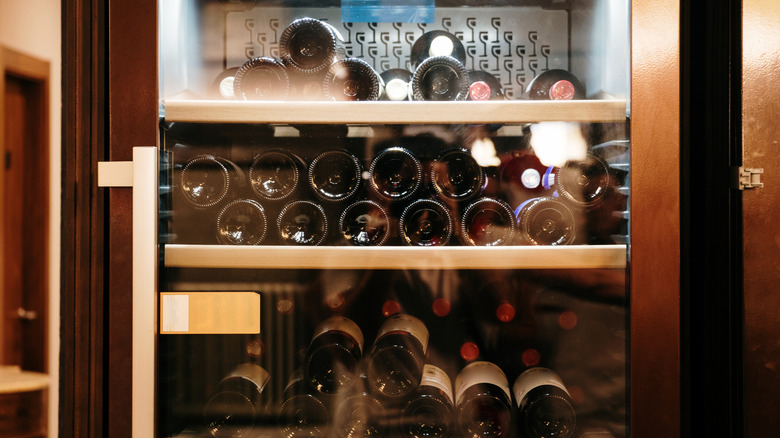
To get the most from your wine chilling appliance, regardless of door style, it's essential to maintain the right temperature for the type of wine you're storing. For most reds, ports, and sweet wines, a range between 55 and 65 degrees Fahrenheit is ideal, while white wines and rosés should be kept cooler, around 45 to 55 degrees Fahrenheit. Sparkling wines do best around 45 to 50 degrees Fahrenheit. If your chiller has dual zones, make the most of them by dividing your wine types accordingly.
Humidity is another important factor often overlooked. Wines stored in too dry an environment can suffer from drying corks, which allows air into the bottle and leads to oxidation. Ideally, humidity levels should be kept around 50% to 80%. While many wine chillers don't come with humidity control, using a small container of water inside the appliance can help increase moisture if needed. Conversely, avoid placing your chiller in extremely humid locations, which can lead to mold around the corks and labels.
Lastly, always store wine bottles horizontally, except for sparkling wines. This keeps the cork moist and prevents it from shrinking or cracking. Movement and vibration can also damage wines over time, so choose a chiller that has vibration-reduction features and avoid placing it near frequently used appliances . By following these best practices and opting for a wine chiller with a solid door, you'll create a protective, consistent environment that allows your wines to be stored and age gracefully.