

12 Ways To Reduce Plastic Waste In Your Kitchen
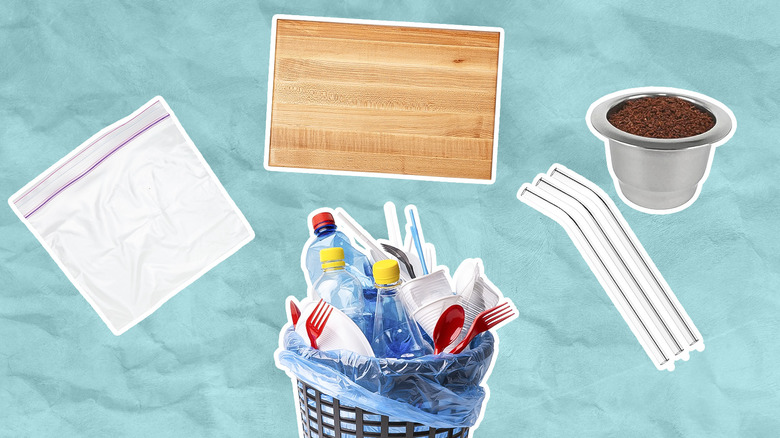
You've heard it before: You should probably try to reduce the amount of plastic you're using, both for the good of the environment and your health. Humans dump about 2,000 tons of plastic into the ocean every day, which causes pollution issues across the globe. There are now studies that show that microplastics — the tiny pieces of plastic that break down from larger plastic products — are linked to a variety of health issues, including cancer and heart attacks. Therefore, it only makes sense for us to find ways to use less plastic in our everyday lives. The kitchen just happens to be one of the best places to start, since so many of us use various plastic products while cooking, and because so much of our food comes packaged in plastic.
Luckily, it's not hard to reduce plastic waste in your kitchen if you just follow a few simple steps. We reached out to Anne‑Marie Bonneau, author of "The Zero-Waste Chef," to learn about some of the ways that she cuts down on her plastic consumption in the kitchen. "It starts with prevention," she told us. "The way you shop can really cut the amount of waste you're bringing home." Let's dig into some of the best ways to make your kitchen more sustainable — and more plastic-free.
Employ reusable cloth bags when you go grocery shopping
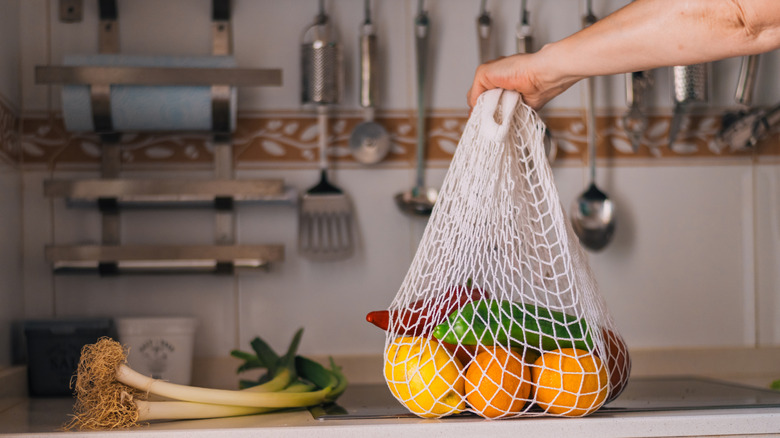
One of the easiest ways to cut down on your plastic use is to refuse plastic bags at the grocery store. Instead of opting for plastic or paper bags at the checkout, bring your own bags instead. "Reusable cloth shopping bags, if you keep those tucked in your shopping bag, then you'll always have them with you," explained Anne-Marie Bonneau.
But don't just think about the plastic bags you actually carry your groceries home in. Consider using reusable bags for your produce as well. "The produce bags can really cut down on plastic because most of us, I think, are used to reusable shopping bags, but then, you know, you go and grab like five plastic produce bags and put those in your shopping bag," said Bonneau. By opting out of those thin plastic produce bags, you're bringing less plastic into your kitchen than you otherwise would. The best part about this tip? It's especially easy to implement. "That's easy... It's just remembering," Bonneau said.
Buy ingredients in bulk
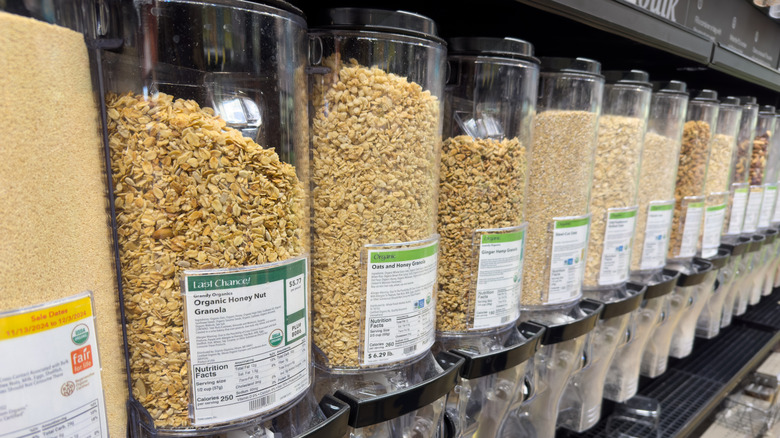
Bypassing plastic when you're stocking up on produce is relatively easy, but it's not always so simple when it comes to other basic staples and dry goods, like rice, beans, and pasta. If you shop at a conventional grocery store, most of these items come packaged in at least some plastic, if not a whole lot of it. But if you know where to shop, you might be able to reduce your plastic consumption at this level as well. Anne-Marie Bonneau explained that buying in bulk is one way that she can ensure she's bringing less plastic into her kitchen in the first place.
"Depending on where you live, you may be able to buy some things in bulk," she explained. So, pasta, nuts, or rice, things like that. And you can bring your own reusable bag or container for that and fill it up." That way, you can use the same containers for these items time and time again, instead of having to buy pasta or nuts that are packaged in plastic every time you go to the store.
However, not everyone has access to a store that has bulk bins available."If you don't have access to bulk bins, another thing you can do if it makes sense is to buy large bags of food, if you will eat it all," explained Bonneau. "So, instead of buying ten small bags of rice over time, maybe you can buy one giant bag of rice, and then, overall, that's less plastic to throw away."
Plan ahead and make more food from scratch

Some popular foods are easy to make at home, which involves less plastic or no plastic at all. For example, Anne-Marie Bonneau said she often makes her own yogurt from scratch. Every time she does this, she avoids bringing another plastic tub container into her home.
However, she does warn that making your food this way requires some forethought. "You have to plan ahead a little bit, but not a huge amount," Bonneau told us. For example, it takes 12 hours for her yogurt to ferment. By planning ahead for when she might need yogurt in the future, she won't have to go out and buy a plastic-housed tub of the stuff. Sure, preparing food like this may require a few extra steps, but for most of human history, that's just how the majority of people ate. According to Bonneau, "I think that's probably how we've lived forever."
Don't buy a ton of new plastic-free products if you don't truly need them
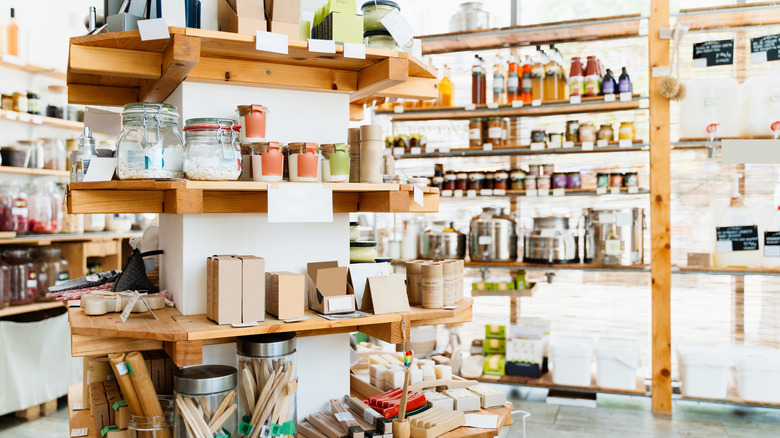
When you get started on your plastic waste reduction journey, you may be tempted to go out and buy all the trendiest-looking plastic-free products out there. But according to Anne-Marie Bonneau, that's not necessarily a good idea if you don't need new kitchen products in the first place. "I don't like to tell people to throw out all your stuff and get new stuff," she said. "It's very expensive, and that stuff's going straight to landfill."
That doesn't mean you can't buy anything new — it just means that you shouldn't buy new, plastic-free kitchen stuff if the plastic versions of what you already have still work fine. "We can't shop our way out of global warming, and so, I'd use the stuff until it broke," Bonneau said of her own plastic consumption practices. Although it can be fun to restock your kitchen with a ton of plastic-free, reusable gadgets, that's not really what you should be focused on if you truly care about being more sustainable in your own kitchen. "Just use what you have. That's the most sustainable thing you can do," suggests Bonneau.
Opt for wooden cutting boards over plastic when possible
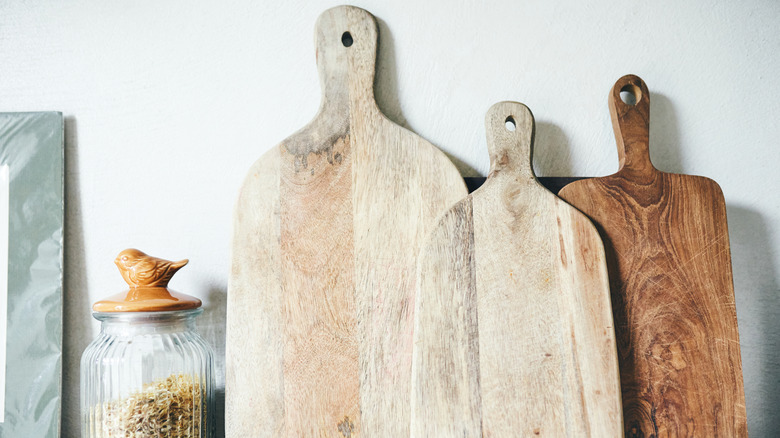
However, there is one plastic-free product it may be worth it to seek out, per Anne-Marie Bonneau. "If you're going to spend money on something, a nice wooden cutting board would be good." That's because when you use plastic cutting boards, you're likely cutting up bits of plastic while you chop, which then end up in your food. And since most of us would like to reduce the amount of plastic we're ingesting on a daily basis, a wooden cutting board is generally going to be a better option, particularly if you cook at home a lot.
Luckily, a good cutting board can last you a lifetime if you take good care of it, so it may be worth the expense, particularly if you're already in the market for a new cutting board. Plus, a wooden cutting board can also double as a tray for snacks or charcuterie and cheese when you have guests over at your house, so it can serve multiple purposes in your kitchen.
Get a water filter instead of buying bottled water
Do you tend to buy bottled water? If so, then that's a really easy way to cut down on the amount of plastic you use in your kitchen on a daily basis. Instead of using bottled water, just invest in a good-quality filter and water bottle so you can bring your own water from home with you wherever you go.
Take this route, and you'll probably end up getting tastier water anyway. "Depending on where you live, a lot of bottled water is just tap water," explained Anne-Marie Bonneau. "So that might be an easy one for you to cut. Not only are you paying for tap water when you're buying bottled water, but the plastic bottle sheds a lot of microplastics." It just doesn't make much sense to pay a premium for bottled water that isn't any better than the stuff coming out of your faucet. Once you get the hang of washing your water bottle regularly so it's always ready for you, it'll feel like second nature to do so, and you may wonder why you ever preferred buying bottled water in the first place.
Opt for glass straws

There are a lot of people out there who hate paper straws, and we can't blame them — often, they'll get soggy too quickly, leaving you sucking your coffee through what feels like cardboard. But just because you don't want to use plastic straws in your kitchen doesn't mean you have to succumb to the horror that is a plastic straw. Instead, you can opt for glass straws, which stay intact and can be reused over and over again.
In fact, once you start using glass straws, you may find that you like them better than the plastic ones. They're stronger and can be used for thicker concoctions like milkshakes that plastic straws may struggle with. Plus, they make it easy to take your homemade coffee, iced tea, or any other beverage on the go. Once you start using glass straws, you'll never think of buying another pack of plastic straws for your kitchen again.
Wash and reuse your Ziploc bags
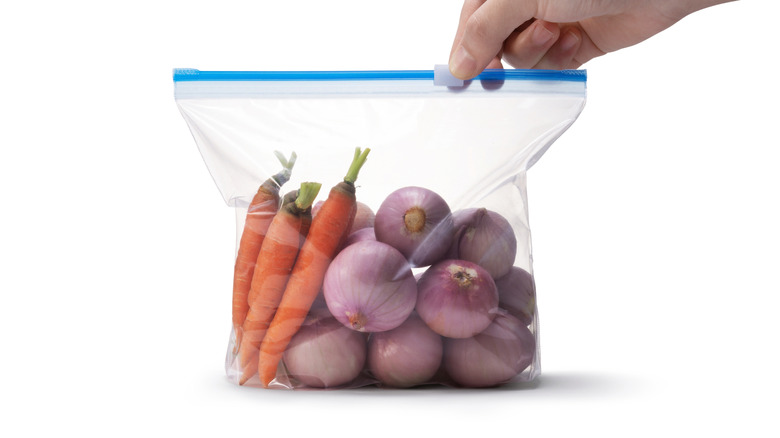
Just because you're trying to reduce your plastic consumption in your kitchen doesn't mean that you can never use plastic again — it just means that you should try to reuse the plastic that you've already brought into your home. One great example of this is Ziploc bags. Can they come in handy? Of course. But a lot of people think that they can only use a Ziploc bag once before they have to throw it away and get themselves a new one from the pantry. That's not the case, though: You should absolutely be reusing your Ziploc bags until they break.
All you have to do is make sure that you clean your Ziploc bags between uses. Give them a thorough scrub with some hot, soapy water, let them drain, and they'll be as good as new. Not only are you reducing the amount of plastic you use on a weekly and monthly basis in the kitchen, but this trick can also help you save a ton of money on food storage products in the process. It'll be months — or even years — until you have to buy another box of Ziploc bags again.
Waste less food and compost your food scraps
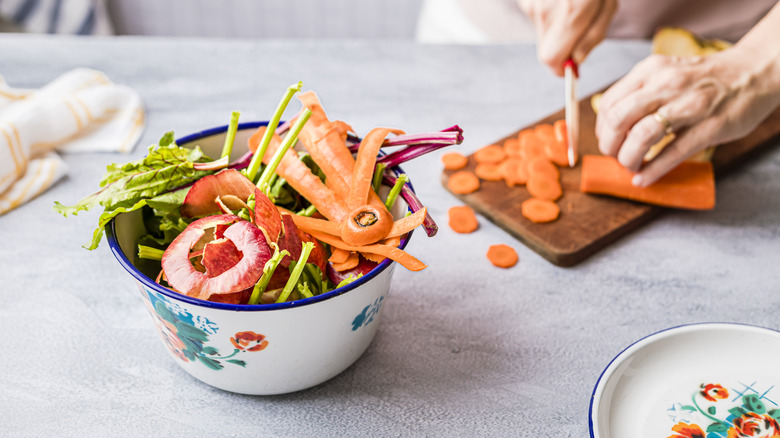
You think that food doesn't have much to do with plastic waste in your kitchen, but that's where you're wrong. In reality, waste is often connected. For example, when you throw food scraps into the trash, you're wasting space where other waste could go. That means that you'll use up those plastic trash bags faster, ultimately creating more plastic waste. Therefore, considering food waste is just as important as thinking about the plastic itself. "By focusing on the plastic, I was more aware of the food going to waste," explained Anne-Marie Bonneau. "So, if you waste less food, you'll save a lot of money."
Bonneau suggested taking your leftover vegetable scraps and saving them in the freezer before boiling them together in a pot to create your own homemade vegetable broth. You can then freeze that broth as well, saving it for whenever you need some. This is a great strategy because it reduces waste on so many levels and saves you money in the process. If you can't find a way to use up those leftover food scraps, though, you should consider composting — that waste can then be used for gardening, and you won't have to use as many plastic trash bags to store the extra organic waste.
Avoid single-use coffee pods
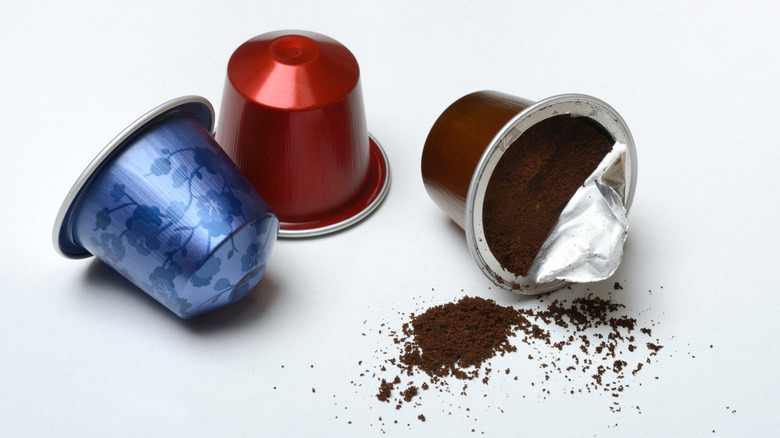
We get it: Using single-use coffee pods is an easy way of getting your caffeine fix in the morning, especially if you've never learned how to make good coffee from scratch. But using a whole plastic pod every morning (or, if you're like us, using several over the course of a day) creates a lot of plastic waste. That's why you may want to take a closer look at your morning cup of joe to consider ways to make it more sustainable.
Using a drip coffee maker is a solid option, since it doesn't require a new pod for every single serving of coffee. Alternatively, you can use reusable coffee pods and fill them with your own coffee if you're not ready to get rid of your Nespresso or Keurig. However, we really like using a zero-waste pourover coffee brewer, since you don't even need to buy coffee filters for it. These are just a few more-sustainable coffee options you should look into if you're trying to find ways to cut your plastic use in the kitchen.
Get creative with alternative solutions
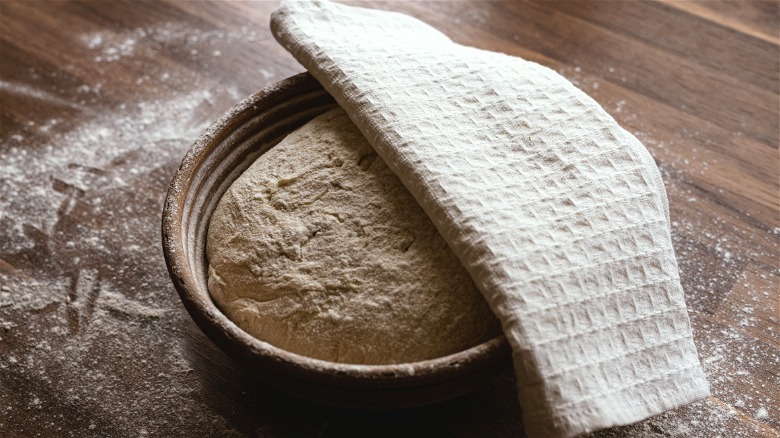
You might often reach for plastic in the kitchen without realizing there are simple, plastic-free alternatives. Sometimes, the only way to notice them is to remove the plastic in the first place. "When you don't have the stuff, like plastic wrap, you kind of just think of a solution. You get very creative, and you think, okay, what do I do instead?" said Anne-Marie Bonneau.
For example, you don't necessarily need a plastic bag or container to store an avocado. "If I have half an avocado, I take the pit out, and I put it cut-side down on a plate and put it in the fridge,: Bonneau told us. She said that this method also works for onions and melons. Many recipes will suggest that you use plastic wrap to cover bread dough while it's proofing. But, according to Bonneau, it's not necessary — you can simply cover the dough with a kitchen towel instead. Bonneau told us, "I think, 'what would my grandmother have done?'"
Think about plastic reduction holistically
Finally, and perhaps most importantly, one should think about plastic waste reduction holistically. It's not just about reducing the amount of plastic you use and produce in your kitchen — it's about making your whole home more sustainable in various ways, which can then help you further reduce your plastic consumption. Anne-Marie Bonneau said that paying attention to her plastic use helped her think about other steps she could take to create a more sustainable living environment, particularly in the kitchen. "You become more intentional," she said, "and you think more about your purchases, so I think that makes you more aware."
Thinking critically about how much plastic you use in your kitchen — and in your home more generally — is a big step to becoming a more sustainable household. "It makes you more mindful," Bonneau said. Cutting plastic waste often starts with how you use food and other resources — sometimes in ways you wouldn't expect.