

Does Brown Sugar Ever Expire? How To Know It's Time To Toss It

We may receive a commission on purchases made from links.
Brown sugar is a staple in baking. From gooey cookies to rich crumbles, it's a star ingredient in so many recipes, making it something that you always want to have on hand. Some people buy their sugar in bulk, which is a great idea for those who bake a lot. Fortunately, it's safe to eat expired sugar as neither white nor brown sugar technically spoils. So, you can store it for as long as you want without much worry. However, quality may fade.
Brown sugar does harden over time, if it's not stored properly. This is because it contains molasses, which evaporates when exposed to oxygen for a prolonged period of time. The brown sugar will lose moisture as this process occurs, which affects its soft texture. It happens to both dark and light brown sugar, and it makes them incredibly difficult to work with as the granules clump together.
Luckily, all you need to do to avoid the problem is keep your brown sugar in an airtight container like a glass jar with a tightly sealed lid or a resealable plastic bag. Keep the container in a cool area, but avoid the refrigerator. Storing sugar in the fridge is always a bad idea as it can draw the moisture from the sugar. Instead, store it away from light and heat inside a cupboard. Freezing can also be a good option for long-term storage.
How to keep brown sugar soft and fresh for longer
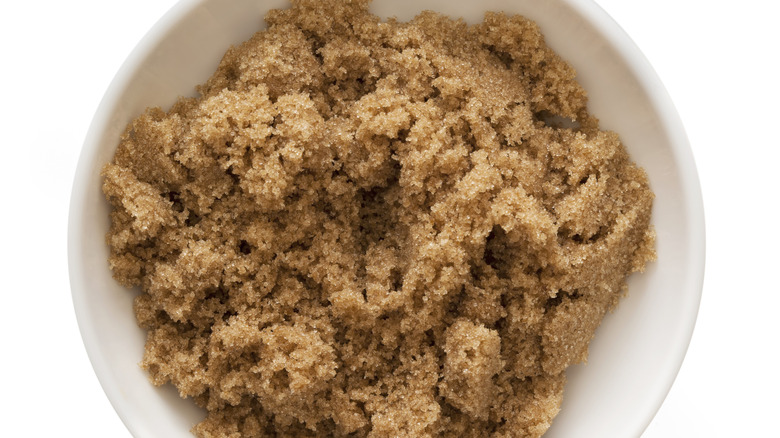
No matter how you store it, remember that brown sugar will have the best flavor and texture when used within the first two years of purchase. So, use it before then to make the tastiest cookies, breads, and baked goods.
One of the absolute best ways to keep brown sugar soft is to use a brown sugar saver. These small, ceramic disks — including JBK Pottery's Terracotta Sugar Saver – are specially made to help keep sugar fresh. Just soak the disk in water and place it in the container of sugar, where it will gradually release enough moisture to keep the granules soft. Apple and bread slices can have the same effect, but you need to watch for mold.
If it's already too late, there are a few ways to soften brown sugar that has hardened. For example, you can spread the sugar on a baking sheet and heat it for a few minutes at 250 degrees Fahrenheit, or add it to a bowl covered with a damp paper towel and microwave it in short bursts. The blender can also help if you want to break apart clumps, as long as the appliance doesn't have an unusual smell. If that is the case, sugar will absorb odors and impact the flavor of your food. Should you notice any changes in taste, aroma, or appearance, it's best to toss the ingredient once and for all.