

What Really Makes A Diner A Diner

The diner is the quintessential American restaurant, a casual eatery where one can stop in for simple, inexpensive food. They exist all over the country and do good business slinging sandwiches, burgers, and all-day breakfast. A retro aesthetic, complete with anachronisms like a jukebox in the corner, contributes to the overall gestalt of the American diner, hinting at the origins of the restaurant as well as creating an undeniable sense of nostalgia.
Another aspect of many traditional American diners is the layout. On top of the retro decoration, a traditional diner also has a particular design, featuring a number of booths, tables, and a counter spread out in a restaurant that is long and narrow, with a small kitchen behind the counter. Just like in countless movies and television shows, larger groups can gather into a booth for a meal fresh from the griddle, while lone diners can sidle up to the counter for a hot cup of coffee at any time of day or night.
That is the basic image of the American diner. Should any restaurant meet the above criteria, it's unlikely that anyone would object to them calling themselves a diner. But to understand exactly how the diner came to occupy this space in the American mind, as well as how these criteria came to be so clearly defined, we will have to look back at where diners first came from.
The history of diners
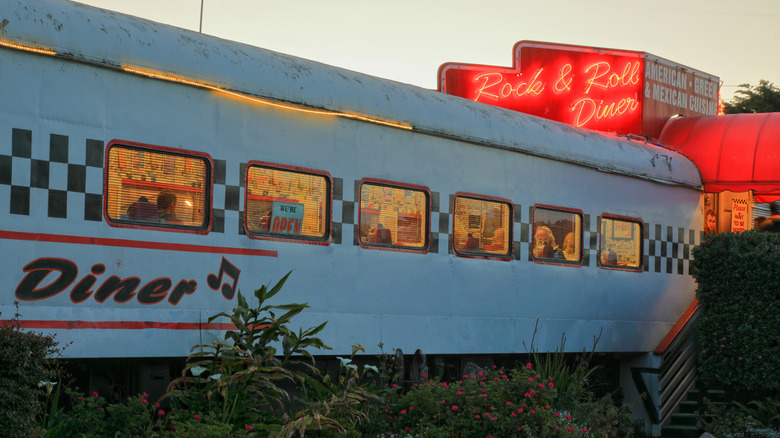
The story of the American diner actually begins in the late 1800s with something called a "lunch car." These lunch cars were similar to modern food trucks, wagons that would position themselves in urban areas where working-class people could stop by and grab a quick, inexpensive meal. As more and more began working industrial jobs, these eateries became mainstays and traded their wheels for proper foundations and more complex construction — including luxuries like indoor bathrooms. It was at this time that the standard diner layout came into being.
Around the same time that these quick, no-nonsense eateries were becoming a cultural pillar, train travel was considered the height of luxury. Additionally, many early diners were prefabricated and then transported to their permanent location, where they could simply be set on a foundation. As a result, many early diners were built to resemble the dining cars on trains. Not only did this aesthetic mean that they were sleek and attractive, but the shape also made them easy to transport to their final locations. In fact, the word "diner" itself comes from a shortening of "dining car," a reference to the train-like appearance of these restaurants.
As times changed, the sleek shape and shiny metal of the train car look came to be less important to the overall diner aesthetic, but some of the best diners in America are still housed in those same buildings. That said, these days, the definition of a diner has much more to do with the atmosphere and the menu — and can do just fine in a brick building.
Diners are classic Americana
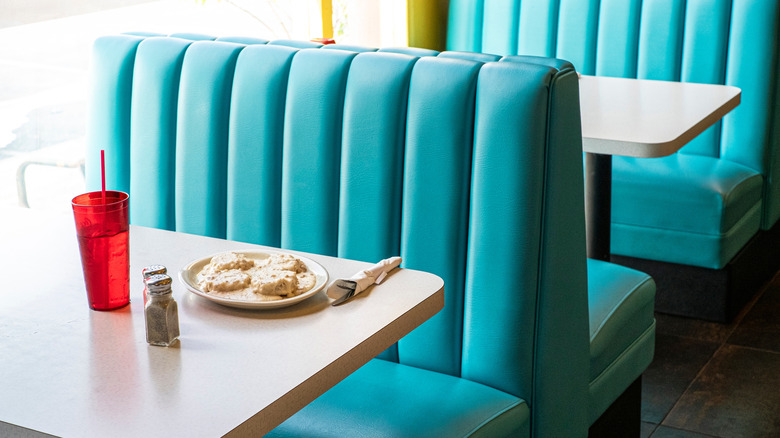
In the end, what really defines a diner is that it is a restaurant for the working class. They first popped up to provide quick, inexpensive meals to working people, and that was long their place in the cultural tableau. Nowadays, this role has been largely taken by fast food restaurants. At the time of their inception, diners were the quickest and easiest way for a factory worker to grab a meal. In modern times, as folks commute to work by car, the drive-thru window is a faster and easier way to fill that need. One doesn't need to worry about tipping the waitstaff or even about getting out of the car to grab breakfast on their way to work. But, thankfully, despite being out-competed by measures of speed and price, the diner has maintained its place in American culture.
One could argue, particularly given the tendency toward retro aesthetics, that it is primarily nostalgia that keeps diners afloat in the modern U.S., but there are undoubtedly some foods that just taste better at a diner than when you make them at home. Classic American comfort foods like milkshakes, hamburgers, and biscuits and gravy take on a different character when you eat them at a Formica table, tucked into a squishy leather booth. They are not the kind of restaurant where you go for upscale dining — and there are definitely some items you should avoid ordering at a diner — but there's something intangible and comforting about these restaurants that feel just a little out of place in time.