

Is It Possible To Ripen An Unripe Watermelon After Buying It?

We often believe time ripens all fruits. It's the reason those green bananas you picked up from the store turn yellow a few days later, hard avocados become soft and vibrant overnight, and why the most sour peaches can eventually sing sweet summer tunes. It only makes sense that we wonder if the same thing could happen to watermelon, but the answer is a surprising no. Once it's off the vine, this fruit's fate is sealed. No ripening. No softening. What you see at the grocery store is what you'll get days later at home.
Certain fruits ripen once picked and continue to do so afterward, while others stop altogether the moment they are harvested. These are categorized as climacteric and non-climacteric fruits, and watermelon falls squarely into the second variety. Simply put, this means after it's picked during its peak ripeness, it no longer produces or reacts to ethylene gas, the hormone responsible for inducing ripeness. Changes in sugar content, flavor, and tenderness still occur, but in a much more subtle manner than the drastic change in climacteric fruits. That's why you should pick ripe watermelon when you're at the store, rather than grabbing unripe ones and hoping for the best.
How to pick ripe watermelon and store it well
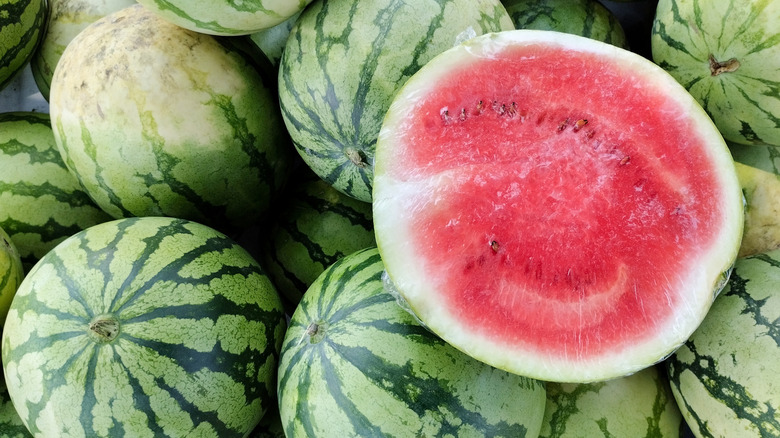
The watermelon won't get any better than it already is, so it's imperative to pick out the best, ripest one when you're at the grocery store. Fortunately, ripe watermelon comes with copious telltale signs. You've probably seen people tapping on the fruit before. This tried-and-true method is often used to estimate ripeness. A bouncy and hollow sound indicates ripeness, while a dense, high-pitched ring suggests it's not ripe. A deeper tone means it could be overripe.
If you have a hard time differentiating the sound, don't fret. There are still other ways to identify a watermelon's ripeness. Look for yellow spots and webbing on the skin (also known as "sugar spots") to get the sweetest interiors. The stripes should be consistent and well-developed, leaning heavier into dark green hues and a dull, matte exterior. This is often accompanied by a dried-up, shriveled stem, a sign that the watermelon left the vine when it's fully matured. And finally, the weight. A hefty watermelon or one that looks heavy for its size usually means it contains a high water content.
Once you've picked up a ripe watermelon, the only thing left to do is store it right until you're ready to eat it. Unlike other fruits, it might be a bad idea to refrigerate watermelon because it's a summer crop. Just keep it in a cool, dry area at room temperature away from direct sunlight, and it should last for about a week.